
Dremel Scroll Saw Blades 3 Inch: A Practical Selection Guide
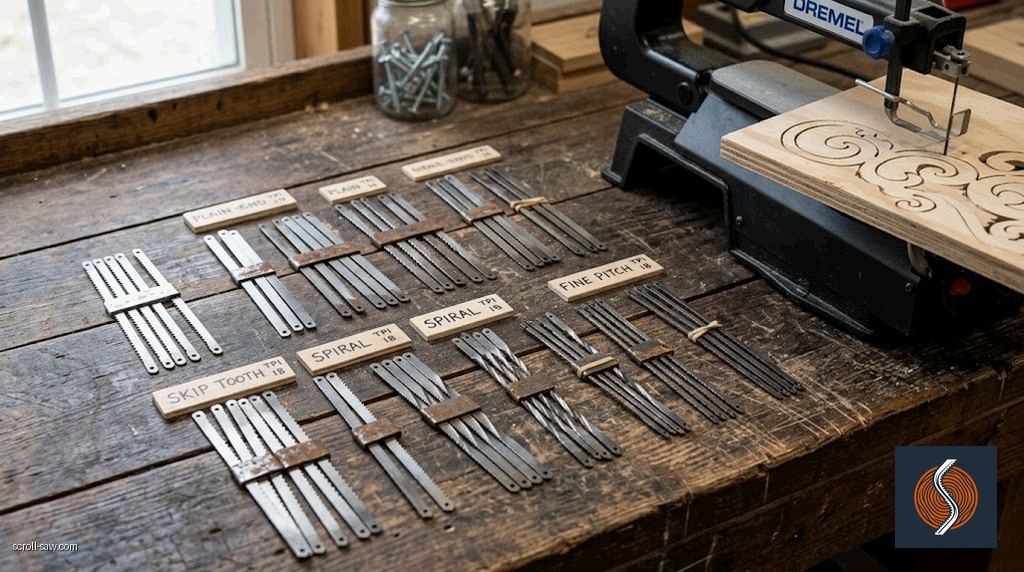
A Practical Selection Guide to Dremel Scroll Saw Blades 3 Inch
You are halfway through a delicate inlay pattern on a piece of cherry, and the blade starts wandering. The line on your template is clean, but the kerf is getting wider, the edges rougher. You stop, pull the blade out, and look at the teeth. Half of them are gone or bent. You grab the next blade from the same pack, pop it in, and twenty minutes later the same thing happens. The problem is not your technique. It is the blade.
Dremel scroll saw blades 3 inch are the pinned and pinless blades designed for Dremel’s line of scroll saws, from the older 1671 and 1830 models to the current MS20-01 Moto-Saw. These blades are roughly 3 inches long and come in several tooth configurations for cutting wood, plastic, and laminate. Picking the right one comes down to matching tooth count to material thickness and knowing whether your saw takes pinned or pinless blades.
The short answer: for fine detail work in hardwood, use a fine-tooth blade like the MS51. For general wood cutting, the MS52 is your middle-ground pick. For thick stock or aggressive cuts in softwood and laminate, reach for the MS53. If you are running an older Dremel like the 1671 or 571, check the blade holder type before buying, because pinned and pinless blades are not interchangeable.
Understanding Dremel’s Pinned Blade System
The Dremel MS20-01 Moto-Saw uses a pinned blade system, and this is where most of the confusion starts. Pinned blades have small cross-pins at each end that seat into the blade clamps. You load them by flipping the Quick Change lever, dropping the blade in, and closing the lever. The auto-tensioning mechanism handles the rest, so you do not need to manually dial in tension.
The three blades Dremel ships with the Moto-Saw are the MS51, MS52, and MS53. Each one covers a different range of material and cut type.
The MS51 is the fine-tooth blade. Think delicate fretwork, thin hardwood veneers, and tight curves with small radii. The trade-off is speed: a fine-tooth blade removes material slowly, so thick stock takes patience. If you try to push the MS51 through a 1-inch board, you will burn the wood before you finish the cut.
The MS52 is the medium-tooth blade and the one most people should start with. It handles 1/4-inch to 3/4-inch wood well, cuts at a reasonable pace, and leaves a kerf that needs only light sanding. I would reach for this blade for most furniture inlay work, signs, and decorative cuts in pine and birch.
The MS53 is the coarse-tooth blade. It chews through thick stock fast, which makes it the pick for 1-inch and thicker softwood, laminate flooring, and some plastics. The cost is a wider kerf and rougher edge. You will spend more time sanding, and tight interior curves are not realistic with this blade.
One flaw worth naming: none of these blades are great for metal. Dremel lists soft-metal cutting as possible with the Moto-Saw, but in practice, even the MS51 will dull quickly on aluminum or thin brass. If metal cutting is a regular part of your work, a dedicated metal-cutting scroll saw blade from a different manufacturer will outlast anything in the MS series.
Matching Blade Teeth to Your Material
Tooth count is the single most important factor in blade selection, and it comes down to a simple rule: more teeth for thin material and fine detail, fewer teeth for thick material and rough cuts.
For thin wood (1/8 inch or less), the MS51 gives you the control you need. The fine teeth produce a smooth cut face and let you turn tight corners without snapping the blade. The same blade works well for plastic sheets up to 1/8 inch, though you should run the saw at a slower speed to prevent melting.
For medium stock (1/4 to 3/4 inch), the MS52 is the right call. It balances cut speed with surface finish. You can still do interior cuts and reasonable curves, just not the hairpin turns the MS51 manages.
For thick stock (3/4 inch and up), the MS53 keeps the cut moving. A fine-tooth blade in thick material packs sawdust in the kerf and burns the wood. The coarse teeth on the MS53 clear the dust and keep cutting.
Laminate is a special case. The hard wear layer on laminate flooring dulls fine teeth fast. The MS53 gets through it, but expect to go through two or three blades on a single project. Keep the speed moderate to avoid chipping the surface layer.
Pinned vs Pinless Blades for Dremel Saws
This is where people waste money. Pinned and pinless blades look similar in a photo, but they are not interchangeable.
The MS20-01 Moto-Saw takes pinned blades only. The pins seat into the clamps and the auto-tensioning mechanism depends on that pin geometry. If you buy pinless blades, they will not mount.
Older Dremel scroll saws like the 1671, 1672, and 1830 may use pinless blades depending on the specific blade holder. If you own one of these, check the manual or look at the blade clamp design before ordering. Pinless blades use a set-screw or clamp that grips the flat end of the blade directly.
The Dremel 571 is another older model worth checking. Some versions used pinned blades, others used a different mount entirely. If you are buying blades for a saw you picked up used, take the old blade to the store or measure the pin diameter and spacing before ordering online.
Compatible Dremel Scroll Saw Models
The MS51, MS52, and MS53 blades are designed for the MS20-01 Moto-Saw, but they also fit any Dremel scroll saw that uses the same pinned blade format. Here is what I can tell you from research:
The Dremel 1671 is an older benchtop scroll saw. If it uses pinned blades with the same pin dimensions, the MS series should fit. But Dremel changed blade designs over the years, so verify the pin spacing.
The Dremel 1830 is another older model. Same caution applies. Check the blade holder.
The Dremel 571 scroll saw is a compact model that predates the Moto-Saw by years. Blade compatibility depends on the specific holder design.
The Dremel 1680 and 1695 are 16-inch variable speed scroll saws. These are larger benchtop tools and may use a different blade type entirely. Do not assume the MS series fits without checking.
If you own the MS20-01, you are in good shape. The MS51, MS52, and MS53 are purpose-built for it, and the Quick Change lever makes swapping blades a ten-second job.
Blade Life and Signs of Wear
Scroll saw blades do not last forever, and recognizing when to swap them saves your workpiece from ruin. Here are the signs I look for:
The cut gets harder to follow. A sharp blade tracks the line with light pressure. When you start pushing harder to keep the cut moving, the teeth are dulling.
The kerf widens. As teeth wear or bend, the blade cuts a wider path. If your cut line suddenly looks wider than it did at the start, the blade is done.
Burn marks on the wood. A dull blade generates friction, and friction burns wood. If you smell smoke or see dark streaks along the cut, stop and change the blade.
The blade catches or jumps. Worn teeth grab instead of cutting smoothly. This is not only a sign of wear but also a safety risk, because a catching blade can snap.
For the MS51, expect the shortest blade life because the fine teeth are fragile. The MS52 lasts longer in typical use, and the MS53 is the most durable of the three but still wears out faster than you might expect on hard materials.
My Verdict on Dremel 3-Inch Scroll Saw Blades
If you own a Dremel MS20-01 Moto-Saw, buy the MS52 as your default blade. It is the most versatile of the three, handling the widest range of materials and cut types without forcing you to swap constantly. Keep MS51 blades on hand for fine detail work and MS53 blades for thick stock.
Skip generic replacement blades unless you can confirm the pin dimensions match. The Moto-Saw’s auto-tensioning mechanism depends on correct pin geometry, and off-brand blades that are slightly off will either fail to seat or seat loosely, which leads to blade drift and breakage.
If you are running an older Dremel scroll saw (1671, 1830, 571, 1680, 1695), do not assume the MS series fits. Measure your blade holder, check the manual, and buy accordingly. The wrong blade format is a waste of money, not a shortcut.
FAQ
What size blades does a Dremel scroll saw use? Dremel scroll saws use blades that are approximately 3 inches long. The MS20-01 Moto-Saw uses pinned blades (MS51, MS52, MS53), while older models may use pinless blades depending on the blade holder design.
Are Dremel scroll saw blades pinned or pinless? The MS20-01 Moto-Saw uses pinned blades exclusively. Older Dremel scroll saws like the 1671, 1830, and 571 may use pinless blades, so check your specific model before buying.
What is the difference between MS51, MS52, and MS53 blades? The MS51 is a fine-tooth blade for delicate work and thin material, the MS52 is a medium-tooth general-purpose blade, and the MS53 is a coarse-tooth blade for thick stock and fast cuts.
Can I use Dremel scroll saw blades for cutting metal? Dremel lists soft-metal cutting as possible with the Moto-Saw, but the MS series blades dull quickly on metal. For regular metal work, use a dedicated metal-cutting blade from a different manufacturer.
How long do Dremel scroll saw blades last? Blade life depends on material and usage. Fine-tooth MS51 blades wear fastest, while MS53 blades last longest. Expect to change blades when the cut gets harder to follow, the kerf widens, or you see burn marks on the wood.
Do Dremel scroll saw blades fit other brands of scroll saws? Only if the other saw uses the same pinned blade format with matching pin dimensions. Pinned and pinless blades are not interchangeable, and pin spacing varies between manufacturers.
What blade should I use for cutting laminate with a Dremel scroll saw? Use the MS53 coarse-tooth blade for laminate. The hard wear layer on laminate flooring dulls fine teeth quickly, so expect to go through several blades on a single project.
Can I use pinless blades in a Dremel MS20-01 Moto-Saw? No. The Moto-Saw’s blade clamps and auto-tensioning mechanism require pinned blades. Pinless blades will not seat in the clamps.
References
- Dremel. MS20-01 Moto-Saw Product Specifications. dremel.com.
- Dremel. Moto-Saw Blade Selection Guide (MS51, MS52, MS53). dremel.com.
- Occupational Safety and Health Administration. Machine Guarding Standards for Power Tools. osha.gov.
- Consumer Product Safety Commission. Power Tool Safety Guidelines. cpsc.gov.


