
Choosing a Rated Scroll Saw: Capacity, Vibration, and Blade-System Checks
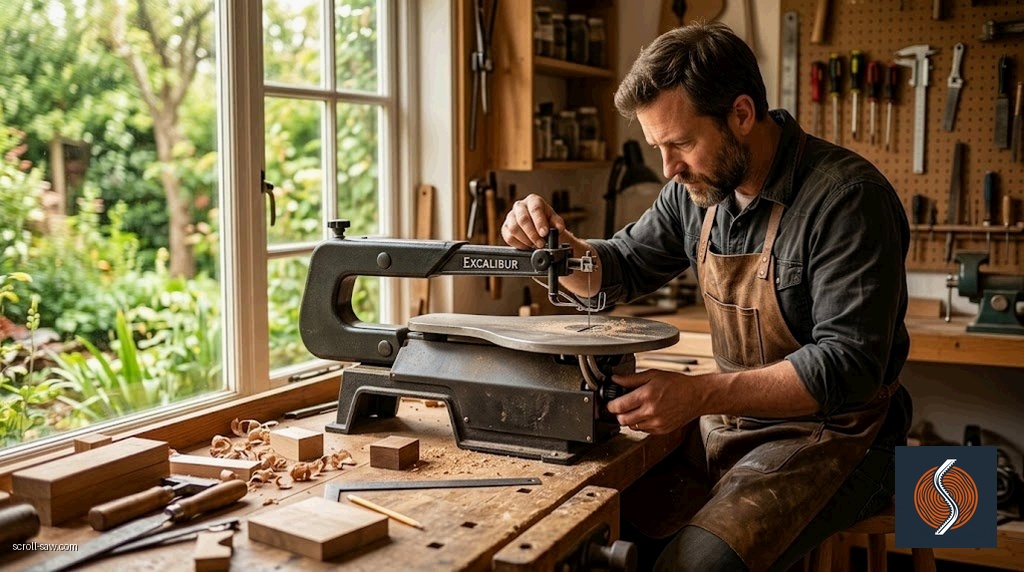
Choosing a Rated Scroll Saw: Capacity, Vibration, and Blade-System Checks
Every “best rated scroll saw” list on the internet reads the same. DeWalt DW788 at the top, an Excalibur somewhere in the middle, a WEN or a Delta as the budget pick, an aspirational Hegner floating above like a mirage. What none of those lists tell you is which of the ratings actually correlate with a saw that will make you finish more projects, and which are noise. Three specs do. The rest is opinion.
A rated scroll saw, in the practical sense, is one that consistently earns high marks across independent reviews for three specific things: throat capacity that fits the work you plan to do, vibration low enough that the blade stays on the line at cruise speed, and a blade-change system fast enough that you actually use pierced interior cuts instead of avoiding them. This piece is about how to weigh those three, and how to spot when a rating is really about a different variable.
The short answer
Buy for the blade-change system first. A saw you dread rethreading is a saw that sits in the corner. Buy for the vibration profile second, by watching a real-user video of the saw at speed rather than a manufacturer beauty shot. Buy for throat capacity third; 16 inches suits most work, 20 inches gives you room for larger pattern books, 21 to 22 inches is the sweet spot for serious hobby use. Motor amperage matters less than any of those, provided the saw has a proper induction motor.
Capacity: throat depth vs cut depth
Two numbers matter. Throat depth is how far the workpiece can extend past the blade toward the back of the arm; a 16-inch saw holds a 16-inch-wide piece, a 20-inch saw holds a 20-inch piece. Cut depth is how thick a piece the saw can plunge through; on most current saws this is 2 inches, though some larger machines reach 2-1/4.
For pattern books and ornaments up to about 12 inches wide, a 16-inch saw such as the WEN 3921 or the Genesis GSS160 has room. For clocks, larger fretwork, and full-size pattern-book projects, 20 inches (DeWalt DW788) is the accepted standard. For occasional oversized work, 21 to 22 inches (Excalibur EX-21, Pegas 21) buys peace of mind at the cost of a bigger footprint.
Do not overbuy throat depth. A 30-inch saw is a specialist tool that no beginner needs, and the extra reach comes with more arm mass and more vibration on cheaper builds.
Vibration: the spec no data sheet publishes
Spec sheets brag about SPM range and motor watts. They do not brag about vibration because there is no honest way to measure it in a standard test. Yet vibration is the single quality difference between a saw you love and a saw you replace within a year.
A good scroll saw at 1,400 SPM should sit on a solid bench with a full coffee mug on the base plate and leave the coffee level and still. A poor one will send ripples across the surface. When you shop, watch real-user videos, not manufacturer clips. Look for the base of the saw, not the blade. If the base shakes, the blade shakes, and your line shakes with it.
Parallel-arm and parallel-link designs (DeWalt DW788, Excalibur EX-21, Pegas 21, Delta 40-694) run smoother than C-arm designs at every price point. That geometric fact is the reason the same short list of saws shows up on every credible ranking.
Blade-change system: the deciding factor
Piercing an interior cut requires releasing the top blade clamp, threading the blade through a starter hole, and reclamping. If that operation takes fifteen seconds, you will do it a hundred times a year. If it takes ninety seconds and needs an allen key, you will design around it and lose half the reason you bought a scroll saw.
Tool-free thumbscrew clamps (DeWalt DW788, Pegas quick-clamp) are the current standard. Some saws still use setscrews that need a hex key; skip them unless the price is a genuine giveaway. On budget saws, the top clamp is often the weak point; read owner-forum threads about the specific model to see whether users complain about slipping clamps.
Motor: amperage matters less than build
Most hobby scroll saws run 1.2 to 1.6 amp induction motors. That is enough for anything a scroll saw is asked to cut. What matters is whether it holds SPM under load and whether the motor is a proper induction motor rather than a universal (brushed) motor.
Induction motors run quieter, cooler, and longer with no maintenance. Brushed motors are cheaper and lighter but heat up, whine at low SPM, and eventually need brush replacement. On any saw you plan to keep more than a season, insist on induction.
Table: tilt, size, insert, dust blower
The table is where the workpiece lives, and small things add up. Look for a table that tilts left at least 45 degrees. Look for a machined or ground surface, not a rough casting; a burnished-in scratch will telegraph into every workpiece. A blade-thickness insert (a small removable plate around the blade slot) prevents thin cutouts from dropping through and reduces exit tearout. A dust blower aimed at the pattern line is a small quality-of-life item that better saws include and cheaper ones omit.
Where the price tiers actually break
The entry tier (budget hobby saws) is honest for 1/4 to 1/2-inch plywood and light craft work. Expect a C-arm, a brushed or small induction motor, and a blade-clamp system that will annoy you. Fine for casual weekend projects.
The middle tier (DeWalt DW788, Delta 40-694) is where most serious hobbyists live. Parallel arm, induction motor, real blade clamps, throat depths of 20 inches, and vibration low enough that a full mug of coffee stays flat.
The upper tier (Excalibur EX-21, Pegas 21) buys smoother arm design, better tables, and easier blade changes. Diminishing returns start here for most users.
The premium tier (Hegner Multimax) buys tank-grade durability at the cost of a small car. If you cut every day, it pays back in decades of service. If you cut every weekend, you are subsidizing that durability without using it.
Verdict
A rated scroll saw is one that gets out of the way. Fast blade change so you actually pierce interior cuts, low vibration so the line stays put, and enough throat depth to fit the pattern you want to cut. Beyond that, most ratings measure how a saw looks in a photograph rather than how it feels in the ninth hour of a project. The DeWalt DW788 is the persistent middle-tier winner because it hits all three of the specs that matter without the premium-tier surcharge. The Pegas 21 and Excalibur EX-21 are better in specific ways and worth the step up for daily users. Everything below that price wall is a compromise you should know before you buy, not after.
FAQ
What is the best rated scroll saw for beginners? A 16 to 20-inch parallel-arm saw with induction motor and tool-free blade clamps. That specification list, more than any brand name, is what beginners should shop for.
Is the DeWalt DW788 still worth buying? It continues to earn top ratings because the parallel-arm geometry, induction motor, and blade-change system have not been improved on at that price point. It is not the newest saw on the shelf, but it is still the reference.
How much throat depth do I need? Sixteen inches for most craft work, 20 inches for pattern-book projects, 21+ for larger fretwork and clocks. Anything above 22 inches is specialty.
Does higher SPM mean a better saw? No. SPM range above about 1,600 is largely marketing. What matters is that the motor holds SPM under load and that low SPM is genuinely usable (torque holds at 400 to 500 SPM without stalling).
Do I need a stand for my scroll saw? A sturdy bench works fine. A dedicated stand is helpful for ergonomics and vibration damping but not required. If a stand is optional, choose a heavy one over a light one; mass under the saw is a free vibration fix.
Can a cheap scroll saw do fine detail work? Up to a point. A budget saw will cut a #3 blade through 1/4-inch plywood cleanly. Where cheap saws show their price is under continuous use, at low SPM under load, and at interior cuts where the blade clamps get exercised.
References
-
DeWalt DW788 Instruction Manual, published specs
-
Delta 40-694 Owner’s Manual, published specs
-
Fine Woodworking, scroll saw comparative reviews
-
Scroll Saw Woodworking & Crafts, published saw testing coverage
Title: Rated Scroll Saw: Which Specs Actually Matter Meta description: Which scroll saw ratings correlate with real usability: capacity, vibration, and blade-change system explained, so you buy the saw that finishes more projects. Slug: rated-scroll-saw-guide Excerpt: Ratings rarely tell you which scroll saw will make you finish more projects. Three specs decide that: capacity, vibration, and blade-change system. Here is how to weigh each one honestly.


