
A Practical Selection Guide to Old Craftsman Scroll Saw Blades
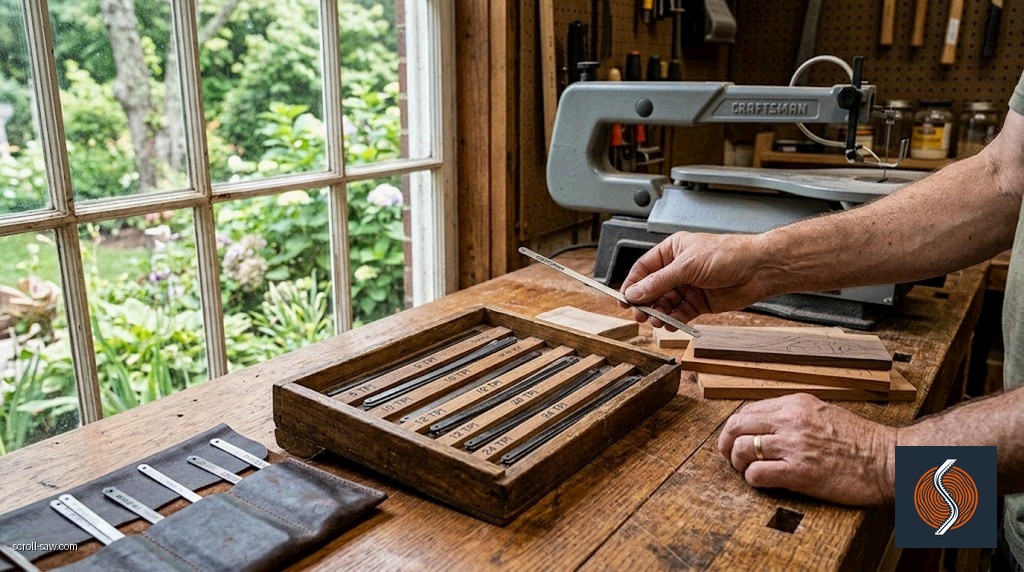
A Practical Selection Guide to Old Craftsman Scroll Saw Blades
The saw was in a garage sale, covered in sawdust and old enough to have a Sears sticker on the motor housing. Twenty dollars. The Craftsman 16-inch scroll saw had not been run in years, but the motor spun up fine and the table was flat. The blade, though, was a rusted stub snapped off in the lower clamp. I needed to find old Craftsman scroll saw blades, and what I learned is that the process is part detective work and part patience.
Old Craftsman scroll saws are the workhorses of home workshops across North America. Sears sold these saws under the Craftsman brand for decades, in models ranging from small benchtop units to full-size 16-inch floor models. The blades for these saws are standard scroll saw blades, but identifying which type your specific model uses requires checking the model plate and sometimes the parts diagram.
Finding the right old Craftsman scroll saw blades comes down to three steps: identify your model number, determine whether your saw uses pin-end or plain-end blades, and match the blade length and pin diameter to what your blade holder accepts.
Identifying Your Old Craftsman Scroll Saw
Before you buy blades, you need to know what you have. Here is how to identify an old Craftsman scroll saw:
Find the model plate. Look on the back of the motor assembly, on the base, or sometimes under the table. The model plate has the Sears model number, which is typically a three-part number like 113.xxxxxx or 137.xxxxxx. This number is your key to finding the correct parts.
Check the serial number. The serial number on the model plate can help date the saw. Older Sears model numbers starting with 113 were made by Emerson Electric. Models starting with 137 were made by Ryobi. The manufacturer affects parts availability and blade holder design.
Look for the operator manual. If the manual is with the saw, it will specify the blade type, size, and installation procedure. If not, you can often find scanned copies of old Craftsman manuals online by searching the model number.
Find the parts diagram. The parts diagram (sometimes called an exploded view) shows every component of the saw, including the blade holder, blade clamp, and table insert. It will show whether the holder accepts pin-end blades, plain-end blades, or both. This is the single most useful document for identifying blade compatibility.
Pin-End vs. Plain-End on Old Craftsman Saws
Most old Craftsman scroll saws use one of two blade systems:
Pin-end blades. These have small pins at each end that drop into notched blade holders. They are the most common type on Craftsman 16-inch scroll saw models from the 1990s and 2000s. They are easy to install but cannot thread through small pilot holes for interior cuts.
Plain-end blades. These are flat steel at both ends, held by set screws or cam clamps. Older Craftsman models, particularly benchtop saws from the 1980s and earlier, often use plain-end blades. They allow interior cuts through small drilled holes.
Some Craftsman models accept both types with a convertible blade holder. If your saw has notches for pins and also has set screws, you can use either type. Check the parts diagram to confirm.
The Craftsman 16-inch scroll saw (sold under various Sears model numbers) typically uses standard 5-inch pin-end blades. The Craftsman motorized scroll saw, an older benchtop model, may use plain-end blades. Always verify with your specific model.
What Size Blades for a Craftsman 16 Scroll Saw?
If you have a Craftsman 16-inch scroll saw, you need blades for 16-inch Craftsman scroll saw models. The standard blade length is 5 inches, pin-end. Here is what to look for:
Blade length: 5 inches is standard for most Craftsman 16-inch scroll saws. Measure the old blade if you have it, or check the operator manual.
Pin diameter: Standard pin-end scroll saw blades use a pin diameter of about 0.093 inches. Most blades sold as “scroll saw pin-end blades” will match, but verify before buying in bulk.
Blade width and thickness: These vary by TPI and blade style. For general work, a blade width of 0.090 to 0.125 inches is typical. For fine work, narrower blades (0.030 to 0.050 inches) are better.
TPI range: Keep an assortment. For the Craftsman 16-inch scroll saw, I keep blades from 7 TPI (for thick stock) to 25 TPI (for fine fretwork). The variable-speed control on many models lets you match blade speed to TPI.
The Craftsman Scroll Saw 26877 and Its Blades
One specific model that comes up often is the Craftsman scroll saw 26877. This model, like many Craftsman scroll saws, uses standard pin-end blades. If you are looking for craftsman scroll saw 26877 blades specifically, standard 5-inch pin-end scroll saw blades will fit.
The 26877 is a variable-speed model, which means you can adjust the stroke rate to match the blade and material. Slower speeds for metal and plastic, faster for wood. The blade holder, blade clamp, and table insert are standard Craftsman parts, and replacement parts are available through Sears parts distributors and aftermarket suppliers.
Where to Find Old Craftsman Scroll Saw Blades
You do not need to find original Craftsman-branded blades. Scroll saw blades are standardized, and any manufacturer’s blade of the correct type and size will work. Here is where to look:
Online retailers. Amazon, woodworking supply stores, and specialty blade manufacturers all sell standard pin-end and plain-end scroll saw blades. Search for “scroll saw blades for Craftsman” or specify the blade type (pin-end or plain-end) and size.
Woodworking supply stores. Stores that cater to woodworkers carry blade assortments. These are useful because you get multiple TPI ratings in one package, letting you test different blades on your projects.
Sears parts. Sears still sells parts for many Craftsman models through their parts website. Enter your model number to find the correct blade and blade holder parts. Availability varies by model.
Local hardware stores. Some hardware stores carry basic pin-end scroll saw blades. The selection is usually limited to a few TPI ratings, but for a quick replacement, they work.
Common Issues with Old Craftsman Scroll Saw Blades
The blade holder is worn. On old saws, the blade holder and blade clamp are often the first parts to wear. Grooves in the clamp jaws cause the blade to sit crooked, which leads to drift and breakage. If your cuts pull to one side, inspect the clamp jaws. Replacement blade holders are available for many models.
The blade clamp screws are stripped. On plain-end models with set-screw clamps, the screw holes can strip after years of tightening. A stripped clamp will not hold the blade securely. Replacement clamps and screws are available through parts diagrams.
The table insert is damaged. The table insert surrounds the blade slot and supports the workpiece. A damaged insert lets the workpiece dip, which causes uneven cuts. Replacement table inserts are available or can be made from thin hardwood.
The variable-speed control is inconsistent. On older models, the variable-speed control can become erratic. This is usually a problem with the speed control module, not the blade, but it affects cut quality because the blade speed varies during the cut.
Electrical issues. If the saw has been sitting for years, check the wiring diagram in the operator manual before plugging it in. The switch assembly and motor assembly wiring can degrade over time. A short in the wiring is dangerous. If you are not comfortable with electrical work, have a technician check it.
Maintaining an Old Craftsman Scroll Saw
If you are running an old Craftsman, a few maintenance habits will keep it cutting well:
- Clean the blade holder and blade clamp with a brass brush after every few blade changes. Resin and dust build up in the jaws.
- Check the wiring diagram if the saw has electrical issues. The switch assembly and motor assembly wiring can degrade over time. If you are not comfortable with electrical work, have a technician check it.
- Keep the table clean and waxed. A coat of paste wax on the table reduces friction and makes cutting smoother.
- Store blades in a labeled organizer. Old blades in a drawer get bent and dull.
- Check the tension mechanism regularly. On old saws, the tension spring can fatigue, making it hard to get proper tension.
Conclusion
Old Craftsman scroll saw blades are not hard to find once you know your model. Identify the Sears model number on the model plate, check the parts diagram for blade type (pin-end or plain-end), and buy standard scroll saw blades of the correct size. You do not need original Craftsman blades. Any quality blade of the right type and TPI will work. Keep an assortment of TPI ratings, maintain the blade holder and clamp, and your old Craftsman scroll saw will keep cutting for years to come.
FAQ
What blades do I need for an old Craftsman scroll saw? It depends on your model. Most Craftsman 16-inch scroll saws use standard 5-inch pin-end blades. Older benchtop models may use plain-end blades. Check your model number and parts diagram to confirm.
Where can I buy blades for a Craftsman scroll saw? Standard scroll saw blades are available from online retailers, woodworking supply stores, and some hardware stores. You do not need Craftsman-branded blades specifically.
How do I find the model number on my old Craftsman scroll saw? Look for the model plate on the back of the motor assembly, on the base, or under the table. The Sears model number is typically a three-part number starting with 113 or 137.
Can I use plain-end blades on a Craftsman scroll saw that came with pin-end holders? Only if your blade holder accepts both types. Some models have convertible holders. Check the parts diagram for your specific model to confirm.
What TPI should I use on an old Craftsman scroll saw? For general work, 10 to 15 TPI is a good starting point. For thick stock, use 7 to 10 TPI. For fine fretwork, use 20+ TPI. Keep an assortment on hand.
Are Craftsman scroll saw blades still available? Yes, standard scroll saw blades that fit Craftsman saws are widely available. You do not need to find original Craftsman-branded blades.
How do I know if my blade holder is worn out? Signs include the blade sitting crooked, cuts drifting to one side, and frequent blade breakage. Inspect the clamp jaws for grooves or burrs. Replace the holder if the jaws are worn.
What is the difference between a Craftsman 16-inch scroll saw and a Craftsman 5-inch scroll saw? The 16-inch refers to the throat depth (distance from blade to back of the throat), which determines the maximum width of workpiece. The 5-inch refers to the blade length. They are different measurements of different things.
References
- Occupational Safety and Health Administration (OSHA), Machine Guarding: https://www.osha.gov/machine-guarding
- Sears/Craftsman operator manuals and parts diagrams (model-specific documentation)
- Scroll Saw Woodworking and Crafts magazine, blade selection and tensioning guides


