
Choosing Hawk Scroll Saw Blades for Clean Curves
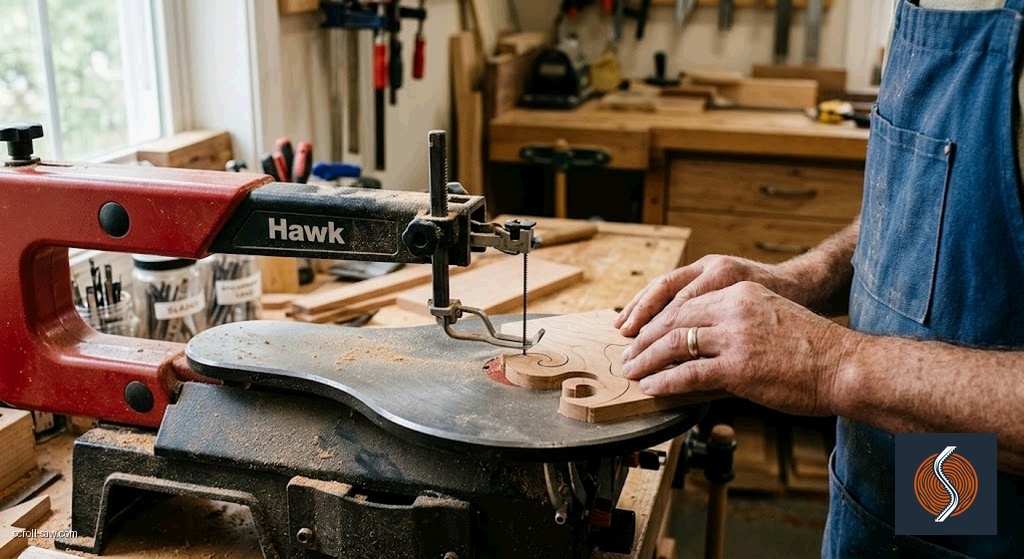
Choosing Hawk Scroll Saw Blades for Clean Curves and Controlled Feed
The first time I put a dull blade in my Hawk 220-3 and tried to cut a tight inside curve in 3/4-inch cherry, the wood bucked, the blade wandered two teeth off the line, and I burned a scorch mark into the waste side that no amount of sanding could erase. That was the day I stopped treating hawk scroll saw blades as an afterthought. The blade is the single most important variable on any scroll saw, and on a Hawk, which has the throat depth and speed range to handle serious work, getting the blade right means the difference between a cut you are proud of and one you hide behind a finish.
Hawk scroll saw blades are the consumable cutting components designed to fit Hawk scroll saws, including the Hawk 220-3 and earlier Hawk models. They come in pin-end and plain-end styles, and choosing between them depends on your saw’s blade system, the material you are cutting, and the radius of the curves you need to turn. The right blade gives you clean entry lines, controlled feed, and minimal tearout. The wrong one fights you on every stroke.
If you own a Hawk, the core decision is simple: match the blade type to your saw’s blade holders, pick the tooth count for your material thickness, and dial in tension until the blade sings rather than flutters. Most cutting problems on Hawk scroll saws trace back to one of those three things being off.
Pin-End vs Plain-End Blades on Hawk Scroll Saws
Hawk scroll saws accept both pin-end and plain-end blades, which is one of the reasons woodworkers like them. Pin-end blades have small pins molded into each end that seat into the upper and lower blade holders. They are easy to install, stay oriented correctly, and are a good choice when you are doing straight or gently curved cuts in thicker stock. The pins hold the blade firmly without relying on tension alone to keep it seated.
Plain-end blades are the standard for fine scrollwork. They have no pins, so you clamp them directly into the blade holders using the saw’s clamping mechanism. Plain-end blades come in finer tooth counts and smaller sizes, which lets you turn tighter radii. If you are cutting intricate fretwork, intarsia, or thin veneers, plain-end is what you want.
The tradeoff is real. Pin-end blades are faster to change but limited in how tight a curve they can turn because the pins are thicker than the blade itself. Plain-end blades give you access to the finest sizes and tightest curves, but they require more careful clamping and tensioning. On the Hawk 220-3, the blade system handles both, so you can switch between them depending on the project.
When I am doing rough work, ripping down stock, or cutting outside curves on thick material, I reach for a pin-end blade. When I am doing portrait work or anything with inside cuts tighter than a nickel, I switch to plain-end. Most hawk scroll saw reviews from experienced users echo the same split.
One flaw worth naming: the pin-end holder on older Hawk models can wear if it has been used hard for years. The pin seats can oval out, which means the blade will not sit squarely and will track at an angle. If you are buying a used Hawk, check the pin seats with a fresh blade before you commit. A worn holder means you are limited to plain-end blades until you repair or replace it.
Matching Hawk Scroll Saw Blades to Material and Thickness
Scroll saw blades are numbered, and the numbering system tells you roughly what the blade can do. Lower numbers (size 2/0, 0, 1) are finer blades with more teeth per inch. Higher numbers (size 5, 7, 9, 12) are coarser with fewer teeth per inch and bigger gullets that clear sawdust faster from thick stock.
Here is how I think about it:
- 3/4-inch hardwood or thicker: size 5 or 7. You need the gullet capacity to clear chips, or the blade will clog and heat up.
- 1/4-inch to 1/2-inch hardwood: size 2 or 3. Enough teeth to leave a clean line, enough gullet to keep cutting.
- 1/8-inch to 1/4-inch softwood or veneer: size 0 or 1. Fine teeth for a smooth surface, minimal tearout on thin stock.
- Intricate fretwork in thin stock (1/8 inch or less): size 2/0 or 3/0. These are the tightest turning blades, but they break easily if you push too hard.
The Hawk 220-3 has a speed range that lets you pair blade size with stroke speed. A fine blade in thin stock wants a faster stroke rate to keep the cut clean. A coarse blade in thick stock wants a slower stroke rate so each tooth has time to clear its chip. If you hear the blade chattering or see burn marks, you are either feeding too fast or running the wrong speed for that blade and material combo.
A common mistake I see with people who are new to the Hawk is running a size 2/0 blade in 3/4-inch hardwood at full speed. The gullets on a 2/0 blade are tiny, and they pack with sawdust almost instantly in thick stock. The blade heats up, the wood burns, and the blade breaks. Step up to a size 5, slow the stroke down, and the same cut goes through clean.
Hawk Scroll Saw Blade Tension: Getting It Right
Blade tension is where most scroll saw problems live. Too little tension and the blade flutters, wanders off the line, and breaks prematurely. Too much tension and the blade snaps on the first tight curve.
On the Hawk, tension is set by the upper arm mechanism. After you install the blade, you tighten the tension until the blade produces a clear, high-pitched ping when you pluck it like a guitar string. Not a dull thud, not a buzzing rattle. A clean ping means the blade is under enough tension to track straight but not so tight that it is overstressed.
Here is the test I use: after tensioning, push the blade sideways with your finger. It should deflect slightly and return to center. If it moves more than an eighth of an inch, add tension. If it does not move at all, back off a quarter turn. Then make a test cut in scrap of the same material and thickness you will be cutting. If the blade tracks the line without drifting, the tension is right.
Hawk scroll saw blade tension is not a set-and-forget setting. As the blade warms up and the saw runs, tension can relax slightly. Check it after the first ten minutes of cutting, especially on long sessions. A blade that was singing at the start can go flat halfway through a project, and the cut quality drops with it.
The flaw in the Hawk tension system is that the adjustment can drift over years of use. The mechanism on older saws may not hold tension as firmly as it did when new. If you find yourself re-tensioning every few minutes, the tension hardware may need cleaning or replacement. Check the owner manual or parts diagram for your model to identify the tension assembly parts.
Replacing Blades on a Hawk 220-3 Scroll Saw
Replacing blades on a Hawk 220-3 scroll saw is straightforward once you know the sequence, but the first few times you do it, the lower blade holder can be fiddly. Here is the process that works for me.
First, unplug the saw. This is not optional. The Hawk has a serious motor rating for a scroll saw, and you do not want it cycling while your fingers are in the blade holders.
Loosen the upper blade holder. On the 220-3, this is a cam or thumbscrew mechanism on the upper arm. Loosen the lower blade holder the same way. If you are running a pin-end blade, the pins will drop free. If you are running a plain-end blade, the clamps will release the blade ends.
Remove the old blade. Take note of the orientation: the teeth should face down, toward the table, so the blade cuts on the downstroke. This is the standard for Hawk scroll saws and most scroll saws in general. Putting a blade in upside down is the most common mistake I see, and it results in the blade lifting the stock off the table on every stroke.
To install the new blade, thread it through the hole in your workpiece if you are doing an inside cut. Seat the bottom end first, in the lower blade holder. Then seat the top end in the upper blade holder. Tighten the lower holder, then the upper. Apply tension. Pluck the blade. Adjust until you get that clean ping.
The hawk scroll saw lower blade holder is the one that gives people trouble because it is under the table and harder to see. If you have the owner manual or parts diagram for your specific Hawk model, keep it near the saw. The exploded view shows exactly how the lower holder assembles, and having it handy saves time when you are reassembling after a blade change or cleaning. The service part number for the lower holder assembly should be in the parts list.
If you need to replace the blade on a Hawk 220 scroll saw (the earlier model, not the 220-3), the process is similar but the holder design is slightly different. The 220 uses a different clamping arrangement, and the lower holder may require a different tightening sequence. Check the nameplate on your saw for the model number and type number to confirm which version you have before ordering parts or following a blade change guide.
When to Replace Your Blade
Scroll saw blades are consumable. A blade that has lost its edge will burn wood, wander off the line, and make you think the saw is the problem when it is really just a dull blade.
I change blades at the first sign of burning, when the cut starts requiring more feed pressure than it did when the blade was fresh, or when the blade stops self-feeding and I have to push the stock through. A fresh blade should almost pull the workpiece through on its own at a steady, controllable rate. When you start forcing it, the blade is done.
For a hobbyist doing a few projects a month, a blade might last several sessions. For someone cutting daily, blades are a weekly or even daily replacement. Keep a stock of your most-used sizes so you are not tempted to squeeze one more cut out of a tired blade. That is when mistakes happen and wood gets ruined.
I keep a labeled box near my Hawk with sizes 2/0, 1, 3, 5, and 7 in plain-end, plus a pack of pin-end size 5. That covers 90 percent of what I cut. When I am doing a big project with lots of inside cuts, I buy an extra pack of whatever size the project calls for, because I know I will break at least two blades before the piece is done.
Who Should Buy What
If you are new to the Hawk and not sure where to start, buy a variety pack of plain-end blades in sizes 1 through 5. That covers most projects and lets you feel the difference between fine and coarse blades. Add a pack of pin-end blades in size 5 or 7 for thick stock work.
If you are doing production fretwork, buy plain-end blades by the dozen in your preferred size. You will go through them faster than you think, and having them on hand keeps you working instead of waiting on a mail order.
If you are looking at a hawk scroll saw for sale, check the blade system before you buy. Make sure both the upper and lower blade holders are intact and that the tensioning mechanism moves freely. A Hawk with a damaged lower holder is a project saw, not a worker, and replacing Hawk-specific parts takes more effort than finding standard blades. Check the serial number on the nameplate so you can look up the correct parts diagram and service part numbers later.
Table Bevel and Blade Selection
One thing people overlook is how table bevel affects blade choice. When you tilt the Hawk table for a beveled cut, the blade is cutting at an angle through the material, which means it is effectively cutting through more stock thickness than the material is thick. A 3/4-inch board at a 45-degree bevel is cutting through over an inch of wood.
That means you need a bigger blade for beveled cuts than you would for the same material cut square. If a size 3 works for straight cuts in 1/2-inch stock, step up to a size 5 for the same stock at a 30-degree bevel. The blade is removing more material per stroke, and a fine blade will clog and burn.
The Hawk 220-3 has a table bevel that locks at common angles, which is a nice feature. But the lock can slip on older saws if the locking hardware is worn. If your bevel angle drifts during a cut, check the table lock before blaming the blade.
Conclusion
The blade is the heart of the scroll saw, and on a Hawk, you have the flexibility to run both pin-end and plain-end styles across a wide range of sizes. Match hawk scroll saw blades to your material thickness, dial in tension until the blade sings, and replace blades the moment they start burning or losing their self-feed. The Hawk 220-3 is a capable machine with the throat depth and speed range to handle serious work, but it is only as good as the blade in it. Get the blade right, and the saw will do the rest.
FAQ
What blades does a Hawk 220-3 scroll saw use? The Hawk 220-3 accepts both pin-end and plain-end scroll saw blades. Pin-end blades are easier to install and good for thicker stock, while plain-end blades give you access to finer sizes for tight curves and intricate work.
How do I replace the blade on a Hawk 220 scroll saw? Unplug the saw, loosen the upper and lower blade holders, remove the old blade, then seat the new blade in the lower holder first and the upper holder second. Apply tension and pluck the blade to check it is tight enough. Teeth should face down toward the table.
How tight should the blade tension be on a Hawk scroll saw? Tighten the blade until it produces a clear, high-pitched ping when plucked. It should deflect slightly when pushed sideways and return to center. If it buzzes or rattles, add tension. If it will not flex at all, back off slightly.
What size blade should I use for thick hardwood? For hardwood 3/4 inch or thicker, use a size 5 or 7 blade. The larger gullets clear chips efficiently in thick stock, which prevents clogging and burning. Run the saw at a slower speed setting for thick material.
Can I use plain-end blades on a Hawk scroll saw? Yes. The Hawk blade system clamps plain-end blades directly in the upper and lower holders. Plain-end blades are the best choice for fine fretwork, tight inside curves, and thin material where pin-end blades are too thick to turn.
Where can I find the parts diagram for my Hawk scroll saw? The owner manual for your Hawk model includes an exploded view and parts diagram. If you do not have the manual, look for the model number and type number on the nameplate on the saw, then search for the corresponding parts list or service part numbers from Hawk or aftermarket parts suppliers.
How do I know when to replace my scroll saw blade? Replace the blade when it starts burning the wood, when you have to apply more feed pressure than usual, or when the blade stops self-feeding and you have to push the stock through. A sharp blade should pull the workpiece through at a steady, controllable rate.
What is the difference between pin-end and plain-end scroll saw blades? Pin-end blades have small metal pins at each end that seat into the blade holders. They are quick to install but limited in how tight a curve they can turn. Plain-end blades have no pins and clamp directly into the holders, allowing finer sizes and tighter radii.
Does table bevel affect which blade I should use? Yes. When you bevel the table, the blade cuts through more material thickness than the stock is thick. Step up one or two blade sizes for beveled cuts to prevent clogging and burning.
References
- Hawk Woodworking Tools owner manuals and parts diagrams for blade system specifications and exploded views
- Olson Scroll Saw Blades product pages for blade sizing and tooth geometry reference
- Scroll Saw Association resources on blade selection and tensioning techniques
- Fine Woodworking reference guides on scroll saw blade numbering and material matching


