
DeWalt Scroll Saw Blade Change: Blade Matching
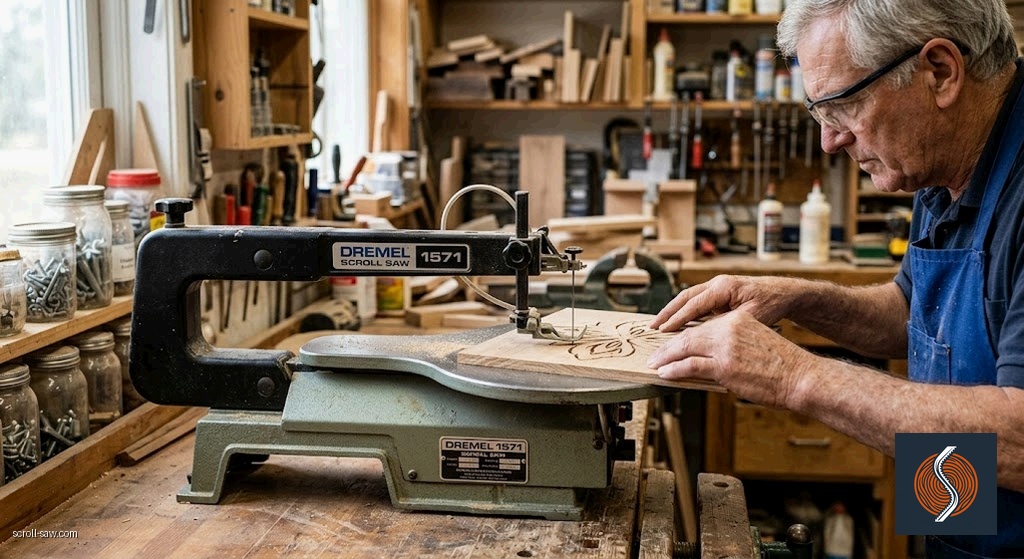
DeWalt Scroll Saw Blade Change: Match Blade Number to Material and Thickness
You finish cutting a 3/4 inch walnut sign on your DeWalt DW788 with a #5 blade, and the surface is rough with visible tooth marks. You switch to a #2 blade for the next piece, a 2 inch thick maple block, and the blade burns the wood within two minutes because it cannot clear dust fast enough. The saw is fine. The blade change is fine. The problem is that the blade number does not match the material and thickness. Changing a blade on a DeWalt scroll saw takes 30 seconds, but choosing the right blade takes a little more thought.
A DeWalt scroll saw blade change is the process of removing and installing a blade on a DeWalt DW788 (or the identical DW7880 and DW7881). The DW788 uses a tool-free blade clamp system with a quarter-turn lever that opens and closes the upper and lower clamps. The saw accepts both pin-end and plain-end blades. Matching the blade number to the material and thickness is what determines whether the cut is clean, fast, and cool, or rough, slow, and burning.
The short answer: use a #2/0 or #2 blade (20 to 28 TPI) for thin stock (under 1/2 inch) and fine detail. Use a #2 or #3 blade (18 to 20 TPI) for medium stock (1/2 to 1 inch). Use a #5 or #7 blade (11.5 to 12.5 TPI) for thick stock (1 to 2 inches). The thicker the material, the fewer teeth per inch you need, because fewer teeth means more space between them to clear sawdust from the deep kerf.
The DeWalt DW788 Blade Change Process
The DW788 has one of the fastest blade change systems of any scroll saw. Here is the process:
- Turn off and unplug the saw.
- Release the blade tension by flipping the tensioning lever on the upper arm.
- Open the upper blade clamp with a quarter-turn of the clamp lever. The blade end releases.
- Open the lower blade clamp with a quarter-turn. The blade drops free.
- Remove the blade from the saw.
- Thread the new blade through the table slot. For plain-end blades, orient the teeth down and forward. For pin-end blades, seat the lower pin in the lower clamp notch first.
- Seat and close the lower clamp. Quarter-turn to lock.
- Seat and close the upper clamp. Quarter-turn to lock.
- Close the tensioning lever. Pluck the blade to check tension. It should ping clearly and deflect less than 1/8 inch.
The whole process takes about 30 seconds. No tools are needed.
Matching Blade Number to Material Thickness
The blade number determines the teeth per inch (TPI), and the TPI determines how well the blade handles different material thicknesses. The key principle: the blade needs at least three teeth in the material at all times to cut cleanly. If fewer than three teeth are engaged, the blade will grab, vibrate, and tear the wood.
Here is a practical matching guide:
| Material Thickness | Recommended Blade | TPI | Why |
| 1/8 to 1/4 in. (thin) | #2/0 skip-tooth | 28 | Many small teeth keep 3+ teeth engaged in thin stock. Clean finish. |
| 1/4 to 1/2 in. (medium-thin) | #2 skip-tooth | 20 | Balanced tooth count for clean cutting and reasonable speed. |
| 1/2 to 1 in. (medium) | #2 or #3 skip-tooth | 18 to 20 | Enough teeth for clean cutting, enough gullet space for dust. |
| 1 to 1.5 in. (thick) | #5 skip-tooth | 12.5 | Fewer, larger teeth clear dust from deep kerf. Prevents burning. |
| 1.5 to 2 in. (very thick) | #7 or #9 skip-tooth | 7 to 11.5 | Maximum dust clearance for deep cuts. Rougher finish, faster cutting. |
Matching Blade to Material Type
The material type matters as much as the thickness. Harder materials need slower cutting and more teeth per inch to prevent burning. Softer materials can use fewer teeth and higher speed.
Softwoods (pine, basswood, cedar): Cut easily at 900 to 1,200 SPM. A #2 skip-tooth handles most softwood projects up to 1 inch thick. For thin softwood (under 1/4 inch), use a #2/0 to prevent tearout.
Hardwoods (walnut, cherry, maple, oak): Need slower cutting (700 to 900 SPM) and a blade with enough TPI to prevent burning. A #2 skip-tooth works for hardwoods up to 3/4 inch. For thicker hardwood, step up to a #3 or #5 to get better dust clearance, even though the finish will be slightly rougher.
Plywood (Baltic birch): Plywood is prone to splintering on the bottom face. Use a #2 reverse-tooth blade (20 TPI) to prevent splintering. The reverse teeth cut on the upstroke and clean the bottom face. Run at 900 to 1,100 SPM.
Non-ferrous metal (aluminum, copper): Use a #5 skip-tooth blade rated for metal cutting. Apply cutting wax or oil to the blade. Run at 400 to 600 SPM. The cut will be slow, but the blade will not burn the material.
Tooth Geometry: Skip, Reverse, and Crown
The tooth geometry affects the finish and the cutting behavior:
Skip-tooth blades have every other tooth removed, giving large gullets between teeth for dust clearance. They are the best general-purpose blade and the default choice for most projects on the DW788.
Reverse-tooth blades have the bottom few teeth reversed to cut on the upstroke. They prevent bottom-surface splintering, which makes them the best choice for plywood and brittle woods. The drawback is that the reverse teeth can lift the workpiece, so hold the wood firmly.
Crown-tooth blades have teeth pointing both directions throughout. They cut on both upstroke and downstroke, giving the cleanest finish on both faces. They are slower and more expensive than skip-tooth blades.
Tension and Speed After a Blade Change
After changing the blade, always check the tension and adjust the speed to match the new blade and material.
The DW788 has a variable speed dial from 400 to 1,750 SPM. The speed should match the blade and material combination:
- Thin softwood with a #2/0 blade: 1,200 to 1,500 SPM
- Medium softwood with a #2 blade: 900 to 1,200 SPM
- Hardwood with a #2 blade: 700 to 900 SPM
- Thick hardwood with a #5 blade: 500 to 700 SPM
- Metal with a #5 blade: 400 to 600 SPM
Check the tension by plucking the blade after each change. A properly tensioned blade pings at a high pitch and deflects less than 1/8 inch when pushed sideways. The DW788 tensioning lever sets a fixed tension that works for most blades, but you can fine-tune with the tension knob if needed.
Common Blade Change Mistakes on the DW788
Wrong tooth direction: The teeth must face down and toward the front of the saw. If the teeth face up, the blade lifts the workpiece and the cut is dangerous and rough.
Blade not seated in the clamp: If the blade is not fully inserted into the clamp jaw before closing, it will slip under tension. Always verify the blade is seated before tensioning.
Wrong blade for the material: Using a #2/0 (28 TPI) in 2 inch thick hardwood will burn the wood because the small teeth cannot clear dust from the deep kerf. Using a #5 (12.5 TPI) in 1/8 inch plywood will tear the wood because too few teeth are engaged.
Not checking tension: The preset tension on the DW788 works for most blades, but if you are using a very small or very large blade, the preset may be wrong. Always pluck and check.
Conclusion
Changing a blade on a DeWalt DW788 is fast and tool-free, but the speed of the change can make you skip the two things that matter: matching the blade number to the material and thickness, and checking the tension. Use #2/0 for thin stock and fine detail, #2 for general work, and #5 or #7 for thick stock. Match the tooth geometry to the material: skip-tooth for general work, reverse-tooth for plywood, and crown-tooth for the cleanest finish. Set the SPM to match the blade and material, and always pluck the blade to verify tension after every change.
FAQ
How do I change the blade on a DeWalt DW788 scroll saw? Release the tensioning lever, open the upper and lower blade clamps with a quarter-turn, remove the old blade, thread the new blade through the table slot, seat and close both clamps, and close the tensioning lever. The process takes about 30 seconds and requires no tools.
What blade should I use for thick hardwood on a DeWalt scroll saw? Use a #5 skip-tooth blade with 12.5 TPI for hardwood 1 to 1.5 inches thick. The large gullets between teeth clear dust from the deep kerf and prevent burning. For hardwood over 1.5 inches, use a #7.
What blade should I use for thin plywood on a DeWalt scroll saw? Use a #2/0 reverse-tooth blade with 28 TPI for plywood under 1/4 inch. The reverse teeth prevent splintering on the bottom face, and the high TPI keeps enough teeth engaged in the thin material.
Why does my DeWalt scroll saw burn the wood after a blade change? Burning is caused by a blade with too many teeth per inch for the material thickness, a dull blade, or a feed speed that is too slow. Switch to a blade with fewer teeth (lower TPI) for thicker material, or increase the SPM.
What speed should I use after changing the blade on a DeWalt DW788? Match the speed to the blade and material. For thin softwood with a #2/0, use 1,200 to 1,500 SPM. For hardwood with a #2, use 700 to 900 SPM. For thick hardwood with a #5, use 500 to 700 SPM.
Do I need tools to change the blade on a DeWalt DW788? No. The DW788 has a tool-free blade change system with quarter-turn clamp levers and a tensioning lever. The entire blade change takes about 30 seconds.
Can I use pin-end and plain-end blades on the DeWalt DW788? Yes. The DW788 accepts both pin-end and plain-end blades. The clamps have notches for pin-end blades and jaws for plain-end blades. You do not need adapters or different clamps.
How do I know if the blade tension is correct on my DeWalt scroll saw? Pluck the blade like a guitar string. It should produce a clear, high ping and deflect less than 1/8 inch when pushed sideways with moderate finger pressure. If the ping is dull or the deflection is large, increase the tension with the knob on the upper arm.
References
- DeWalt, owner’s manual for the DW788 scroll saw
- Scroll Saw Woodworking & Crafts magazine, blade selection guides
- Fine Woodworking, scroll saw technique articles
- Olson Saw, scroll saw blade specification sheets


