
Mastercraft Scroll Saw Blades: TPI, Kerf, Radius, and Finish Explained
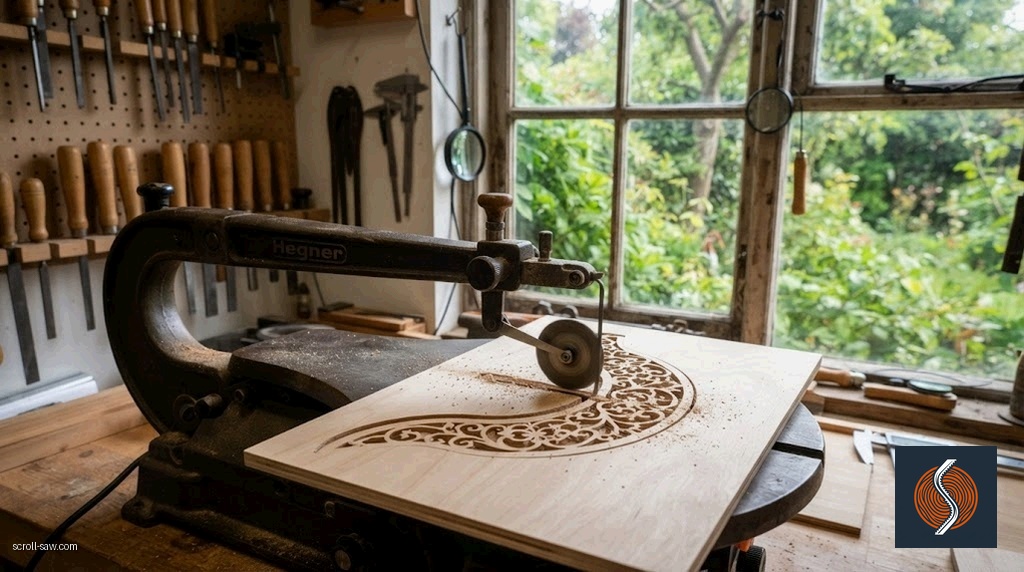
Mastercraft Scroll Saw Blades: TPI, Kerf, Radius, and Finish Explained
The first blade that came with my Mastercraft scroll saw was a 10 TPI pin-end blade that burned everything I fed it. I was cutting 1/8-inch birch ply, and the edges came out brown and ragged. I thought the saw was defective. It was not. The blade was wrong for the material. Mastercraft scroll saw blades are not one-size-fits-all, and if you are burning wood, drifting cuts, or breaking blades, the problem is almost always blade selection, not the saw.
A scroll saw blade is a thin reciprocating cutting tool held under tension between two clamps. Mastercraft scroll saws, sold primarily through Canadian Tire under the Mastercraft brand name, come in several sizes including the Mastercraft 16-inch scroll saw. These saws use standard pin-end and plain-end blades, and the blade you choose determines cut speed, finish quality, and the minimum radius you can turn.
The right Mastercraft scroll saw blade for your work depends on three things: tooth count (TPI), blade width, and blade thickness. These determine the kerf (width of the cut), the minimum cutting radius, and the surface finish. Match them to your material and you will get clean cuts. Get them wrong and you will burn, drift, or break blades.
Understanding TPI on Mastercraft Scroll Saw Blades
Teeth per inch is the most important number on any scroll saw blade. Here is how TPI affects your work on a Mastercraft saw:
Low TPI (3 to 7): Few teeth, big gullets, aggressive cutting. Good for thick stock (1/2 inch and up) and rough shaping. Leaves a rough surface. Cuts fast.
Medium TPI (8 to 12): The general-purpose range. Works for material from 1/8 to 1/2 inch. Acceptable finish. Most Mastercraft 16-inch scroll saw blades in this range are good for everyday projects.
High TPI (15 to 25): Many teeth, small gullets, slow cutting. For thin material (under 1/8 inch) and fine fretwork. Clean finish. Tight radius capability.
Very high TPI (28+): For extremely thin material, veneers, and delicate work. Very clean finish but very slow. Easy to burn the wood if you push too hard.
The rule I follow: at least three teeth in the material at all times. Cut 1/4-inch wood with a 12 TPI blade and you have three teeth in the cut. Cut the same wood with a 7 TPI blade and you have fewer than two teeth, which causes grabbing and rough cuts.
If you are looking for the best blades for Mastercraft scroll saw work, start with a mid-range TPI (10 to 15) and adjust from there based on results.
Kerf Width and What It Means for Your Project
Kerf is the width of the slot the blade cuts. It matters more than most people realize.
A standard scroll saw blade leaves a kerf of about 0.035 to 0.050 inches. Wider kerf blades cut faster and clear dust better but leave a wider gap in your workpiece. Narrower kerf blades (0.020 to 0.030 inches) are for fine work where the gap between pieces matters, like intarsia or marquetry.
On a Mastercraft scroll saw, kerf affects how tight you can turn. A wide kerf means you are removing more material, which gives you more room to steer but also weakens thin sections of your workpiece. A narrow kerf preserves material but is less forgiving if your technique is off.
If you are doing segmented cuts where pieces fit together, kerf consistency matters. A blade that wanders creates a variable kerf, and your pieces will not fit. Keep the blade sharp and properly tensioned to maintain a consistent kerf.
Minimum Cutting Radius: How Tight Can You Turn?
The minimum radius a blade can cut is determined by blade width. A narrower blade turns tighter. A wider blade resists turning.
Here is a rough guide based on blade width:
| Blade Width | Minimum Radius |
|---|---|
| 0.125 inches (1/8) | About 1/2 inch |
| 0.090 inches | About 3/8 inch |
| 0.070 inches | About 1/4 inch |
| 0.050 inches | About 1/8 inch |
| 0.030 inches | About 1/16 inch or tighter |
For the Mastercraft 16-inch scroll saw, which has a throat depth of about 16 inches, you have room for larger workpieces. But the minimum radius is still determined by the blade, not the throat. If you need to cut a tight inside corner, switch to a narrower blade. If you are cutting gentle curves on thick stock, a wider blade is fine.
Pin-End vs. Plain-End Blades on a Mastercraft Scroll Saw
The Mastercraft 16-inch scroll saw accepts both pin-end and plain-end blades, depending on the blade holder configuration. The blade system on your saw determines which type you can use.
Pin-end blades have small pins at each end that seat into notched holders. They are quick to install and remove, which is convenient for beginners. They are limited to exterior cuts or interior cuts with large pilot holes because the pins will not fit through small holes.
Plain-end blades are flat steel at both ends, held by friction in the blade clamp. They thread through small pilot holes for interior cutout work. They take longer to install but give you more flexibility.
For most Mastercraft scroll saw owners, keeping both types on hand is the practical approach. Use pin-end for quick exterior cuts and plain-end for fretwork and interior designs.
Mastercraft Scroll Saw Blade Change: The Process
Changing a blade on a Mastercraft scroll saw follows the same basic steps as most scroll saws:
- Unplug the saw.
- Release blade tension using the tension knob on the upper arm.
- Open the upper blade clamp (cam lever or set screw depending on model).
- Open the lower blade clamp.
- Remove the old blade.
- Install the new blade, teeth down and facing forward.
- Close both clamps, lower first, then upper.
- Apply tension until the blade rings when plucked.
- Check that the blade passes through the table insert slot without rubbing.
The process takes less than five minutes once you have done it a few times. The key is making sure the teeth face the right direction (down and forward) and the tension is correct.
Finding the Right Blade for Your Mastercraft
To identify the correct blades for your Mastercraft scroll saw, find the model number and type number on the nameplate. The nameplate is usually on the back of the motor housing or on the base. The serial number may also be listed. With the model number, you can look up the owner manual and parts diagram, which will specify the blade type and size.
An exploded view of your saw, found in the parts diagram, shows every component including the blade holder, blade clamp, and table insert. If you need a service part number for a replacement, the exploded view is where you find it.
The Mastercraft 16-inch scroll saw blades are standard sizes, available from several manufacturers. You do not need to buy Mastercraft-branded blades specifically. Any quality scroll saw blade of the correct type (pin-end or plain-end) and TPI will work, as long as the length and pin diameter match.
Check the speed range and motor rating on the nameplate to understand what your saw can handle. Most Mastercraft scroll saws have a speed range suitable for wood and soft materials. If your saw has variable speed, you can slow down for metal and plastic. The table bevel angle lets you cut angles, but it does not affect blade selection.
If you are buying blades for the first time, get an assortment pack with multiple TPI ratings. This lets you test different tooth counts on your typical materials and find the sweet spot.
Common Problems and Their Blade-Related Causes
Burning: Blade is too fine for the material, or the blade is dull. Try a coarser blade or replace the current one. Slow down your feed rate.
Rough finish: Blade is too coarse for the material. Move to a higher TPI blade.
Blade drift: Blade is not tensioned properly, or the blade clamp is worn. Check tension first, then inspect the clamp jaws.
Blade breakage: Overtensioning, worn clamps, or wrong blade for the material. Back off tension a quarter turn and check the clamps.
Tearout on the underside: Use a reverse-tooth blade, which cuts on the upstroke for the last few teeth and cleans the bottom face.
Conclusion
Mastercraft scroll saw blades are the single biggest factor in how your projects turn out. The saw is just the motor and the arm. The blade does the cutting. Match your TPI to your material thickness, keep three teeth in the cut, choose the right blade width for your radius, and keep your clamps clean and tight. If you are burning wood, try a coarser blade. If your finish is rough, go finer. The right blade solves most problems before they start.
FAQ
What are the best blades for a Mastercraft scroll saw? The best blade depends on your material and project. For general work, a 10 to 15 TPI blade is a good starting point. For fine fretwork, go to 20+ TPI. For thick stock, use 7 to 10 TPI.
What size blades does the Mastercraft 16-inch scroll saw use? The Mastercraft 16-inch scroll saw uses standard 5-inch pin-end or plain-end blades. Check your owner manual or the nameplate for the exact specification.
How do I change the blade on a Mastercraft scroll saw? Unplug the saw, release tension, open the upper and lower blade clamps, remove the old blade, insert the new blade teeth-down, close the clamps, and reapply tension until the blade rings.
Why is my Mastercraft scroll saw burning the wood? The blade is likely too fine for the material, or the blade is dull. Try a coarser blade (lower TPI), slow your feed rate, or replace a worn blade.
Can I use non-Mastercraft blades on my Mastercraft scroll saw? Yes, any standard scroll saw blade of the correct type and size will work. You do not need to buy Mastercraft-branded blades specifically.
What is the difference between pin-end and plain-end blades? Pin-end blades have pins at the ends that seat into notched holders. They are quick to change but cannot thread through small holes. Plain-end blades are flat and can thread through pilot holes for interior cuts.
How tight should the blade be on a Mastercraft scroll saw? Tight enough to ring clearly when plucked, like a guitar string. If it sounds dull, it is too loose. If it sounds like it might snap, back off a quarter turn.
What TPI should I use for 1/4-inch wood? A blade with 12 to 15 TPI is ideal for 1/4-inch material. This keeps at least three teeth in the cut and produces a clean finish.
References
- Occupational Safety and Health Administration (OSHA), Machine Guarding: https://www.osha.gov/machine-guarding
- Scroll Saw Woodworking and Crafts magazine, blade selection and tensioning guides
- Mastercraft owner manuals and parts diagrams (model-specific documentation)


