
Pégas Scroll Saw Blade Clamp: TPI, Kerf, Finish
Pégas Scroll Saw Blade Clamp: TPI, Kerf, Radius, and Finish Explained
I was cutting a compound curve in cherry, the kind of cut where the line twists back on itself and the blade has to change direction mid-stroke. Halfway through, the blade started leaving a wider kerf on the right side than the left. I checked the blade, checked the tension, checked the speed. Everything was right. What I had missed was the clamp. The lower blade clamp had loosened just enough to let the blade shift a fraction of a millimeter on each stroke. That tiny shift was enough to ruin the cut.
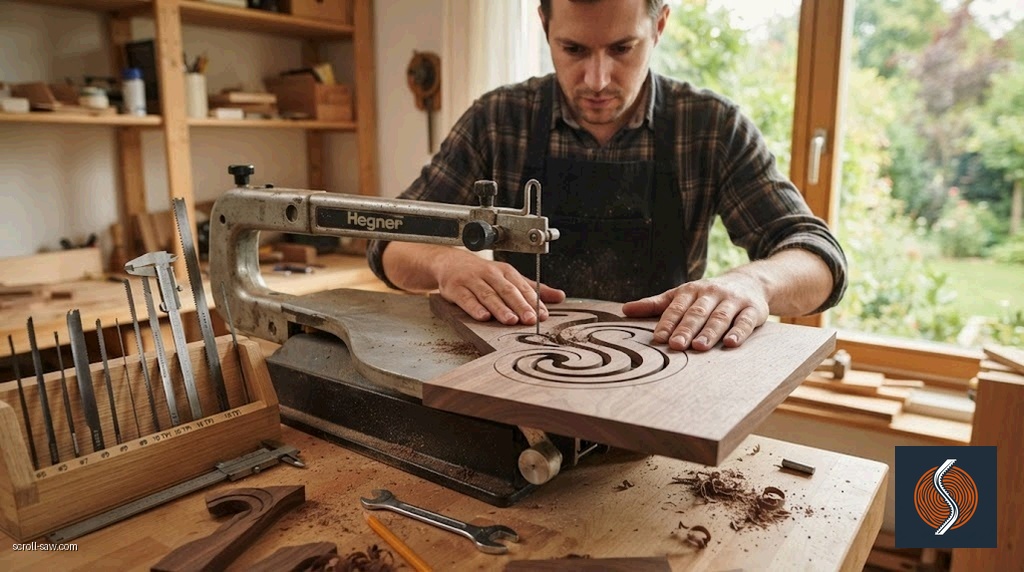
A Pégas scroll saw blade clamp is the mechanism that secures the blade in the saw’s chuck head. It is the direct contact point between the saw and the blade, and it determines whether the blade runs true or wanders. The clamp affects four things that matter to every cut: TPI performance, kerf width, turning radius, and surface finish. If the clamp is not right, none of those four will be right either.
The short answer: a properly clamped blade runs straight, produces consistent kerf, turns at the radius the blade was designed for, and leaves the finish the blade is capable of. A poorly clamped blade wanders, widens the kerf, reduces the effective turning radius, and degrades the finish. The clamp is the foundation, and everything else builds on it.
How the Clamp Affects TPI Performance
TPI (teeth per inch) determines how the blade interacts with the material, but only if the clamp holds the blade rigidly. A blade that moves in the clamp effectively changes its cutting geometry on every stroke.
When a fine-tooth blade (20+ TPI) is properly clamped, each tooth takes a consistent, small bite. The cut is clean and controlled. When the same blade is loosely clamped, the blade shifts slightly on each stroke, and some teeth take bigger bites than others. The result is an inconsistent cut with some areas clean and some areas rough or torn.
With coarse blades (7 to 10 TPI), a loose clamp is even more problematic. Each tooth takes a large bite, and the cutting force is higher. A loose clamp under high cutting load lets the blade deflect, which can cause the blade to grab the material, jump, or even break. The clamp must hold firmly enough to resist the cutting force without introducing play.
Pégas blade clamps use a precision clamping system that grips the blade across a wide contact area. This distributes the clamping force evenly and reduces the risk of localized blade damage. The wider contact area also means the blade is less likely to shift under load, which is why Pégas clamps are valued for production work where consistency matters.
Kerf: Why Clamp Alignment Matters
Kerf is the width of the cut the blade makes. It is determined by blade thickness and tooth set (how far the teeth bend left and right from the blade body). But kerf only stays consistent if the blade runs in a single plane, and that is the clamp’s job.
A properly clamped blade produces a kerf that is the same width from top to bottom. The cut walls are parallel, and the waste piece slides out cleanly. A loosely clamped blade wobbles, producing a kerf that varies in width. The cut walls are uneven, the waste piece binds, and the surface finish is rough.
Kerf width matters for two reasons. First, a wider kerf removes more material, which means more waste and looser-fitting joints. Second, a wider kerf on tight curves means the blade removes material from the inside of the curve, making the turn radius effectively larger. A blade that should cut a tight curve cannot, because the extra kerf width eats into the turning space.
The clamp also affects kerf through alignment. If the upper and lower clamps are not in line, the blade runs at an angle. The kerf is wider on one side, the cut is not vertical, and pieces cut with that blade will not fit together properly. This is especially critical for intarsia and marquetry, where pieces must fit precisely.
Turning Radius and Clamp Rigidity
The minimum turning radius of a scroll saw blade is determined by blade width, but only if the clamp holds the blade rigidly. A blade that flexes in the clamp has a larger effective turning radius than a blade that is held firm.
Here is why. When you turn a curve, you rotate the workpiece while the blade cuts. The blade must stay vertical and resist the side force of the turn. A rigidly clamped blade stays vertical and can turn at its designed minimum radius. A loosely clamped blade flexes under the side force, the cut widens, and the effective turning radius increases because the blade is cutting a wider path.
For fine fretwork with tight interior curves, this is the difference between a clean cut and a ruined piece. A #2/0 blade with a 0.010-inch width should be able to turn in a very tight radius. But if the clamp lets the blade flex, the effective turning radius doubles or triples, and the pattern detail is lost.
Pégas clamps address this with a precision guide system that supports the blade near the cutting zone. The guide system reduces blade flex by supporting the blade above and below the cut. But the guide system only works if the clamp holds the blade firmly. The guide and the clamp work together: the clamp holds the blade, the guide supports it, and the blade runs true.
Surface Finish: The Clamp’s Hidden Role
Surface finish is what most scrollers care about, and it is where the clamp’s influence is most visible. A clean, smooth cut surface means less sanding and a better-finished piece. A rough, torn surface means hours of sanding or a piece that does not meet quality standards.
The clamp affects finish in three ways. First, a rigidly clamped blade produces consistent tooth marks. The surface may have visible tooth marks, but they are uniform and easy to sand. A loosely clamped blade produces irregular tooth marks, some deep, some shallow, that are harder to sand out.
Second, a rigidly clamped blade reduces tear-out on the bottom of the cut. Tear-out happens when the blade exits the material and the teeth pull fibers out instead of cutting them. A blade that is held firm exits cleanly. A blade that wobbles tears fibers.
Third, a rigidly clamped blade reduces burning. Burning happens when the blade rubs the cut walls instead of cutting cleanly. A blade that wanders in the clamp rubs more, heats up, and burns the wood. A blade that runs straight cuts clean and stays cool.
Choosing the Right Pégas Clamp for Your Work
For general scroll work, the standard Pégas clamp that comes with the saw is usually adequate. If you are getting clean cuts and the blade is not slipping, the clamp is doing its job.
For fine fretwork and portrait work, consider the Pégas SCP C100 clamp kit. This kit is designed for precision work with fine blades. The clamping surfaces are machined to tighter tolerances, which means better grip on small blades and less blade shift during tight turns.
For production work with frequent blade changes, look for a clamp system that releases and re-grips quickly without losing alignment. Some Pégas clamp systems allow tool-free blade changes while maintaining alignment, which saves time in a production environment.
For thick stock and aggressive cutting, make sure the clamp can handle the cutting force. A clamp that works fine on thin material may let a thick blade shift under the higher loads of cutting half-inch hardwood. Check the clamp’s blade thickness rating.
Maintaining Your Blade Clamps
Blade clamps wear. The clamping surfaces get grooved from repeated blade installations, and the mounting hardware can loosen from vibration. Here is how to keep them working.
Inspect the clamping surfaces regularly. If you see grooves or wear marks, the surface is no longer flat and the blade will not grip evenly. Some Pégas clamps have replaceable jaw inserts, so you can swap the worn insert instead of replacing the entire clamp.
Check mounting hardware monthly. The screws and bolts that hold the clamp to the saw can loosen from vibration. A loose clamp introduces play into the blade, which shows up as wider kerf and chatter marks.
Clean the clamping surfaces with a small brush after each session. Sawdust and resin buildup on the clamp surfaces prevent the blade from seating properly. A clean surface means a better grip.
The Verdict
The blade clamp is the most important and most ignored part of the scroll saw. You can buy the best blade on the market, and a bad clamp will make it cut like a cheap one. The Pégas clamp system is built for precision, but only if it is maintained and matched to the blades you use.
Three takeaways: check clamp alignment before you blame the blade, replace worn clamping surfaces when they develop grooves, and match the clamp to your blade size range. A good clamp makes a good blade better. A bad clamp makes every blade worse.
FAQ
What does a Pégas scroll saw blade clamp do? It secures the blade in the saw’s chuck head, holding it under tension and in alignment so the blade tracks straight during cutting. The clamp is the direct contact point between the saw and the blade.
How does the clamp affect kerf width? A properly clamped blade produces a consistent kerf because the blade runs in a single plane. A loosely clamped blade wobbles, producing a wider, inconsistent kerf that affects fit and turning radius.
Can a loose clamp cause burning? Yes. A loose blade wanders in the cut and rubs the cut walls instead of cutting cleanly. The friction heats the blade and burns the wood. Tightening the clamp often solves burning that is not caused by the wrong TPI.
How do I know if my blade clamp is worn? Signs include blade slipping during cuts, inconsistent kerf width, chatter marks on the cut surface, and difficulty maintaining blade tension. Inspect the clamping surfaces for grooves or wear marks.
What is the Pégas SCP C100 clamp kit? It is a precision clamp kit designed for fine scroll work with small blades. The clamping surfaces are machined to tighter tolerances for better grip on fine fretwork blades and less blade shift during tight turns.
How does the clamp affect turning radius? A rigidly clamped blade can turn at its designed minimum radius. A loosely clamped blade flexes under side force, which widens the cut and increases the effective turning radius, making tight curves impossible.
Should I replace my clamp or my blade first? If you are getting poor cut quality, check the clamp first. A new blade in a worn clamp will still cut poorly. Replace or service the clamp, then evaluate whether the blade also needs changing.
How often should I clean my blade clamps? Clean the clamping surfaces after each session with a small brush to remove sawdust and resin. Check mounting hardware monthly for tightness. Inspect clamping surfaces for wear every few months or whenever cut quality degrades.
References
- Pégas by Niqua, clamp system documentation and product specifications, pegas.swiss or niqua.ch
- Fine Woodworking, scroll saw maintenance and setup, finewoodworking.com
- Scroll Saw Woodworking and Crafts magazine, blade clamp reviews, scrollsawer.com
- Wood Magazine, scroll saw troubleshooting and maintenance, woodmagazine.com


