
Spiral Scroll Saw: Which Saws and Blades Handle Spirals Best
Spiral Scroll Saw: Which Saws and Blades Handle Spirals Best
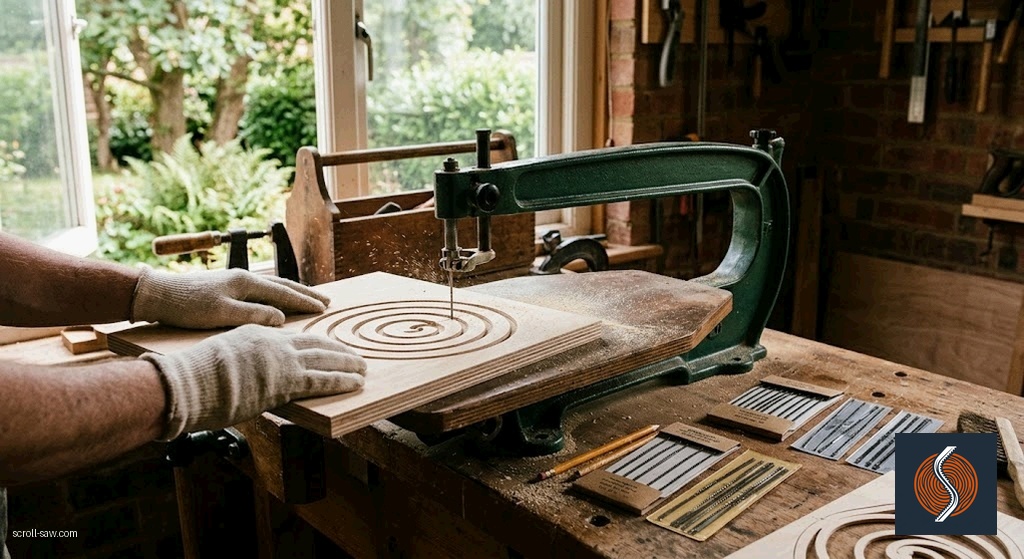
The phrase “spiral scroll saw” is a small confusion. Nobody sells a scroll saw specifically for spiral blades. What people mean when they type it into a search bar is: which scroll saws run spiral blades well, and what kind of work does a spiral-capable saw do? Those are useful questions, and they have concrete answers.
This guide walks through what makes a scroll saw “spiral-capable,” which saws handle spirals cleanly, and how the size and tooth geometry of a spiral blade interact with the saw and the material.
What makes a scroll saw spiral-capable
Three features:
Plain-end blade support. Spirals are only sold in plain-end (pinless) form. A pinned-only scroll saw cannot run spirals directly. Either buy a plain-end saw or install a pinless conversion adapter.
Adequate blade tension range. Spirals need higher tension than a similarly-sized flat blade. The saw’s tension mechanism needs enough range to properly tension a size 5 spiral without maxing out.
Rigid clamps that resist rotation. Spirals put lateral force on the clamp. Loose clamps allow the blade to rotate around its long axis, which spins the teeth sideways and stops the cut. Set-screw and lever clamps handle this better than loose thumb wheels.
All three matter. Missing any one of them turns spiral work into an exercise in frustration.
The saws that handle spirals well
DEWALT DW788 20-inch
The DEWALT DW788 is the reference spiral-capable scroll saw. Tool-free lever clamps grip plain-end blades firmly and resist rotation. Variable speed goes low enough (down to about 400 SPM) for controlled spiral feed rates in dense hardwood or metal.
Drawback: pricier than 16-inch imports. Blade clamps have a slight learning curve on seating.
Best for: serious spiral work. Skip if: budget is tight or your projects fit in a 16-inch throat.
WEN 3922 16-inch
The WEN 3922 handles spirals well enough for hobby use. Thumb-screw plain-end clamps hold size 5 spirals reliably; smaller sizes (2/0 and finer) need extra care in seating.
Drawback: thumb screws work loose on long runs. Check every 10 minutes on new spirals.
Best for: hobbyists who spiral occasionally alongside straight-blade work. Skip if: you spiral every day (upgrade to the DW788).
Bucktool 22-inch variable-speed
The Bucktool 22-inch variable-speed scroll saw explicitly lists spiral blade compatibility at 43 and 47 TPI, along with straight-tooth blades from 10 to 25 TPI. 360 SPM low speed handles spiral feed rates in dense material.
Drawback: heavier and larger than 16-inch hobby saws; reputation less established than DeWalt or WEN.
Best for: large-throat spiral work, especially on bigger workpieces. Skip if: 16 inches of throat is enough for your work.
Converting a pinned saw to spiral-capable
If you already own a pinned saw, do not sell it to buy a spiral-capable saw. Install a pinless adapter first.
-
Olson AC49610 for Central Machinery and older Delta.
-
Universal Pin-Less Adapter for WEN, Ryobi, and other 15-inch imports.
-
Proxxon 28747 spiral blade holder for Proxxon DS 230/E.
Once converted, the saw runs any plain-end spiral. The conversion costs a fraction of a new saw.
Which spiral blades to run
General spiral work in 1/4 to 3/4 inch wood
Olson SP46500 Universal #4. 36 TPI, 0.041-inch kerf. Cuts hardwood, softwood, and plywood in the middle thickness range. The workhorse spiral for hobby scrollers.
Drawback: 36 TPI is slow on thick stock.
Best for: general omnidirectional cuts. Skip if: your work is under 1/8 inch (use a finer spiral).
Premium finish spiral
Pégas Spiral Size 5, 48 TPI. Swiss-made, milled teeth, 0.024-inch diameter. Cleaner finish than Olson at the same size. Rated for wood, plastic, ferrous and nonferrous metals, bone, and wax.
Drawback: pricier per blade.
Best for: work that will be finished under stain or clear coat where cut quality shows. Skip if: heavy paint hides the cut edge anyway.
Fine detail and fret work
Flying Dutchman New Spiral #3/0. Six-dozen packs. Fine spiral for fret work, ornament letters, and small marquetry.
Drawback: extremely fragile.
Best for: intricate fret work and letter cutting. Skip if: you are new to spirals (start with size 5).
Reverse spiral for double-sided work
Olson FR49202 reverse tooth for reverse-tooth spiral work that leaves clean cuts on both top and bottom of the workpiece.
Drawback: standard reverse tooth (not omnidirectional spiral); cuts in one axis.
Best for: work where both surfaces of the wood will be visible. Skip if: only the top surface matters.
Spiral tooth geometry, quickly
Spirals come in several tooth geometries. What each does:
Standard spiral. Teeth face 360 degrees around the blade. Cuts in every direction. Slightly rough finish. This is what most “spiral scroll saw blade” packs contain.
Fine spiral (jewelers-grade). Same 360-degree tooth face, but at much finer TPI and smaller diameter. For fret work, ornament letters, and thin metal.
Reverse spiral (less common). Some teeth reverse direction at the bottom of the blade to reduce tear-out on the underside. Rare in spiral form.
Metal-cutting spiral. Higher-carbon or high-speed steel, higher TPI, finer diameter. For brass, copper, aluminum, thin steel, and jewelry work.
Most hobby scrollers use standard spirals and never miss the specialty types.
Material considerations
Spirals cut most materials, with feed-rate adjustments:
-
Hardwood (oak, maple, cherry, walnut): standard feed, size 5 spiral.
-
Softwood (pine, cedar): faster feed possible, watch for pitch buildup; use beeswax on the blade.
-
Plywood (Baltic birch, hardwood ply): standard feed, works well.
-
MDF: medium feed, generates fine dust (use dust collection).
-
Acrylic: slow feed, low saw speed; heat is the enemy.
-
Brass, copper, aluminum: very slow feed, cutting lubricant, size 5 or finer metal spiral.
-
Thin steel: slowest feed, metal-cutting spiral only, cutting oil mandatory.
Verdict
A “spiral scroll saw” is any plain-end scroll saw with adequate tension range and firm clamps. The DEWALT DW788 is the reference; the WEN 3922 is the budget starter. If you already own a pinned saw, convert it with a Olson AC49610 or universal adapter rather than buying new. Run Olson SP46500 or Pégas Size 5 as your first spirals, and add fine sizes only when a project demands them.
FAQ
What is a spiral scroll saw? Any scroll saw capable of running spiral (helically-toothed) plain-end blades. Requires plain-end blade support and adequate clamp rigidity.
Can all scroll saws use spiral blades? No. Pinned-only scroll saws cannot use spirals without a pinless conversion adapter. All plain-end saws can use spirals.
What is the best scroll saw for spiral blades? The DEWALT DW788 for its rigid double parallel-link arm, tool-free clamps, and 400 SPM low speed. The WEN 3922 is a budget alternative.
Do spiral blades cut faster than straight blades? No. Spirals cut in all directions, which saves the time of rotating the workpiece. Actual cutting speed per unit of blade length is similar to a straight-tooth blade of the same TPI.
What size spiral blade should I use? Size 5 for general work in 1/4 to 3/4 inch wood. Size 3 for detail in 1/4 inch. Size 2/0 or 3/0 for fret work.
Can I cut metal with a spiral scroll saw blade? Yes, with a metal-rated spiral (Pégas size 5 or a jewelers-grade fine spiral) at low speed with cutting lubricant.
Do spirals leave a rougher cut than straight blades? Slightly, yes. The 360-degree tooth face leaves a scratchier finish. Light sanding is usually needed on visible edges.
References
-
DEWALT DW788 product specifications: dewalt.com
-
Olson Saw Company spiral blade catalog: olsonsaw.net
-
Pégas Sawblades product line: pegas-swiss.com
Title tag: Spiral Scroll Saw: Which Saws and Blades Handle Spirals Best Meta description: What makes a scroll saw spiral-capable, plus real saw picks (DEWALT, WEN, Bucktool) and spiral blade recommendations for wood, metal, and fret work. Slug: spiral-scroll-saw Excerpt: A spiral scroll saw is any plain-end scroll saw with adequate tension range and firm clamps. This guide covers what makes a saw spiral-capable, which specific saws handle spirals best, how to convert a pinned saw for spirals, and which spiral blades to run in each situation.


