
Best Scroll Saw Blade for Thick Hardwood: PGT and Skip-Tooth Picks
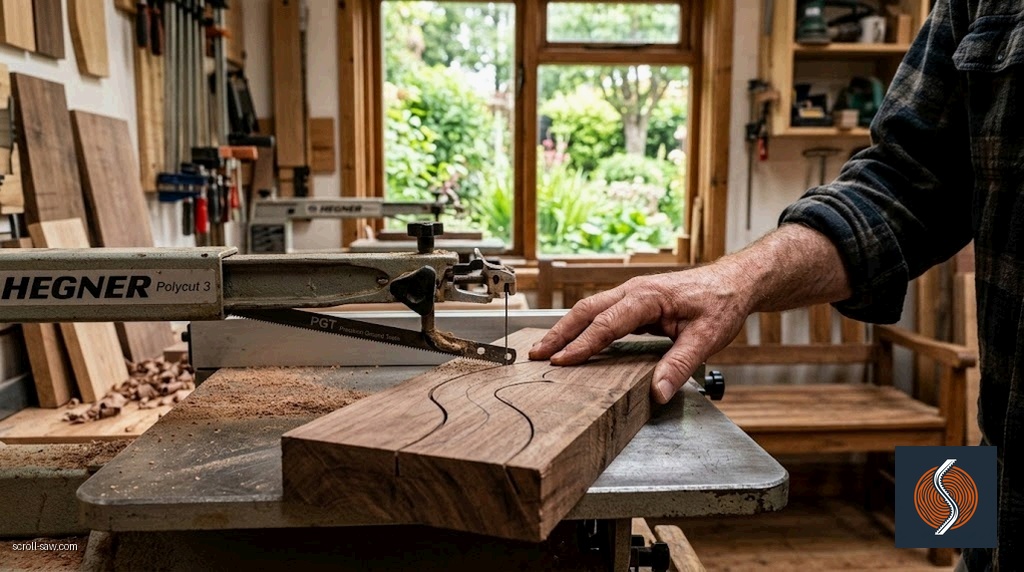
Best Scroll Saw Blade for Thick Hardwood: PGT and Skip-Tooth Picks
Thick hardwood on a scroll saw is where most hobbyists lose confidence. A blade that flew through 1/4-inch cherry now stalls in 3/4-inch oak, burns the kerf, and snaps ten minutes in. Nothing has changed about the saw or the operator. What changed is that the blade you were running has too many teeth engaged in the material for the chip clearance it offers, and the blade cannot shed chips fast enough to stay cool.
Cutting thick hardwood well is a blade problem more than a technique problem. This guide walks through what “thick” means for a scroll saw, what tooth geometries clear chips at that scale, and which specific blades hold up in the 3/4-inch to 2-inch range where hobby saws start to strain.
What counts as thick hardwood
On a hobby scroll saw, hardwood thickness ranges break down roughly like this:
-
Under 1/4 inch: thin work. Any decent skip-tooth or reverse-tooth blade cuts it.
-
1/4 to 1/2 inch: medium. Standard size 5 to size 7 skip-tooth or reverse-tooth blades.
-
1/2 to 3/4 inch: thick. Size 7 to size 9 skip-tooth, or a precision-ground double-tooth blade.
-
3/4 to 1-1/2 inch: heavy. Size 9 to size 12 coarse skip-tooth or hook-tooth blades. This is where blade choice matters most.
-
Over 1-1/2 inch: at the limit for a hobby scroll saw. Consider a bandsaw for these cuts.
This guide focuses on the 3/4-inch to 1-1/2-inch range in dense hardwoods (oak, maple, cherry, walnut, hickory). At those thicknesses, ordinary hobby blades stall.
Tooth geometry for thick hardwood
Three geometries handle thick hardwood well:
Skip tooth. Oversized gullets between teeth clear chips fast. The workhorse for thick hardwood at 6 to 12 TPI.
Hook tooth (also called crown tooth on some brands). Teeth are angled forward to grab wood aggressively on the down stroke. Cuts faster than skip tooth in thick stock but leaves a rougher finish. 6 to 10 TPI.
Precision-ground tooth (PGT). Milled instead of stamped. Sharper edges, longer life, cleaner cuts. Double-tooth designs put two teeth close together separated by a large gullet, combining chip clearance with cutting density. Best finish in thick hardwood, at a price premium.
Spirals do not belong in thick hardwood. The 360-degree tooth face generates too much heat, and spirals flex under load in thick stock.
The blades worth buying for thick hardwood
Olson PG49902 Precision Ground 12/9,6 reverse
The Olson PG49902 precision ground reverse-tooth blade is a PGT reverse-tooth blade with a coarser tooth pattern than the standard Olson PGT line. Optimized for hardwood in the 3/4 to 1-1/4 inch range. Precision-ground double teeth cut faster and cleaner than stamped equivalents.
Drawback: pricier than stamped blades. Not for stock under 1/2 inch.
Best for: hardwood 3/4 to 1-1/4 inch where cut quality matters. Skip if: your work is under 1/2 inch (use a finer PGT or a standard reverse tooth).
Olson PG497DZ PGT Double Tooth #7RG
The Olson PG497DZ Double Tooth 5-inch #7RG is a precision-ground double-tooth blade at 0.047 x 0.018 inches, 10.5/8 tooth pattern. The double-tooth geometry pairs two cutting teeth with a large gullet, delivering top-tier performance in dense hardwood.
Drawback: pricier per blade.
Best for: fine hardwood cuts in the 1/2 to 1-inch range where finish matters. Skip if: cost is a constraint or your work is under 1/2 inch.
Olson PG499DZ PGT Double Tooth #9RG
The Olson PG499DZ Double Tooth 5-inch #9RG is the same PGT double-tooth design in a larger #9 size at 0.049-inch diameter. Coarser TPI for thicker stock, still with the PGT tooth quality.
Drawback: pricier per blade.
Best for: hardwood 3/4 to 1-1/2 inch. Skip if: your work is under 1/2 inch.
Olson CT62900 Crown Tooth 6 TPI
The Olson CT62900 Crown Tooth 6 TPI is a #9 crown-tooth blade at 6 TPI, 0.053 x 0.018 inches. Rated by Olson for hardwood up to 3/4 inch and softwood up to 1-1/2 inch. Crown tooth is a specific geometry that cuts on both up and down strokes, similar in principle to reverse tooth but with a different tooth profile.
Drawback: aggressive cut leaves a rougher finish than PGT.
Best for: fast cuts in thick hardwood and softwood. Skip if: cut quality matters more than speed.
Pégas Modified Geometry #12spr
The Pégas Modified Geometry #12spr is a modified-geometry tooth blade rated for soft and hard wood up to 3 inches thick. 0.011 thick x 0.030 wide. The modified geometry minimizes burning and expels chips fast.
Drawback: pricier than Olson equivalents.
Best for: thick hardwood (over 1 inch) where standard blades stall. Skip if: your work fits within standard size 7 to 9 range (Pégas #9spr is more common).
Pégas Super Skip Tooth Size 7
The Pégas Super Skip Tooth Size 7 is a super-skip-tooth blade with wider gullets than a standard skip tooth. Cuts fast in thick hardwood while leaving a cleaner finish than a hook tooth.
Drawback: pricier than generic skip-tooth blades.
Best for: fast, clean cuts in 3/4 to 1-1/4 inch hardwood. Skip if: budget is tight (Olson skip-tooth is cheaper and adequate for less demanding work).
Olson FR41001 Reverse Tooth (for lighter thick hardwood work)
The Olson FR41001 5-inch reverse tooth #10 blade is a standard reverse-tooth blade at #10 size. Practical for 1/2 to 3/4 inch hardwood; underpowered for stock over 1 inch.
Drawback: stamped teeth rather than PGT; blade life shorter than premium options.
Best for: mid-range hardwood work. Skip if: your work is over 1 inch (use PGT #9 or a Pégas Modified Geometry).
Setup for thick hardwood
Even the right blade needs the right setup:
Blade tension: on the higher end of the saw’s range. Loose blades wander in thick stock.
Saw speed: 80 to 100 percent of top speed on variable-speed saws. Thick hardwood benefits from high SPM; low speed just wears the blade without cutting.
Feed rate: steady but not aggressive. The blade should cut without forcing. If you have to push hard, the blade is dull, wrong TPI, or your saw is underpowered.
Blade cooling: on cuts over 30 seconds, pause every 20 to 30 seconds to let the blade shed heat. Overheated blades in hardwood scorch the kerf and dull permanently.
Beeswax: rub a light coat of beeswax on the blade every few cuts. Reduces pitch buildup, which is a significant blade-life factor in resinous or exotic hardwood.
Common problems in thick hardwood
Blade burns the kerf. Too many teeth engaged, feed rate too slow, or blade dull. Move up in TPI (fewer teeth), feed more steadily, or replace the blade.
Blade stalls mid-cut. Chip clearance failing. Use a coarser skip-tooth or hook-tooth blade. Also check that the blade is fully seated in both clamps; a partially-seated blade cuts sluggishly.
Blade drifts sideways or bevels. Blade dull, tension too low, or feed pressure uneven. Replace blade, tighten tension, feed as a single unit with both hands.
Kerf closes behind the blade. Some hardwoods (particularly cherry with internal tension) close behind the cut. Use a slightly wider-kerf blade (hook tooth or crown tooth) to prevent binding, or make relief cuts.
Verdict
For most hobby scrollers working thick hardwood, the Olson PG499DZ PGT Double Tooth #9RG is the best all-around choice. Precision-ground tooth quality delivers cleaner cuts and longer life than stamped blades. For heavier work over 1 inch, upgrade to the Pégas Modified Geometry #12spr. For fast cuts where finish is secondary, the Olson CT62900 Crown Tooth delivers speed at a reasonable price. Set tension high, run the saw fast, feed steady, and take cooling breaks on long cuts.
FAQ
What is the best scroll saw blade for thick hardwood? A precision-ground double-tooth blade like the Olson PG499DZ #9RG for finish quality, or a Pégas Modified Geometry #12spr for thicker stock over 1 inch.
What TPI is best for 1-inch hardwood? Around 6 to 10 TPI. Coarser TPI clears chips faster in thick stock.
Can a scroll saw cut 2-inch hardwood? At the limit. A hobby scroll saw with a coarse skip-tooth or PGT #12 blade cuts 2-inch hardwood slowly. A bandsaw is the better tool for anything over 1-1/2 inch.
Why does my blade burn hardwood? Too many teeth engaged in the material, feed rate too slow, or blade dull. Coarser TPI, steadier feed, or replace the blade.
Should I use skip tooth or reverse tooth for thick hardwood? Skip tooth if only the top surface will be visible. Reverse tooth if both surfaces need to be clean.
Do I need a premium blade for thick hardwood? PGT blades cut cleaner and last longer, especially in dense hardwood. For occasional thick work, stamped skip-tooth blades work but need replacement more often.
How long should a blade last cutting hardwood? 30 to 60 minutes of continuous cutting for stamped blades, 60 to 120 minutes for PGT and Pégas modified geometry blades. Depends heavily on hardwood species and feed rate.
References
-
Olson Saw Company scroll saw blade catalog: olsonsaw.net
-
Pégas Sawblades modified geometry line: pegas-swiss.com
-
Flying Dutchman Scroll Saw Blades: mikesworkshop.com
Title tag: Best Scroll Saw Blade for Thick Hardwood: PGT and Skip-Tooth Picks Meta description: The best scroll saw blades for 3/4-inch to 1-1/2-inch hardwood. PGT double-tooth, crown-tooth, and Pégas Modified Geometry picks that clear chips and stay cool. Slug: best-scroll-saw-blade-for-thick-hardwood Excerpt: Thick hardwood on a scroll saw needs blades with coarse TPI, aggressive chip clearance, and enough tooth quality to stay sharp through a full cut. This guide covers the geometries that work (skip tooth, hook tooth, PGT double tooth), which specific blades hold up in the 3/4-inch to 1-1/2-inch range, and how to set up the saw for thick work.


