
How to Use a Scroll Saw Safely: Practical Habits
How to Use a Scroll Saw Safely: Practical Habits
A scroll saw is one of the safer power tools in a hobby shop, but “safer” is not “safe by default.” Real injuries do happen, and they usually come from a small set of predictable causes: hand position, workpiece control, dust, and blade behavior. This guide covers the practical safety habits that eliminate the common risks and lets you focus on the cut. None of it slows you down; it is the safety a woodworker builds into normal working technique.
Why scroll saws are safer than most saws
Compared to a table saw, bandsaw, or router, a scroll saw:
-
Cuts slower (SPM instead of RPM).
-
Uses a thin, low-mass blade that produces less force.
-
Has short blade travel (1 inch stroke).
-
Cannot easily throw the workpiece.
These features make scroll saws forgiving. But forgiving is not the same as harmless. The blade still cuts through skin, and eye and lung hazards exist on any powered saw.
The four risks to manage
Risk 1: Cutting your fingers
The blade cuts flesh as easily as wood.
Prevention:
-
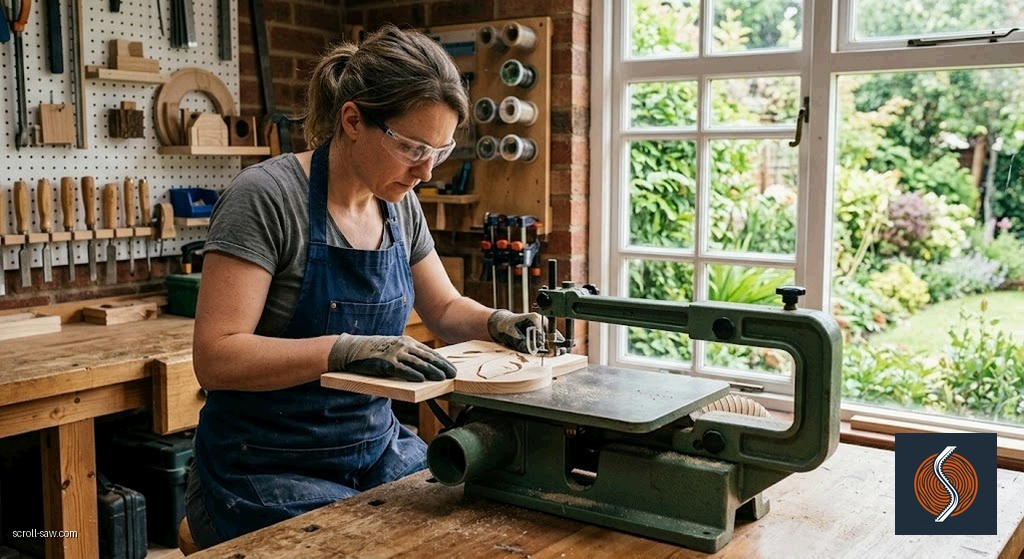
Both hands on the workpiece, not on the table beside the blade.
-
Fingers spread with palm pressure on the workpiece.
-
Thumbs behind the blade line, not in front.
-
Never cross hands over the blade line.
-
Never reach across the running blade.
-
Wait for the blade to stop before removing the workpiece.
Risk 2: Eye injury from broken blade or debris
Broken blades can whip. Dust and chips can fly toward the eyes.
Prevention:
-
Safety glasses always. Regular prescription glasses are not enough; wear over-glasses or prescription safety glasses.
-
Face shield for extended sessions or dusty operations.
-
Keep face at safe distance from the blade (not leaning in close to watch).
Risk 3: Dust in the lungs
Scroll saw work generates fine wood dust. Certain woods (walnut, cedar, tropical exotics) produce dust that can cause respiratory sensitization. Silica-containing materials (stone, some engineered materials) are more serious.
Prevention:
-
Dust mask or respirator (N95 minimum for wood dust; P100 for finer or higher-hazard dust).
-
Dust collection at the saw. Most scroll saws have a dust port; connect to a shop vac.
-
Ventilation in the shop.
-
Avoid working with materials that produce hazardous dust unless properly equipped.
Risk 4: Blade breakage
Broken blades occasionally whip or launch fragments. Rare and usually low-force, but real.
Prevention:
-
Safety glasses (covers this risk too).
-
Proper tension (over-tension is the main cause of blade break-and-launch).
-
Do not force cuts (aggressive feed increases break risk).
-
Stop and diagnose if blades break repeatedly rather than pushing through.
Additional practical safety habits
Loose clothing and jewelry
A scroll saw has less rotating exposed parts than a lathe or bandsaw, but loose sleeves, hanging jewelry, and long hair can still get caught. Tie back hair, remove dangling jewelry, roll up loose sleeves.
Bolted-down saw
An unbolted saw shifts during heavy cuts. Shift can pull your hands unexpectedly close to the blade. Bolt the saw to the bench.
Stable seating
Most scroll saw work is seated. Wobbly stools or chairs make your body position variable, which affects hand control. Use a stable stool at the right height.
Adequate lighting
Good lighting is a safety issue as much as a quality issue. You cannot avoid what you cannot see. Overhead light plus task light near the blade.
One person at the saw at a time
A second person watching from beside the saw is fine. A second person adjusting the workpiece while you feed is not. Only one pair of hands on the workpiece.
Blade guard in place
Most scroll saws have a hold-down foot near the blade. It is not primarily a blade guard, but it helps keep the workpiece flat and provides some protection. Keep it adjusted to touch the workpiece surface lightly.
Do not overreach
If a cut requires you to reach beyond a comfortable arm position, reposition instead of straining. Overreaching pulls your hands out of proper position.
Do not push through problems
If the saw is not cutting well, stop and diagnose. Pushing through a wandering cut or a struggling blade increases risk of injury.
Do not work when tired
Scroll saw work is not physically taxing, but it requires attention. Fatigue reduces attention. When you notice fatigue, stop for the day.
Material-specific safety notes
Wood
Routine safety habits cover most wood work. For high-hazard woods (western red cedar, spalted woods, tropical exotics like cocobolo or bloodwood), upgrade dust protection to P100 respirator.
Plywood
Plywood glue lines contain formaldehyde. Adequate ventilation and dust protection.
Plastic
Cast acrylic cuts cleanly with minimal hazard. Overheated acrylic can produce fumes; keep SPM appropriate to avoid melting.
PVC
PVC produces hazardous fumes when overheated or burned. Cut cool with low SPM. Do not overheat. Ventilate.
Metal
Metal cutting produces sharp chips and generates heat. Longer cuts require lubrication (beeswax for nonferrous, cutting oil for steel). Safety glasses essential.
Stone, tile, or ceramic
Standard scroll saw blades cannot cut stone. Diamond wire is required for soft stone. Cutting produces silica dust; use P100 respirator and wet the cut area to reduce airborne dust. See OSHA guidance on silica: osha.gov
Blade change safety
Blade changes involve handling a sharp blade near the saw.
Procedure
-
Turn off the saw.
-
Unplug the saw for extended blade changes.
-
Release tension fully.
-
Loosen upper clamp first, then lower.
-
Remove blade carefully (blades can be sharp along the sides as well as the teeth).
-
Discard broken or damaged blades in a safe container.
-
Install new blade with teeth facing down.
-
Seat in both clamps.
-
Re-tension.
-
Plug in and turn on only after full installation.
Blade disposal
Used blades can cut trash bags, injure trash collectors, or catch on things. Store used blades in a rigid container (empty coffee can, sealed cardboard box) before disposal.
First aid readiness
Minor cuts happen even with good technique. Basic readiness:
-
First-aid kit in the shop with bandages, antiseptic, and gauze.
-
Location awareness of the nearest running water for washing cuts.
-
Awareness of tetanus vaccination status (rusty blade cuts through the skin are a tetanus risk).
-
Phone accessible for calling emergency services in case of serious injury.
For cuts:
-
Stop the saw immediately.
-
Move away from moving equipment.
-
Apply pressure to control bleeding.
-
Wash the cut with clean water.
-
Apply antiseptic and bandage.
-
Seek medical attention for deep cuts, cuts affecting movement, or cuts with visible fat or muscle.
Recommended saws with good safety features
DEWALT DW788 for premium safety features
The DEWALT DW788 has good dust port, adjustable hold-down foot, and low vibration.
Drawback: premium price. Best for: dedicated hobbyists. Skip if: budget-limited.
WEN 3922 for hobbyist safety features
The WEN 3922 has hold-down foot and dust port at hobbyist pricing.
Drawback: thumb-screw clamps loosen; check tightness. Best for: hobbyist use. Skip if: heavy use.
Ryobi SC165VS for casual safety features
The Ryobi SC165VS has basic hold-down foot at casual pricing.
Drawback: plastic construction. Best for: casual home use. Skip if: heavy use.
Recommended blades that reduce breakage risk
Dedicated-supplier blades from reputable brands break less often from manufacturing variation:
Olson FR42401 reverse tooth #5. Consistent reference blade.
Olson PG497DZ PGT #7. Precision-ground teeth.
Pégas Skip Tooth Size 5. Swiss-made consistency.
Flying Dutchman Ultra Reverse #2/0. Fine detail without excessive breakage.
Verdict
Scroll saw safety is a set of habits that fit into normal working technique. Both hands on the workpiece with thumbs behind the blade, safety glasses always, dust protection for extended work, proper tension to prevent blade breakage, and awareness of material-specific hazards. Bolt the saw down, work with adequate lighting from a stable seat, and stop rather than push through problems. The WEN 3922 and DEWALT DW788 have adequate safety features for hobbyist and premium use respectively. Dedicated-supplier blades (Olson FR42401 #5, Pégas Skip Tooth Size 5) reduce breakage risk. Build the habits and the saw becomes a low-risk tool.
FAQ
Are scroll saws dangerous? Less dangerous than most power saws, but not harmless. The blade cuts flesh, and dust and blade breakage are real hazards. Standard safety habits eliminate most risks.
Do I need safety glasses for a scroll saw? Yes. Broken blades can whip; dust and chips can fly. Prescription glasses are not adequate; wear over-glasses or prescription safety glasses.
Do I need a dust mask for scroll saw work? For short cuts in low-hazard woods, adequate ventilation may suffice. For extended work, high-hazard woods, or plastics, wear an N95 or P100 mask.
Where should my hands be on a scroll saw? Both hands on the workpiece with fingers spread, thumbs behind the blade line. Never on the table beside the blade. Never crossing over the blade line.
What should I do if a blade breaks during cutting? Stop the saw. Wait for movement to stop. Remove workpiece. Install new blade. Verify safety glasses stopped any debris.
Can I cut stone or ceramic on a scroll saw? Only with diamond wire (not standard blades) and only soft stone. Silica dust is a significant hazard; use P100 respirator and wet the cut. Standard scroll saw blades cannot cut stone.
Is a scroll saw safer than a bandsaw? Generally yes. Scroll saws have slower blade speed, shorter blade travel, and less capacity to throw workpieces. Basic safety habits still apply.
References
-
OSHA silica dust guidance: osha.gov
-
WEN scroll saw safety documentation: wenproducts.com
-
DEWALT DW788 owner’s manual and safety notes: dewalt.com
Title tag: How to Use a Scroll Saw Safely: Practical Habits Meta description: Practical scroll saw safety habits that fit into normal working technique. Hand position, eye protection, dust management, blade safety. Slug: how-to-use-a-scroll-saw-safely Excerpt: Scroll saw safety is a set of habits that fit into normal working technique. Both hands on the workpiece with thumbs behind the blade, safety glasses always, dust protection for extended work, proper tension. Build the habits and the saw becomes a low-risk tool.


