
Diamond Scroll Saw Blades for Glass: Actually Cutting Curves in Glass
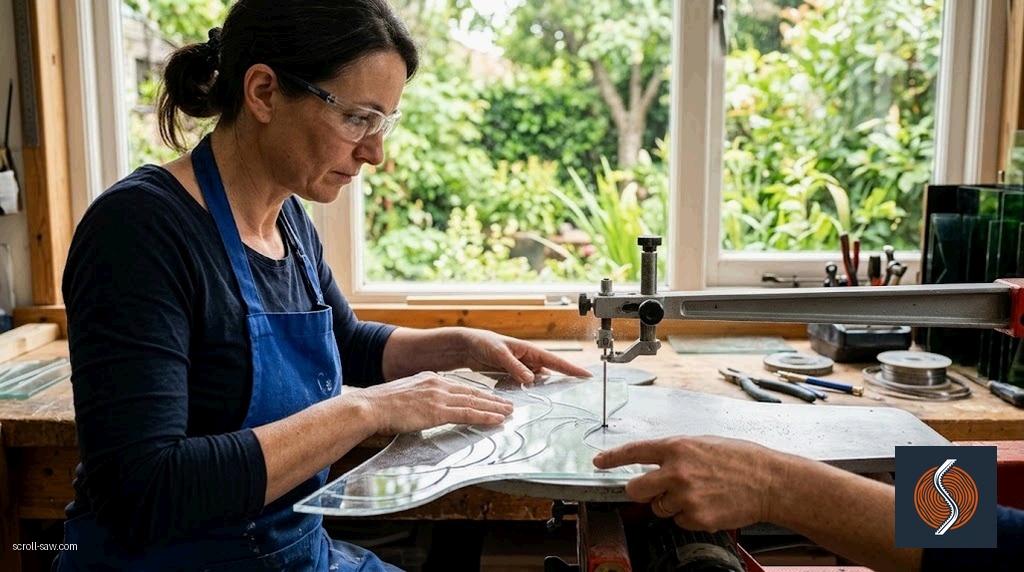
Diamond Scroll Saw Blades for Glass: Actually Cutting Curves in Glass
Every stained glass beginner learns the same lesson early: glass cutters score and break, they don’t cut curves. Convex curves work with running pliers. Concave curves fight you at every turn. That inside corner you drew on your pattern? You either grind it, chip it, or give up.
Unless you have a scroll saw with a diamond blade. Then the curve just happens.
The direct answer
A diamond scroll saw blade fitted to a plain-end scroll saw cuts glass in curved shapes traditional cutters can’t handle. Feed slowly (an inch or two per minute), keep the blade wet with water or cutting fluid, and support the glass on a rubber mat or thin plywood. Blade life is 5 to 15 feet of cutting in most stained glass. Wear cut-resistant gloves and safety glasses.
Why this works when other techniques don’t
Glass fractures along scored lines, which is why glass cutters work in straight lines and gentle convex curves. The moment you ask for a tight interior curve or a sharp corner, the fracture wants to run in whatever direction the glass structure prefers, which is rarely where you want it.
A diamond scroll saw blade doesn’t fracture the glass. It abrades a kerf through it. The blade removes material particle by particle, following exactly the line you’re guiding. The result is a real cut, in any shape.
Setup
Saw. Any plain-end scroll saw works. Variable speed helps. The DEWALT DW788 and Rikon 10-600VS are common in stained glass shops. Pin-end saws work in theory but blade options are much thinner.
Blade. A diamond wire scroll saw blade, or a diamond-coated flat scroll saw blade in the 5-inch length. Search for “diamond scroll saw blade for glass” and buy from a stained glass supplier for the widest selection.
Water supply. A small drip line, a wet sponge, or a shallow water bath around the blade. Water keeps the diamond bond cool and the glass dust from becoming airborne. Never run these blades dry for more than a few seconds.
Workpiece support. A thin plywood or rubber mat under the glass keeps it stable and dampens chatter.
Safety gear. Cut-resistant gloves, safety glasses. Glass dust is a real hazard when dry.
Technique
Feed rate: slow. An inch or two per minute is normal. Any faster and the blade heats up, the glass chips, and the cut wanders.
Feed pressure: light. Let the blade abrade. Force it and the blade wears fast, the glass chips, and the cut breaks out at the exit edge.
Blade tension: firm but not tight. Diamond scroll saw blades are stiffer than wood blades. Set the tension slightly lower than you would for wood.
Follow the pattern with clear water on the glass. Water makes the pattern visible even when the glass is wet.
Interior curves and holes. Drill a small pilot hole through the glass (with a diamond drill bit, dry or wet), then thread the diamond blade through the hole and clamp both ends. Same process as wood, just slower and wetter.
Exit strategy. As the blade approaches the far edge of the cut, slow to a crawl. The exit is where most chip-outs happen. Support the outgoing edge if you can.
What to expect
Curves are clean but the edge is frosted, not polished. You’ll typically go to a wet grinder afterward for smooth foil-ready edges. That’s normal in stained glass workflow. The scroll saw cuts the shape, the grinder finishes it.
A blade lasts anywhere from a small hobby project to a dozen larger pieces depending on the glass. Textured art glass wears blades faster than smooth cathedral glass. Antique glass sometimes has hard inclusions that eat blades.
Honest drawbacks
Slow. Cutting a 4-inch curved shape can take 5 to 10 minutes. Dedicated glass ring saws (Taurus III, Gryphette) are 3 to 5 times faster because they use continuous-loop diamond bands with better water flow.
Messy. Water and glass dust make a slurry that gets everywhere. Set up a plastic sheet or dedicated glass-cutting bench.
Blade cost. Diamond scroll saw blades cost meaningfully more per blade than wood blades, and they wear out.
Saw stress. Repeated wet cutting is not what most scroll saws were designed for. Some scrollers dedicate an older or cheaper saw to glass work to protect their main wood saw. Long-term exposure to water and glass dust corrodes tables and clogs bearings.
Who should use a scroll saw for glass: hobbyist stained glass artists doing occasional complex curves, and mixed-media makers who don’t have space for a dedicated glass saw.
Who should skip: production glass artists (get a Taurus), and anyone whose curves are all achievable with running pliers and a grinder.
The verdict
A diamond scroll saw blade opens curved glass cutting to any plain-end scroll saw owner. It’s slower and messier than a dedicated glass ring saw, but it’s cheaper to enter and covers the occasional cut a beginner or intermediate artist needs. Set up water cooling, feed slowly, wear safety gear, and treat the blade as a consumable.
FAQ
Can a WEN or Bauer scroll saw cut glass? Yes, if you can source a pin-end diamond blade. Selection is thinner but not zero. Plain-end saws have broader options.
How thick a glass can I cut on a scroll saw? Up to about 1/4” comfortably. Thicker glass slows dramatically and wears blades fast.
Do I need special water for diamond blade cooling? Plain tap water is fine. Some artists add a drop of dish soap to the water for smoother flow. Cutting fluid is better still.
Will water damage my scroll saw? Extended wet use will corrode tables and shorten bearing life. Dry the saw thoroughly after each session and consider a dedicated older saw for glass work.
Can I cut mirror on a scroll saw? Yes, but the mirror backing chips more than plain glass. Use plenty of water and expect edge cleanup.
Where do I buy diamond scroll saw blades for stained glass? Delphi Glass, Anything in Stained Glass, and Franklin Art Glass all carry them. Amazon has some options but stained glass suppliers usually have better selection.
Do these blades work on plastic or wood as a bonus? Poorly. Save them for glass and ceramic. Buy separate blades for wood.
References
-
Delphi Glass diamond blade product line: delphiglass.com
-
International Guild of Glass Artists resources: igga.org
-
Glass Craft & Bead Expo, technique demos: glasscraftexpo.com
-
Scroll Saw Association of the World, specialty material notes: saw-online.com


