
Before You Use a Precision Scroll Saw: Fit, Safety, and Performance Checks
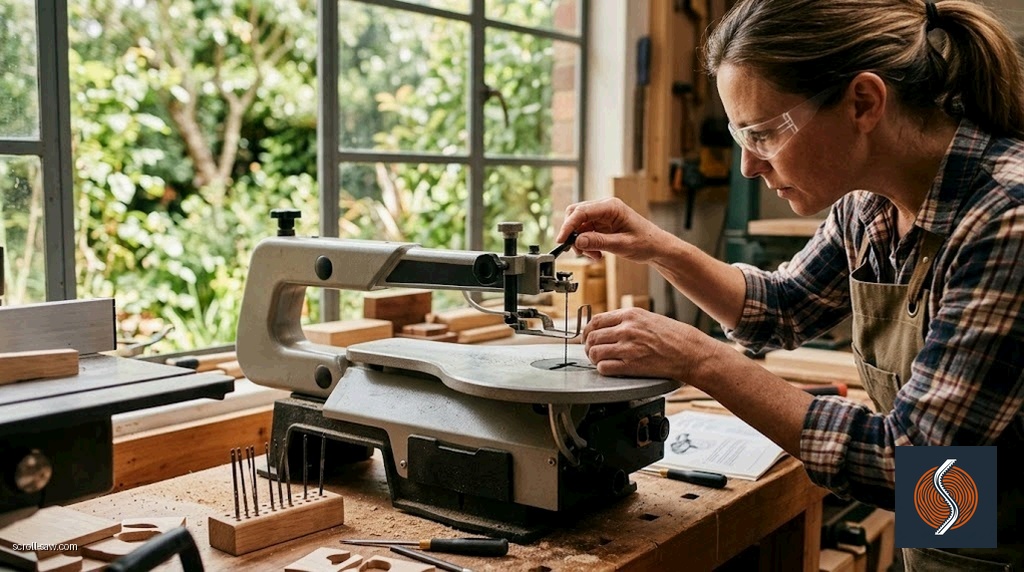
Before You Use a Precision Scroll Saw: Fit, Safety, and Performance Checks
A precision scroll saw is a higher-performance saw designed for fine fretwork, portrait art, and marquetry-level detail. The term appears in brand names (RBI Hawk, Hegner, Pegas) and in hobbyist saw descriptions.
The direct answer
“Precision scroll saw” refers to high-performance scroll saws used for fine detail work (RBI Hawk, Hegner, Pegas, Seyco, Excalibur) or to any saw used with precision technique. Before precision scroll work: verify table square to within 0.1 degrees, blade alignment to vertical, blade tension via pluck test, blade type matched to detail level, dust blower aimed at line, lighting shadow-free. Precision work amplifies any setup error.
What makes a scroll saw “precision”
Low vibration. Vibration causes blade wander.
Accurate tension mechanism. Consistent tension produces consistent cuts.
Parallelogram arm. Purely vertical blade motion.
Cast iron or precision-ground table. Flat, stable.
High-quality blade clamps. Hold blade precisely vertical.
Wide speed range. Fine spirals need very slow speed.
Smooth speed control. Precise SPM setting.
Precision scroll saw models
RBI Hawk. American-made. Among the finest ever made.
Hegner Multimax 22V / Polymax. German-engineered. Professional tier.
Excalibur EX21 / EX30. Canadian-made. 21 and 30-inch throats.
Seyco ST-21. Well-regarded.
DEWALT DW788. The accessible precision option. Hobbyist standard.
- DEWALT DW788 with DW7880 Stand and DW7881 Work Light.
Rikon 10-600VS. Entry to precision-capable tier.
Pre-use checks for precision scroll work
Table square. Verify with machinist’s square or digital angle gauge. Within 0.1 degrees.
Blade vertical. Sight down blade from front and side.
Blade type. Match to detail level. Fine spirals for portrait. Fine reverse-tooth for fretwork.
Blade tension. Pluck test. Precision work requires correct tension.
Dust blower. Aimed precisely at blade-to-workpiece contact point.
Lighting. Shadow-free direct lighting. Magnifier lamp recommended.
Speed. Slow for precision work.
Workpiece. Flat, dry, grain-free area for cut.
Pattern. High-quality transfer. Smeared patterns cannot be followed precisely.
Pilot hole location. Precisely positioned for clean interior entry.
Rest and posture. Sit comfortably. Rest arms.
Safety checks
Eye protection. Safety glasses minimum.
Hearing protection. Long precision sessions require it.
Respirator. Fine dust from hardwood. N95 or better.
Loose clothing. Roll sleeves.
Take breaks. Precision fatigue causes mistakes. Break every 20 to 30 minutes.
Blade selection for precision work
Portrait (spirals):
Fretwork (fine reverse-tooth):
Fine all-around:
Reference: Scroll Saw Workbook (3rd Edition).
Precision cutting technique
Very slow feed. More patience than standard scroll work.
Lighter touch. Let the blade cut; don’t push.
Rest hands on table. Reduce tremor.
Cut in short sections. Stop, rest, recheck position.
Magnifier lamp. 3 to 5 diopter lens.
Frequent blade changes. Fine blades dull quickly.
All interior before exterior. Critical for fragile fretwork.
Common problems in precision work
Blade wandering. Wrong blade or dull. Change blade.
Spiral blade breaking. Too much tension or feed. Reduce both.
Pattern line obscured by dust. Redirect dust blower.
Eye strain. Take break or add magnifier lamp.
Vibration at slow speed. Try slightly faster speed with lighter feed.
Blade clamp slippage. Debris in clamps. Clean before loading.
Compatible accessories
Magnifier lamp. 3 to 5 diopter. Essential for portrait and fretwork.
Stand: DEWALT DW7880 Stand for DW788. WEN Adjustable Stand for others.
Light: DEWALT DW7881 Work Light.
Foot switch. Hands-free control.
Digital angle gauge. Precise table-square verification.
Shop vac. Fine dust control.
Honest reality
Precision scroll saw work takes patience and practice. Setup quality matters more than saw tier. A well-set-up mid-tier saw produces better precision results than a poorly-set-up premium saw.
Most precision quality improvements come from: better blade selection, correct tension, slow speed, light feed, and frequent breaks.
Who benefits from a precision saw: serious portrait artists, competition-level fretwork makers, professional scroll saw workers.
Who benefits from precision technique on any saw: everyone. Same principles apply at any tier.
The verdict
Precision scroll saw work starts with careful setup: table square within 0.1 degrees, blade vertical, correct tension, fine blade matched to detail, shadow-free lighting, and slow deliberate feed. Premium precision saws deliver lower vibration but technique matters more. Any variable-speed saw with correct setup produces precision work.
FAQ
What is a precision scroll saw? A high-performance scroll saw with low vibration and accurate tension for fine detail work. Also refers to brands like Hegner, RBI Hawk, and Excalibur.
Do I need a precision scroll saw for fine fretwork? No. A DEWALT DW788, Rikon 10-600VS, or well-set-up WEN 3922 produces excellent fretwork with the right blades and technique.
Most important factor? Blade selection and tension.
What blade for fretwork? Flying Dutchman UR #2/0 to #3. Pegas SK7 for finest work.
What blade for portraits? Flying Dutchman New Spiral #3/0 or #1. Pégas Spiral #5.
How slow should I run the saw? Slowest available for spirals. Medium-slow for fine reverse-tooth.
Should I use a magnifier lamp? Highly recommended for portrait and fretwork.
References
-
Scroll Saw Association of the World: saw-online.com
-
Steve Good’s Scroll Saw Workshop: scrollsawworkshop.blogspot.com
-
Popular Woodworking: popularwoodworking.com
-
Fine Woodworking: finewoodworking.com


