
Central Machinery Scroll Saw: Selection and Setup Guide
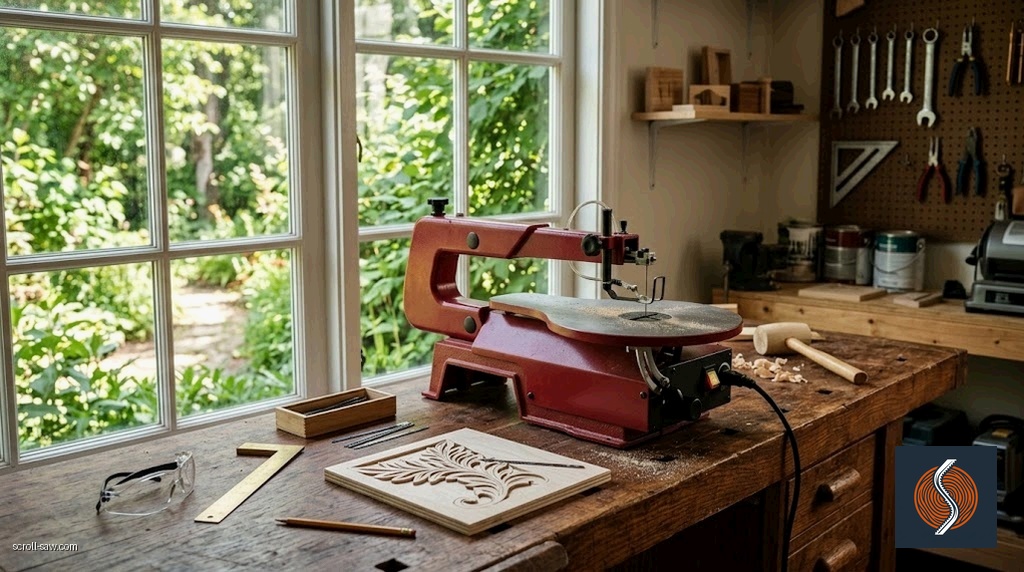
Central Machinery Scroll Saw: Selection and Setup Guide
Harbor Freight sells a family of scroll saws under the Central Machinery brand name (sometimes written “Central Machine” in listings and online chatter). They are inexpensive, they show up on used-tool listings often, and they have a reputation that ranges from “surprisingly serviceable” to “not worth the box.” Both reactions can be right, depending on which model you have and how you set it up.
After helping several friends buy, tune, and eventually decide whether to keep a Central Machinery scroll saw, here is what I have learned about the family, how to make one cut well, and where to stop trying and move on.
What Central Machinery scroll saws actually are
Central Machinery is Harbor Freight’s house brand for benchtop power tools. The scroll saw lineup has changed several times over the years. Recent and recent-past models include:
-
16-inch variable-speed scroll saw, item 93012 (older) and 62519 / 63734 (newer generations).
-
A larger 21-inch variable-speed scroll saw for occasional periods.
-
Various discontinued fixed-speed models that turn up used.
All of them share a general design: a light aluminum arm, a universal motor, a tilting table, and pin-end plus limited plain-end blade capability. They are priced at a fraction of a DeWalt DW788 and roughly a third of what a WEN 3921 costs new.
The honest ceiling on a Central Machinery scroll saw is that of an entry-level hobby tool. It will do the basic scroll-saw tasks. It will not do them as smoothly or as long as a mid-range saw. The question is whether its price makes the compromises acceptable.
The direct answer: is a Central Machinery scroll saw worth buying?
Worth buying in three specific situations:
As a test tool. You want to find out whether scroll sawing is a craft you want to pursue. A Central Machinery saw is the cheapest way to run a hundred hours at a real scroll saw before committing to a better machine. If you love the craft, you will upgrade later. If you decide it is not for you, you have not spent much.
For light seasonal use. Ornaments once a year, occasional gift plaques, small silhouettes. A Central Machinery saw stored between projects and pulled out for a few weekends will last many years. The failure mode of these saws is prolonged heavy use, not occasional use.
As a second saw for a specific task. If you already own a good scroll saw and want a second one dedicated to a rough job (cutting foam, cutting a stack of plywood ornaments for a school event, working outside your normal workflow), a Central Machinery saw is a reasonable option.
Not worth buying if you plan to do daily or weekly scroll sawing as your primary hobby. The clamps, the arm bearings, and the motor duty cycle are all entry-level. Regular use exposes the limits within months, and the upgrade path is basically to buy a WEN, a Delta, or a used DeWalt anyway.
Selection: which Central Machinery scroll saw to pick
On the used market, Central Machinery scroll saws range from nearly new to badly abused. Selection matters more than model number.
Look at the blade clamps. The clamps are the single most common failure point. Cracked plastic, stripped threads, or missing hardware means the saw will not hold blades reliably. If the clamps are visibly damaged, walk away.
Check the table. Set an engineer’s square against the blade at zero tilt. A saw that cannot get to true zero has a bent trunnion or a stripped stop screw. Fixable, but rarely worth the effort on a cheap saw.
Verify variable speed works. The speed control potentiometer sometimes fails on older units. If the saw only runs at full speed or the knob is intermittent, the fix is a replacement pot from a general electronics supplier. Simple but not trivial.
Listen for bearing noise. With the saw running, listen for the arm bearings. A smooth hum is fine. A rasping or gritty sound means bearings are worn. Replacement is possible but the parts are not always available for older models.
Check the dust blower. The flexible tube is often missing or cracked. Not a critical issue; a replacement airline hose from a pet store works fine.
Between the newer 62519/63734 models and the older 93012, the newer generation is a small step forward in casting quality and clamp design. Both work.
Setup: making a Central Machinery scroll saw cut well
The out-of-the-box performance of a Central Machinery scroll saw is uneven. Setup work is what separates the ones that cut well from the ones that frustrate.
Bolt it to a heavy surface. A Central Machinery saw weighs about 25 pounds. Sitting loose on a bench it walks and vibrates. Bolted to a two-inch plywood platform (which is then clamped or bolted to a bench), it cuts far more cleanly.
Square the table. Set a small engineer’s square against the blade. Loosen the trunnion lock and adjust the stop screw until the square shows true. Retighten. Check again after a few cutting sessions; the stop can drift.
Replace the blade clamps if worn. The stock clamps hold plain-end blades poorly on some units. If your saw drops blades or slips them under load, aftermarket clamp assemblies exist for the common Central Machinery models. Alternatively, some users adapt the DeWalt-style clamp with minor machining.
Aim the dust nozzle correctly. The stock nozzle usually points away from the blade entry. Bend the tube by hand or replace with a scrap of aquarium airline hose held to the arm with a small clamp. Aim directly at the blade entry from a slight angle above.
Add a task light. No Central Machinery scroll saw comes with adequate lighting. A magnetic-base LED task lamp from any hardware store solves this permanently.
Use quality blades. Stock Harbor Freight blades are usable for the roughest work. For any project where cut quality matters, buy Olson, Flying Dutchman, or Pégas blades. A cheap saw with quality blades cuts far better than a cheap saw with cheap blades.
A well-set-up Central Machinery scroll saw handles most beginner and intermediate projects. A poorly set-up one is the source of most of the negative reviews the brand accumulates.
Common problems and their fixes
Blade slips out of the clamp
The most common issue. The clamp shoulder is not seating the blade fully. Loosen the clamp completely, slide the blade in with slight downward pressure until it stops against the shoulder, then tighten. If the problem persists, the clamp itself may be worn or the internal grip surface is glazed. Clean with alcohol and a small brass brush. Replace if the issue continues.
Saw vibrates severely
Almost always mounting. A Central Machinery scroll saw needs a heavy or rigidly clamped base. Bolt to a piece of thick plywood that is then clamped to a bench. If the vibration continues after solid mounting, check the four rubber foot pads for even compression.
Variable speed intermittent
The speed potentiometer is failing. Replacement is a general-purpose electronics repair. If you are not comfortable with basic soldering, either accept the saw at whatever speed it works at or move on.
Motor humming without cutting motion
Stuck brushes or a bad reset switch. Unplug, remove the motor cover, check that the brushes move freely in their holders. Clean any accumulated dust. If the reset switch (circuit breaker) will not stay engaged, the switch itself may be bad. Replacement parts are hit-or-miss for older Central Machinery saws.
Table will not stay square
The trunnion stop screw is either the wrong length or has come loose from vibration. Retighten. If it still drifts, add thread locker in low strength. Do not use high-strength thread locker; you will still need to adjust the stop occasionally.
Motor overheats after 20 minutes
This is the machine’s actual duty cycle limit, not a defect. Rest the saw for ten minutes and continue. Long continuous sessions are not what this class of saw is designed for.
Dust obscures the cut line
Stock dust management is poor. Add a shop vac connection at the built-in port. Bend or replace the air blower nozzle. Add a task light. These three fixes together transform the cutting experience.
Where Central Machinery scroll saws genuinely fail
Honest structural limits:
Clamp reliability. Even after tuning, the clamps do not match the reliability of a DeWalt or a Rikon. Every few dozen cuts, expect to re-check the blade seating.
Arm accuracy. Cheap arm bearings drift over hundreds of hours. On a machine with 500 hours on it, the blade motion is measurably less true than it was new.
Fine blade capability. These saws hold #5 and coarser blades reliably. #3 and finer blades slip more often. For heavy fretwork or fine portrait work, the saw becomes a limitation.
Duty cycle. A dedicated 4-hour scroll saw session pushes the motor hard. It will complete the session, but repeated long sessions age the motor faster than a saw with an induction motor.
Parts availability. Old Central Machinery scroll saws are difficult to source parts for. If a critical component fails after five years, the saw may be effectively discarded.
None of these are dealbreakers for the light-use case. All of them matter for daily or weekly serious hobby use.
What to spend your setup budget on
Given a Central Machinery scroll saw and a small budget for tuning and accessories, priorities in order:
-
Quality blades (Olson or Pégas).
-
A magnetic-base LED task light.
-
Solid mounting (heavy plywood plate plus clamps or bolts).
-
Shop vac connection to the dust port.
-
Replacement blade clamps if the stock ones are worn.
-
A small engineer’s square for table calibration.
With all six, a Central Machinery scroll saw is a serviceable tool for hundreds of hours of light-to-moderate hobby work.
Comparison of Central Machinery versus alternatives
| Machine | New price tier | Best for | Ceiling |
| Central Machinery 16" | Lowest | Trial hobby use, occasional projects | Beginner and light intermediate |
| WEN 3921 | Low-mid | Serious beginner | Solid intermediate |
| Delta 40-694 | Mid | Beginner planning to scale up | Advanced hobby |
| DeWalt DW788 (used) | Mid-high used | Long-term hobby, semi-pro | Professional |
Who should consider it: anyone testing the craft before committing budget, or anyone who needs a second scroll saw for a specific rough task.
FAQ
Is a Central Machinery scroll saw the same as a Harbor Freight scroll saw?
Yes. Central Machinery is Harbor Freight’s house brand. The scroll saws sold by Harbor Freight under that name are the same machines.
Can I use standard blades in a Central Machinery scroll saw?
Yes. The 16-inch models accept both pin-end and plain-end blades in standard sizes. Third-party blades from Olson, Pégas, and Flying Dutchman all fit.
How long will a Central Machinery scroll saw last?
Under light hobby use (a few hours a month), many years. Under weekly heavy use (multiple hours per session), roughly two to five years before major parts wear demands attention.
Where do I find parts?
Harbor Freight stocks parts for current models through their parts department. Older discontinued models are difficult; used marketplaces and general electronics suppliers are the fallback for potentiometers, brushes, and switches.
Is variable speed on these saws worth using?
Yes. Even with a mediocre potentiometer, the range is useful for matching speed to hardwood versus plywood. Fix the pot if it fails.
Can I upgrade the motor?
Not practically. The motor and arm are integrated. If the motor fails, the saw is usually beyond economic repair for the cheap models.
Do I need to warm up a Central Machinery scroll saw?
A brief run at low speed for 30 seconds before cutting lets the mechanism reach operating condition. Not strictly necessary but a good habit.
How does it compare to a WEN 3921?
The WEN 3921 costs more but the arm, clamps, and motor are all a step better. For the difference in price, the WEN is worth it for anyone doing more than occasional weekend projects.
References
-
Harbor Freight Central Machinery scroll saw product listings and manuals. harborfreight.com
-
Scroll Saw Village community threads on Central Machinery / Harbor Freight scroll saws. scrollsawvillage.com
-
Scroll Saw Woodworking and Crafts Magazine budget-tool reviews. Fox Chapel Publishing.
Title tag: Central Machinery Scroll Saw: Selection and Setup Guide
Meta description: Where the Central Machinery scroll saw earns its price, how to set it up so it cuts well, and where to stop trying and upgrade to a mid-range saw.
URL slug: central-machinery-scroll-saw
Excerpt: Central Machinery scroll saws are inexpensive and reach a real ceiling. Here is which model to look for on the used market, how to tune one, and which upgrades make the biggest difference in cut quality.


