
Before You Use a Top Rated Scroll Saw: Setup Checks
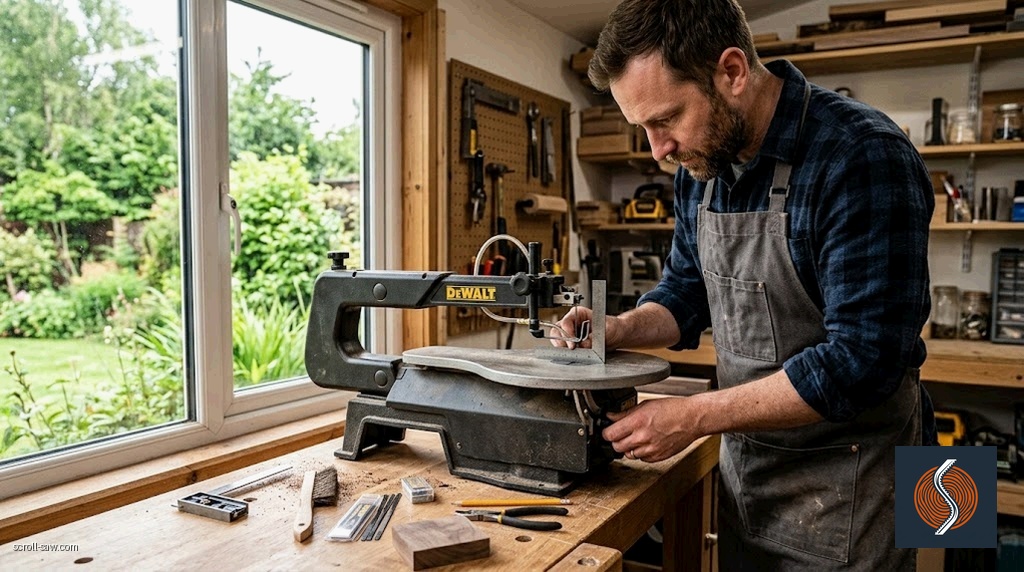
Before You Use a Top Rated Scroll Saw: Setup Checks
The phrase “top rated scroll saw” appears in every buying guide, but the meaning shifts by source. One list ranks by consumer reviews, another by expert testing, a third by sales volume. The saws that show up on most lists are similar (DeWalt DW788, WEN 3921, Rikon 10-600VS, Delta 40-694 in the popular tier; Hegner and Excalibur at the premium tier), but the reasons behind the ranking vary.
What matters more than the rating is whether the specific saw fits your work and whether you set it up so that its rated capabilities translate into finished cuts. This is a pre-use checklist for anyone about to run a top rated scroll saw, whether the rating came from Consumer Reports, from an Amazon review page, or from a scroll saw community forum.
What top rated scroll saw actually means
A saw that shows up on many “top rated” lists has a combination of features that consistently rank well:
-
Variable speed with wide range, typically 400 to 1,800 SPM.
-
Throat depth of 16 to 21 inches for its size class.
-
Tool-free or near-tool-free blade change.
-
Accepts both pin-end and plain-end blades.
-
Cast iron or heavy steel table.
-
Adjustable table tilt with reliable stops.
-
Effective dust port and air blower.
-
Reasonable duty cycle for the intended use.
-
Sufficient parts and accessory support.
Saws that meet most of these criteria at their price class tend to receive high ratings. Meeting them does not guarantee good user experience if the setup and technique are wrong.
The direct answer: pre-use checks to run
Before running any top rated scroll saw for the first time, or before starting a new project on one, run these checks.
1. Bolt or clamp the saw to a stable bench. Even the highest rated saw vibrates on a light bench. A 100+ pound bench with through-bolts through the saw’s mounting holes eliminates most vibration.
2. Square the table to the blade at zero tilt. Use an engineer’s square. Adjust the tilt stop screw so zero is truly perpendicular. Mark zero with a permanent marker.
3. Verify blade tension. Pluck the blade and listen for a clear note. Consult the saw’s manual for the appropriate tension range.
4. Test the arm motion. With the saw off, rotate the arm by hand through a full stroke. Motion should be smooth without deflection or noise.
5. Run at low speed and listen. With no workpiece, run for 30 seconds. Listen for bearing noise, unusual vibration, or motor complaints.
6. Check dust extraction. Confirm the air blower is aimed at the blade entry. Connect a shop vac to the dust port and confirm suction.
7. Confirm task lighting. No shadow on the cut line. Add a magnetic-base LED if the stock light is inadequate.
8. Verify the correct blade is installed. Match blade type and size to the intended stock. A #5 skip-tooth for general 1/4” plywood; finer for detail, coarser for thicker stock.
9. Prepare a test cut. Scrap of the same species and thickness as the project. Confirm feed rate, speed setting, and blade behavior before starting the actual work.
10. Confirm safety gear. Safety glasses on, dust extraction running, sleeves rolled, hair tied back.
Completing the checks takes five to ten minutes and prevents most first-use surprises.
Fit: matching the saw to your work
A top rated saw is only well-rated for its intended use. Match yours.
Beginners and light hobby. WEN 3921 or similar entry class. Rated well for value and simplicity. If your work is occasional and small-scale, the extra capability of larger saws is not repaid.
Serious hobby and craft-fair production. Rikon 10-600VS, Delta 40-694, or used DeWalt DW788. Rated well for balance of features, precision, and duty cycle. The mid-tier that most active hobbyists eventually own.
Semi-pro custom work. Pegas 21-inch, Rikon 21-inch, well-maintained DeWalt DW788, or older Excalibur. Rated well for precision and duty cycle at working prices.
Professional and heavy production. Hegner Multimax series. Rated well for longevity and induction-motor operation, at a price that reflects the tier.
A WEN 3921 rated “best for beginners” is not comparable to a Hegner rated “best overall.” The ratings apply within tiers, not across them.
Bench mounting: the single most impactful setup step
The difference between a well-mounted top rated saw and a poorly mounted one exceeds the difference between many rated tiers.
A stable bench. 100+ pounds. A folding table or lightweight workbench defeats the purpose of any good saw.
Through-bolts. Bolts through the saw’s dedicated mounting holes into the bench top. Nut and washer underneath.
Rubber pads. Small rubber pads between the saw base and the bench absorb some vibration. Not a substitute for bolting.
Level bench. Not perfectly level, but reasonably level. A tilted bench feeds odd forces into the workpiece.
Bench height. Adjust the bench, not the saw. Blade at elbow height standing or comfortable seated position.
Clear working area around the saw. 24 inches to each side for workpiece rotation. Space in front for pattern and blades.
Safety on a top rated scroll saw
Top rated scroll saws are safer than most because their arms track true. Standard safety rules still apply.
Eye protection. Safety glasses at every cut. Fine dust and blade fragments come off at eye level.
Dust extraction running. Shop vac at the port. Fine dust otherwise stays airborne.
Sleeves rolled, jewelry off, hair tied back. Even a smooth arm can catch loose material.
Foot off the pedal during setup. If using a foot pedal, keep the foot off until hands are clear.
Blade guard positioned. Down close to the workpiece surface. Reduces exposure of the moving blade.
Hold-down foot down. Prevents workpiece lift during the up-stroke.
Hearing protection. Not strictly required for occasional use; helpful for long sessions.
Respirator for long sessions. Fine dust benefits from a light respirator during extended cutting.
Performance verification: are you actually seeing the rating?
A top rated saw poorly set up performs like an average saw. To confirm you are seeing the rating:
Straight-line cut. Cut a straight line 12 inches long in 1/4” plywood at moderate speed. The cut should be within 1/32” of the line for its full length. If not, check tension, feed rate, and blade sharpness.
Tight-radius curve. Cut a 1/4” radius circle in 1/4” plywood. The saw should handle the tight radius without binding.
Interior cut. Drill a 1/16” entry hole and start an interior cut. The blade should thread through easily. If the entry hole is too small for the blade, adjust the bit size.
Long session. Run the saw at moderate load for 30 minutes. Motor housing should be warm, not hot. Arm should not develop any new noise.
If all four tests pass, the saw is performing to its rating. Failing any suggests a setup or maintenance issue rather than a flawed saw.
Common problems and their fixes
Saw vibrates on the bench
Bench mounting. Bolt through the saw’s mounting holes. Add mass to the bench. Confirm all four foot pads are compressed evenly.
Blade wanders on straight cuts
Tension, feed, or blade condition. Retension. Slow the feed. Replace the blade.
Table wobbles under hand pressure
Trunnion bolts loose. Retighten. On some saws, apply low-strength thread locker.
Motor hot after 30 minutes
Duty cycle. Universal motors need 5–10 minute breaks per 30–45 minutes of continuous use. Induction motors typically run continuously.
Dust obscures cut line
Air blower aim, dust extraction, and task lighting all contribute. Address all three, not just one.
Blade slips in clamp
Clean the clamp with alcohol. Verify the blade is seated fully. Replace worn clamp components.
Cut edges chip out on bottom
Use reverse-tooth blades. Reverse teeth cut on the up-stroke and clean the bottom face.
Saw walks across the bench
Insufficient mounting. Bolt firmly. Add mass if necessary.
Comparison of frequently top rated scroll saws
| Saw | Throat | Motor | Typical rating context |
| WEN 3921 | 16" | Universal | Best value beginner |
| Delta 40-694 | 20" | Universal | Best mid-range value |
| Rikon 10-600VS | 16" | Universal | Best beginner with pro features |
| Rikon 21-inch | 21" | Induction | Best pro-features value |
| DeWalt DW788 | 20" | Universal | Best serious hobby (used market) |
| Hegner Multimax | 14–22" | Induction | Best premium |
Who should skip the premium class: hobbyists whose current mid-tier saw is not the limitation on their work. A DeWalt DW788 handles nearly all hobby scenarios at a fraction of premium price.
FAQ
What is the most reliable top rated scroll saw?
By long-term reliability, Hegner Multimax at the premium tier and DeWalt DW788 at the mid-tier are consistently rated for durability. Both have long service life in professional and semi-pro use.
Are consumer reviews reliable for scroll saw ratings?
Aggregated reviews reveal general patterns but individual reviews vary widely. Cross-reference with expert reviews from Fine Woodworking or Scroll Saw Woodworking and Crafts, and with community forums like Scroll Saw Village.
Does top rated mean best for beginners?
Not necessarily. Top rated within a beginner tier (WEN 3921, Rikon 10-600VS) is different from top rated overall. Match the rating to your intended use.
How often should I service a top rated scroll saw?
Light cleaning after every session. Detailed cleaning and lubrication annually for hobby use, quarterly for daily use. Blade clamps cleaned quarterly to prevent buildup.
Does higher rating mean higher price?
Within a tier, yes. Across tiers, no. A top rated $200 beginner saw is not comparable in price to a top rated $1,500 premium saw, even if both hold the top spot in their respective lists.
How much does mounting affect performance?
Enormously. A top rated saw poorly mounted performs like a moderate saw. A moderate saw well mounted often outperforms a poorly mounted top rated saw.
Can I use any blade brand on a top rated scroll saw?
Most accept standard pin-end and plain-end blades. Match the blade size to the project. Quality blades from Olson, Flying Dutchman, or Pégas work in most top rated saws.
Should I buy new or used?
New for warranty and modern features. Used for value and access to discontinued premium models. A used DeWalt DW788 in good condition is often better value than a new mid-tier saw at a similar price.
References
-
Fine Woodworking scroll saw reviews. finewoodworking.com
-
Scroll Saw Woodworking and Crafts Magazine tool reviews. scrollsawer.com
-
Scroll Saw Village community forum. scrollsawvillage.com
-
Manufacturer documentation for WEN, Delta, Rikon, DeWalt, Pegas, and Hegner.
Title tag: Before You Use a Top Rated Scroll Saw: Setup Checks
Meta description: What top rated scroll saw actually means, and the fit, safety, and performance checks that turn the rating into finished cuts at the bench.
URL slug: top-rated-scroll-saw-checks
Excerpt: A top rated scroll saw only performs to its rating if you set it up well. Here are the fit, safety, and performance checks to run before starting any project on a saw at any tier.


