
Scroll Saw Woodworking: Setup and Technique
Scroll Saw Woodworking: Setup and Technique
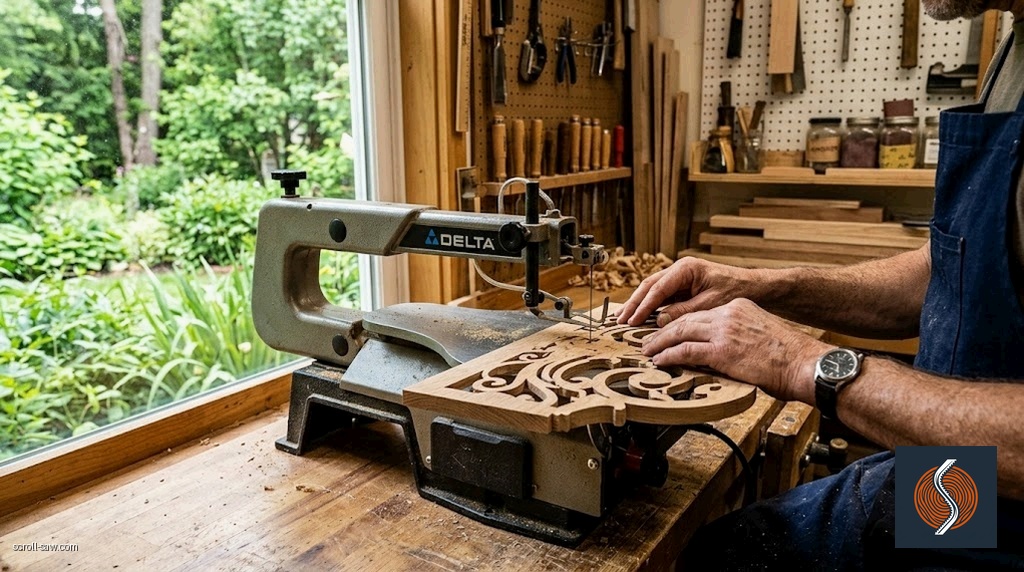
Scroll saw woodworking is a specialty within woodworking that centers on decorative and detailed cutting rather than joinery. A scroll sawyer might never own a table saw or a jointer. What they own is a scroll saw, a small drill press, sanding supplies, and pattern-preparation materials. That toolset produces a specific kind of finished work: silhouettes, fretwork, portraits, intarsia, marquetry, and small decorative pieces.
The question is how to actually get useful results from scroll saw woodworking. The answer combines setup, technique, and workflow.
What scroll saw woodworking includes
As a category, scroll saw woodworking covers:
Silhouette cutting. Single-piece decorative shapes for wall art, ornaments, and gifts.
Fretwork. Delicate cutting with many interior cuts for ornamental panels, clock faces, and decorative overlays.
Portrait cutting. Converting photographs to two-tone patterns and cutting them from thin plywood.
Intarsia. Assembling pictures from separately shaped pieces of contrasting hardwood.
Marquetry. Assembling pictures from cut veneer.
Compound cutting. Three-dimensional shapes cut from flat blanks in two directions.
Toy and small-part making. Wheels, small animals, model parts.
Custom signage and plaques. Names, addresses, and other decorative signage.
Puzzle making. Custom jigsaw puzzles from printed images on thin plywood.
All of these share the scroll saw as the defining tool. Different specialties emphasize different skills, but the underlying craft is consistent.
The direct answer: how to get useful results
Five practices produce reliably useful results in scroll saw woodworking.
Set up the saw properly. A well-mounted, well-squared saw with quality blades produces work that a poorly mounted saw cannot approach. Setup is the largest single factor.
Practice deliberately. Cut ten simple silhouettes before moving to interior cuts. Cut twenty simple projects with a few interior cuts before moving to fretwork. Skipping ahead produces frustration and mediocre results.
Use quality blades. Pégas, Olson, and Flying Dutchman blades cut cleaner than the stock blades that come with most saws. The blade is the second largest factor after setup.
Prepare patterns carefully. Repositionable spray adhesive. Clear packaging tape over delicate patterns. Interior entry holes drilled before starting to saw. Good pattern prep saves cutting time.
Finish thoughtfully. Wipe-on oil or clear spray sealer over a light sanding. Small-part finishing is faster than most beginners expect if the sanding is done well.
Applying all five to every project produces work that most beginners are surprised by within their first month.
Setup: what a scroll saw woodworking bench needs
A productive scroll saw woodworking bench has consistent features regardless of the specialty pursued.
Saw firmly mounted to a stable bench. Bolted through the saw’s mounting holes into a 100+ pound bench.
Comfortable working height. Blade at elbow height standing, or comfortable seated position.
Task lighting on the cut line. No shadow. A magnetic-base LED lamp aimed at the blade entry.
Dust extraction. Shop vac at the built-in port. Ceiling filter helpful for long sessions.
Blade storage within reach. Case sorted by size, with quality blades in each common size.
Pattern-prep supplies at hand. Spray adhesive, painter’s tape, clear packaging tape, awl, scissors, small ruler, permanent marker.
Drilling setup at hand. Cordless drill with 1/16”, 3/32”, and 1/8” bits.
Stock storage. Baltic birch plywood in 1/4” and 1/8”, basswood or poplar for hand-finished pieces, small pieces of contrasting hardwoods for intarsia.
Finishing supplies. 220-grit sandpaper, wipe-on oil finish, clear spray sealer, small brushes.
Assembly hardware. Small screw eyes, hanging cord, backing hardware, small clamps.
Pattern archive. Binder or folder system organized by category.
A bench with all of this in place supports any scroll saw woodworking project without requiring a supply run to start.
Blade selection: matching blades to stock and specialty
Blade selection matters more in scroll saw woodworking than in most woodworking specialties. The wrong blade wastes cuts, burns wood, and produces rough edges.
#5 skip-tooth or reverse-tooth. General work in 1/4” plywood and 1/2” softwood. The workhorse blade for most projects.
#3 skip-tooth. Finer work with tighter radii. Portrait faces, small ornament detail.
#2/0 to #3 for very fine work. Portrait detail, delicate fretwork bridges, small letter cutting.
#7 to #9 skip-tooth or reverse-tooth. Thick stock (3/4”) and long straight sections.
#5 to #7 modified-geometry. Hardwoods and thick stock. Cleaner cuts than standard skip-tooth on dense material.
Reverse-tooth blades. Plywood work where bottom-face chip-out is a concern.
Spiral blades. Portrait work where the cutter does not want to constantly rotate the workpiece.
Jeweler’s blades. Fine metal work up to 1/16” stock.
Keeping a full blade library sorted by size and type takes a few minutes when new blades are received. Time saved during projects far exceeds the setup effort.
Technique fundamentals
Core techniques that apply across scroll saw woodworking specialties.
Feed rate. Let the blade cut at its own pace. Push too fast and the blade wanders; push too slow and the cut burns. Watch the blade, not the pattern line, to gauge feed rate.
Turning corners. Cut past the corner, then back up slightly and turn the workpiece with the blade cutting in place. This produces cleaner corners than trying to pivot on a point.
Straight cuts. Two-hand grip on the workpiece. Feed steadily. If the blade wants to drift, adjust the workpiece angle slightly to compensate.
Interior cut sequence. Cuts that support delicate bridges last. Work from inside toward outside. Consider which cuts weaken the workpiece before starting the next.
Fresh blades for detail work. Blades near end of life produce jagged cuts on tight radii and delicate detail. Change blades more often than seems necessary.
Stack cutting. Multiple thin pieces held together with double-sided tape produce multiple identical parts from a single cut. Essential for craft-fair economics.
Compound cutting. Two orthogonal cuts on a thick blank produce a three-dimensional shape. Requires careful pattern layout and cutting sequence.
Marquetry cutting. Both pieces (foreground and background) cut in a single stack. The kerf becomes the joint.
Each technique repays dedicated practice. A single afternoon spent on turning corners produces measurably better work for years.
Sources for scroll saw woodworking content
Books. The Complete Book of Scroll Saw Patterns family. Named designer books from Sue Mey, Judy Gale Roberts, Charles Dearing, and others.
Magazines. Scroll Saw Woodworking and Crafts Magazine is the specialty publication. Fine Woodworking covers scroll saws occasionally.
Free online. Steve Good’s Scrollsaw Workshop is the largest free pattern resource. YouTube channels demonstrate specific techniques.
Community forums. Scroll Saw Village hosts discussion of technique, tools, and projects.
Association. Scroll Saw Association of the World runs an annual convention and publishes work from members.
Named designers. Direct pattern purchases from designer sites deliver curated, well-specified pattern packs.
Common problems and their fixes
Cut lines wobble
Feed rate too fast, blade tension wrong, or blade dull. Adjust each in turn.
Burning on hardwood
Speed too high or blade dull. Drop the SPM to 700–900 on dense hardwoods. Replace the blade.
Chip-out on the bottom face
Use reverse-tooth blades. They cut on both up and down strokes and clean the bottom edge.
Interior cuts have visible entry holes
Drill smaller entry holes (1/32” or 1/16”). Drill from the good face down so any chip-out is on the pattern side.
Fragile bridges break during cutting
Cut sequence. Save delicate bridges for last, after they are still supported by surrounding structure.
Portrait faces look flat
Insufficient contrast between silhouette and background, or blade too coarse. Use a #3 or #2/0 blade and cut small features (eyes, mouth) with extra care.
Intarsia pieces do not fit together
Small deviations from the pattern in individual pieces. Cut slightly outside the line and hand-fit each piece.
Stock finish takes longer than cutting
Use reverse-tooth blades that leave less to sand. Choose wipe-on finishes that require minimal preparation.
Session fatigue in long cutting runs
Take 5-minute breaks every 30 minutes. Two 45-minute sessions produce cleaner work than one 90-minute session.
Comparison of scroll saw woodworking specialties
| Specialty | Time per piece | Skill ceiling | Market fit |
| Silhouettes and ornaments | 30–90 min | Beginner to intermediate | Craft fair, gift |
| Fretwork | 3–10 hours | Intermediate to advanced | Higher-end craft fair, gift |
| Portrait cutting | 4–16 hours | Advanced | Custom commission |
| Intarsia | 15–60 hours | Advanced | Gallery, commission |
| Marquetry | 10–40 hours | Advanced | Furniture accent, custom |
| Compound cutting | 1–6 hours | Intermediate | Novelty, craft fair |
| Puzzle making | 2–6 hours | Intermediate | Craft fair, custom gift |
Who benefits most: hobbyists who enjoy detailed decorative work, gift-makers, craft-fair producers, and anyone with limited shop space who wants a productive woodworking practice.
Sustaining a scroll saw woodworking practice
A multi-year practice tends to include a few consistent habits.
Regular cutting sessions. Weekly or more often. Skills degrade quickly with long gaps.
Pattern archive maintenance. New patterns filed by category as they arrive. Old patterns culled if no longer relevant.
Tool maintenance. Blade clamps cleaned quarterly. Arm bearings checked annually. Motor brushes replaced when their length falls below the manufacturer’s specification.
Stock reserves. A working supply of Baltic birch plywood, basswood, and hardwoods so projects can start immediately when inspiration strikes.
Community engagement. Scroll Saw Village, a local scroll saw club, or the Scroll Saw Association of the World. Sharing work and problems accelerates improvement.
Skill progression. Deliberate work on techniques that stretch current ability. Not every project needs to push the ceiling, but at least occasionally reach for something harder than last month.
Photographic record. Even phone photos of finished pieces. A visual portfolio of your progress is motivating and, if you ever sell, essential.
FAQ
Is scroll saw woodworking the same as scroll saw crafts?
Heavily overlapping. “Scroll saw woodworking” emphasizes the tool’s place in a broader woodworking practice. “Scroll saw crafts” emphasizes gift and decorative work. Both cover the same core projects.
What is the best scroll saw for scroll saw woodworking?
Depends on scale. Beginner: WEN 3921. Serious hobby: Rikon 10-600VS, Delta 40-694, or used DeWalt DW788. Advanced: Pegas 21-inch, Rikon 21-inch, or Hegner Multimax.
How long to learn scroll saw woodworking?
Basic silhouette cutting: a few afternoons. Intermediate fretwork: several months of regular practice. Advanced portrait or intarsia: years of dedicated work.
Can I make a living from scroll saw woodworking?
Rare, but possible for specialists in custom commissions, high-volume craft-fair production, or teaching. Part-time income is more common than full-time.
What is the biggest mistake beginners make?
Skipping ahead to advanced projects before mastering basics. A beginner attempting a fretwork panel before cutting fifty simple silhouettes will produce frustration and mediocre work.
Do I need a drill press for scroll saw woodworking?
Helpful but not required. A cordless drill with appropriate bits and steady technique covers most entry-hole drilling.
What is the best wood for beginners?
Baltic birch plywood in 1/4” is the workhorse. Basswood or poplar for pieces that will be hand-finished.
How is scroll saw woodworking different from bandsaw work?
Scroll saw handles tighter radii and interior cuts that a bandsaw cannot. Bandsaw handles thicker stock and long straight cuts that a scroll saw cannot. The tools are complementary.
References
-
Scroll Saw Woodworking and Crafts Magazine. scrollsawer.com
-
Good, Steve. Scrollsaw Workshop. scrollsawworkshop.blogspot.com
-
Scroll Saw Village. scrollsawvillage.com
-
Spielman, Patrick. The New Scroll Saw Handbook. Sterling Publishing.
Title tag: Scroll Saw Woodworking: Setup and Technique
Meta description: Practical setup, blade selection, and technique fundamentals for productive scroll saw woodworking. What to practice, what to skip, and how to sustain the work.
URL slug: scroll-saw-woodworking
Excerpt: Scroll saw woodworking is a decorative specialty. Here are the setup, blade selection, and technique fundamentals that produce useful results in silhouettes, fretwork, portraits, and intarsia.


