
Things to Make with a Scroll Saw: Project Guide
Things to Make with a Scroll Saw: Project Guide
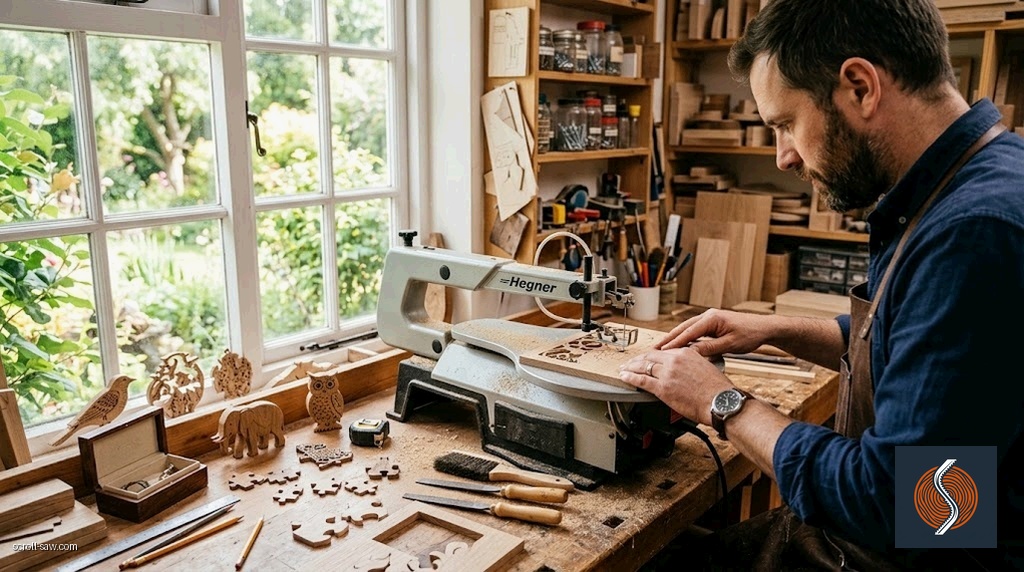
A scroll saw can make more different things than most other shop tools. The list of viable projects runs from small ornaments through complex portraits, functional shop jigs, business signage, cutting boards, jewelry, and puzzles. This range is why the tool holds its place in hobby shops even in an era when laser cutters and CNC routers are more accessible.
This piece surveys what a scroll saw can make, how to select projects that match skill and available time, and the setup and problem-solving that most projects share.
What scroll saws can make
Seventeen practical categories.
Ornaments and decorative silhouettes. Christmas ornaments, holiday decorations, personalized name ornaments, seasonal window hangings.
Wall art and signage. Decorative wall pieces, family name signs, welcome signs, business signage.
Puzzles. Custom jigsaw puzzles, letter puzzles for children, interlocking wooden puzzles.
Toys and figures. Wooden animal toys, alphabet blocks, small figures, stacking rings.
Portraits. Detailed two-tone portraits, silhouette portraits, family portrait plaques.
Fretwork. Delicate interior-cut decorative panels, fretwork boxes, clock faces with fretwork.
Intarsia. Multi-piece assembled art made from contrasting hardwoods.
Marquetry. Thin veneer inlay work using scroll saw stack cutting.
Boxes. Small keepsake boxes, band-saw-style boxes, inlaid-lid boxes.
Clocks. Wall clocks, mantel clocks, decorative clock faces.
Jewelry and accessories. Wooden pendants, earrings, hair barrettes, brooches.
Kitchen items. Cutting boards, cheese boards, spice racks with decorative cuts.
Furniture accents. Decorative panels for cabinet doors, drawer fronts, chair backs.
Shop jigs. Small custom jigs for other shop tools.
Games. Wooden game boards, tabletop game pieces, dominoes.
Educational items. Alphabet trays, geometric puzzles, teaching aids.
Compound-cut figures. Three-dimensional figurines cut from flat blanks.
Any of these can serve as gifts, sale items at craft fairs, or personal shop practice.
The direct answer: what to make first
For a new scroll saw, three project categories build skill efficiently.
Small ornaments and silhouettes. Simple exterior contours in 1/4” Baltic birch plywood. Success and confidence in the first few hours of use.
Alphabet or number cutouts. Individual letters cut on the same stock. Practice on tight interior curves without the pressure of a complex pattern.
Simple puzzles. Cut a photograph adhered to plywood into interlocking pieces. Practical result. Straightforward pattern.
By the end of three or four sessions on these categories, most beginners are ready to attempt intermediate work.
Project selection: matching to skill
Beginner (first few sessions). Simple silhouettes, small ornaments, letter cutouts, basic puzzles.
Beginner-plus (first few weeks). Silhouettes with simple interior cuts, small toys, basic name signs.
Intermediate. Detailed silhouettes with interior detail, small boxes, cutting boards with decorative accents, first fretwork attempts, small intarsia.
Advanced. Detailed portraits, complex fretwork, complete intarsia scenes, compound-cut figurines, clock cases with fretwork.
Master. Portrait-scale detailed work, gallery-quality intarsia, complex commissioned pieces.
Skipping ahead produces mediocre results. Every category above assumes basic skills from the category below.
Project selection: matching to time available
30–60 minutes. Simple silhouette, small ornament, single alphabet letter.
1–2 hours. Silhouette with interior cuts, small toy, small name plaque.
2–4 hours. Detailed silhouette, small puzzle, cutting board with accents, simple fretwork.
4–8 hours. Small box, complete puzzle set, first detailed portrait attempts.
8–20 hours. Complete intarsia piece, detailed portrait, clock case.
20–100 hours. Complex commissioned pieces, gallery-scale intarsia, portrait series.
Unrealistic time estimation causes more scroll saw project abandonment than skill limits do. When in doubt, choose the simpler project and finish it.
Project selection: matching to sale audience
For makers selling at craft fairs, online, or by commission.
High-volume sellers. Small ornaments, simple name plaques, small silhouettes. Price under $25.
Mid-tier sellers. Detailed silhouettes, small puzzles, cutting boards with decoration. Price $25–$75.
Premium items. Detailed portraits, intarsia pieces, custom commissions. Price $75–$500+.
Gift-scale items. Personalized name plaques, ornaments with specific dates or names. Bridges the volume and premium categories.
A balanced product mix serves most craft-fair vendors better than concentrating entirely at one price point.
Setup for productive project cutting
A scroll saw setup that supports project work generally.
Well-mounted saw. Bolted to a stable bench through the saw’s mounting holes.
Squared table. Engineer’s square at zero tilt.
Quality blades on hand. Pégas or Flying Dutchman in a range of sizes.
Task lighting. No shadow on the cut line.
Dust extraction. Shop vac at the built-in port.
Small drill for entry holes. 1/16” and 1/32” bits for interior cuts.
Sanding station. Small sanding drum on a rotary tool, plus 220-grit paper.
Finishing station. Wipe-on oil finishes, clear spray sealer, brushes.
Pattern preparation station. Printer, spray adhesive, clear packaging tape.
Stock storage. Baltic birch plywood, basswood, hardwood scraps organized by size and species.
Photography setup for finished pieces. Neutral background, natural light or small softbox.
Most of this is not project-specific. Once set up, the shop supports many different project categories with minimal reconfiguration.
Stock selection by project category
Ornaments and small silhouettes. 1/4” Baltic birch plywood is the workhorse. Poplar or basswood for hand-finished pieces.
Wall art and signage. 1/2” plywood or 3/4” plywood for larger pieces. Solid hardwood for premium work.
Puzzles. 1/4” or 3/8” plywood. Solid wood for premium puzzles.
Toys. Solid hardwood (maple, oak, cherry). Avoid softwoods that dent. Verify food-safe finish for infant toys.
Portraits. 1/4” or thinner Baltic birch plywood, or thin hardwood for two-tone work.
Fretwork. 1/4” hardwood or Baltic birch plywood.
Intarsia. 3/4” solid hardwoods in a range of colors. Walnut, maple, cherry, oak.
Boxes. Solid hardwood for sides. Plywood for bases. 1/4” thickness common for sides.
Clocks. Solid hardwood for cases. 1/4” plywood for backs.
Jewelry. Thin exotic hardwoods (rosewood, cocobolo, ebony, olivewood) at 1/8” or thinner.
Kitchen items. Food-safe hardwoods (maple, cherry, walnut). Verify all finishes are food-safe.
Pattern sources by project category
Steve Good’s Scrollsaw Workshop. Extensive free pattern archive, all categories. scrollsawworkshop.blogspot.com
Fox Chapel Publishing. Book collections for specific project categories. foxchapelpublishing.com
Scroll Saw Woodworking and Crafts Magazine. Regular pattern features. scrollsawer.com
Named designer sites. Sue Mey, Judy Gale Roberts (intarsia), Rick Longabaugh (intarsia), Charles Dearing.
Craftsmanship communities. Scroll Saw Village and forum-based pattern shares.
Custom pattern generation. Convert photographs to scroll saw patterns using pattern software.
Common problems across project categories
Blade wanders during cutting
Blade dull, tension incorrect, or feed too fast. Fresh blade. Verify tension. Slow the feed rate.
Cut edges chip out on plywood
Reverse-tooth blades. Painter’s tape over the cut line on delicate patterns.
Pattern lifts during cutting
Insufficient adhesive or humidity. Press pattern firmly. Wait a few minutes for adhesive to set.
Interior cuts require awkward setup
Drill entry holes before starting. Adequate size for the blade (1/16” for most work; 1/32” for very fine detail).
Delicate bridges break during cutting
Cut sequence. Save fragile bridges for last within each area. Support surrounding structure.
Finished piece does not present well
Mounting and finishing. Sand to 220 grit minimum. Apply appropriate finish. Mount on contrasting backboard for silhouettes.
Project takes far longer than estimated
Usually blade size selection or feed rate. Verify blade matches the pattern complexity. Do not rush the feed rate.
Multiple copies of a pattern are inconsistent
Stack cutting with the pattern on top. Multiple identical pieces cut simultaneously.
Comparison of project categories
| Category | Skill | Time | Market fit |
| Ornaments and silhouettes | Beginner | 30–90 min | High-volume craft fair |
| Puzzles | Beginner-plus | 1–4 hours | Gift and craft fair |
| Wall art and signage | Beginner to intermediate | 1–6 hours | Gift, custom, and craft fair |
| Detailed portraits | Advanced | 4–20 hours | Custom commission |
| Intarsia | Advanced | 15–100 hours | Gallery and custom |
| Boxes and functional items | Intermediate | 3–10 hours | Gift and premium craft fair |
| Toys | Beginner to intermediate | 1–4 hours | Gift and specialty craft fair |
Who should focus on premium categories: experienced sawyers with time to invest in individual pieces, commissioned makers, gallery sellers.
Who benefits from a mixed portfolio: most working craft-fair vendors and gift makers.
FAQ
What is the easiest thing to make with a scroll saw?
A simple silhouette in 1/4” Baltic birch plywood. No interior cuts. 30 to 60 minutes.
What sells best from a scroll saw?
Personalized name items (plaques, ornaments) consistently sell well. Small silhouettes at low price points also move quickly at craft fairs.
What is the most impressive scroll saw project?
Detailed portraits and full intarsia scenes. Both require advanced skill and significant time investment.
Can I make furniture with a scroll saw?
Decorative furniture accents (panels, drawer fronts, chair backs) yes. Structural furniture components no; the scroll saw is not the primary tool for that work.
What can I make with a scroll saw for kids?
Wooden toys, alphabet blocks, puzzles, stacking rings, name plaques. Ensure all finishes are non-toxic for young children.
Are scroll saw projects profitable?
At the volume and quality tier appropriate to time invested, yes. Not typically a full-time income unless combined with online sales, commissioned work, and pattern sales.
Do I need patterns for all scroll saw projects?
No. Freehand cutting is a valid technique, particularly for organic shapes and rough silhouettes. Patterns produce consistency and are essential for detailed work.
What is the biggest scroll saw project I can make?
Limited by throat depth. Most bench scroll saws have 16–22” throats. Larger pieces require overhead-arm saws or breaking the piece into multiple sections.
References
-
Good, Steve. Scrollsaw Workshop pattern archive. scrollsawworkshop.blogspot.com
-
Fox Chapel Publishing project books. foxchapelpublishing.com
-
Scroll Saw Woodworking and Crafts Magazine. scrollsawer.com
-
Fine Woodworking scroll saw project features. finewoodworking.com
Title tag: Things to Make with a Scroll Saw: Project Guide
Meta description: Seventeen practical categories of scroll saw projects, from beginner silhouettes to advanced intarsia, with skill and time guidance for each.
URL slug: things-to-make-with-a-scroll-saw
Excerpt: A scroll saw makes more different things than most shop tools. Here is a survey of what to make, how to match projects to skill and time, and the setup that supports project work generally.


