
General International Excalibur Scroll Saw: Specifications and Practical Notes
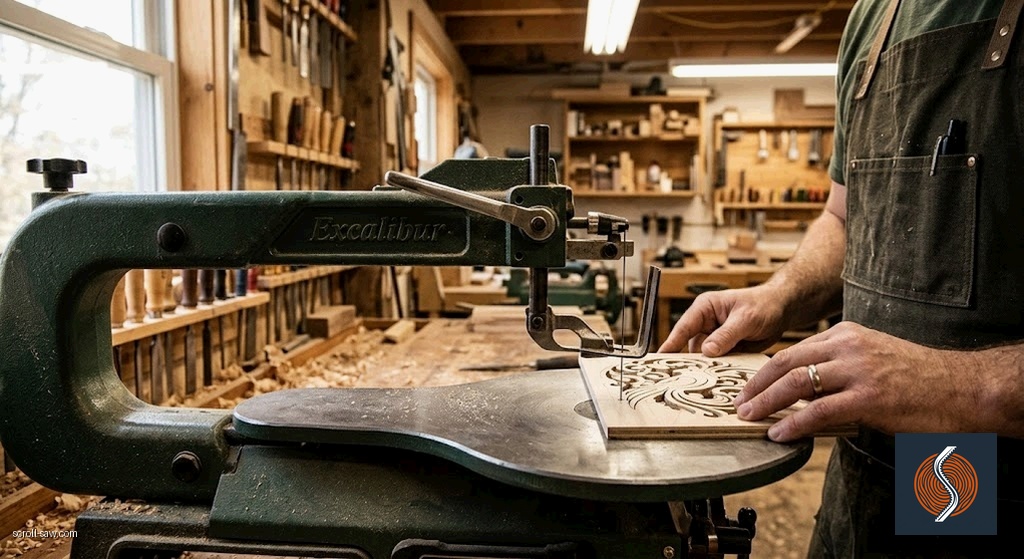
General International Excalibur Scroll Saw: Specifications and Practical Notes
General International sold the Excalibur scroll saw line during roughly 2010-2018, after acquiring rights from the original Excalibur Machine (Sommerville Design) operation and before the current-generation Seyco/Pégas partnerships. Units from this era are common on the used market. They’re capable, well-built scroll saws, but the parts-support picture is more complicated than either the older Sommerville units or the current Seyco-distributed models.
Specifications you’ll actually reference
General International-era Excaliburs (EX-16, EX-21, EX-30) typically offered:
-
16, 21, or 30 inch throat depth
-
Variable-speed motor (400 to 1550 SPM typical)
-
Approximately 2 inches maximum cutting depth
-
Tilting head design (the defining Excalibur feature)
-
Cast base with rigid arm assembly
-
Universal or induction motor depending on specific unit
-
Weight 60 to 90 pounds
-
Standard 5-inch plain-end blade compatibility
Specs read similarly to both the earlier Sommerville-era units and current Seyco production. External appearance is close across generations, but internal parts specifications differ.
What sets General International-era Excaliburs apart
Similar overall design to earlier and later generations. Same tilting-head concept, same front-mounted blade tension.
Different internal parts. Blade holders, control components, and some mechanical parts differ from both earlier Sommerville units and current Seyco units.
General International branding. Distinct from either Sommerville or Seyco/Pégas labeling on the nameplate.
Broader retail distribution. During the General International era, Excaliburs were available at more retail outlets than either before or after.
Buying a used General International Excalibur
What to check:
Motor condition. Run at both ends of the speed range. Listen for growls, watch for excessive brush sparking on universal-motor units.
Blade holder function. Both upper and lower holders grip firmly with standard 5-inch blades. Wear here is the most common used-market issue.
Tilting head mechanism. Operates smoothly through full range on both sides. Look for wear at the pivot.
Arm play. With the tool unplugged, gently move the arm. Excessive play indicates bearing wear.
Speed control. Smooth acceleration through the range. Erratic behavior signals control board issues.
Table condition. No pitting, warp, or damage. Table lock functions correctly.
Included accessories. Original manual, blade guides, and factory dust collection add real value.
Nameplate photos. Preserve model number, serial number, and General International branding before purchase for parts research.
Parts availability
Consumables (blades, brushes, belts): No issue. Standard parts from any supplier.
Blade holders: More difficult. General International-era blade holders may not match current Seyco specifications, and General International’s direct service channels are limited. Options:
-
Seyco cross-reference (sometimes possible)
-
Community forums for owner-shared parts experience
-
eBay parted donor units
Control boards: Same challenge. Not typically stocked in aftermarket channels.
Tilt mechanism parts: Same challenge.
Bearings: By number from any bearing supplier.
Table inserts: Sometimes available through Seyco, sometimes not.
Where these saws fit in the market
Better than:
-
Entry-level scroll saws (WEN 3921, Ryobi SC165VS) in refinement and precision
-
Older Excalibur Machine units in reliability of specific batches
-
Any craft-scale scroll saw
Comparable to:
-
Mid-range scroll saws (DeWalt DW788, Delta 40-694) in overall capability
-
Current Seyco-era Excaliburs in cutting quality (though parts support differs)
Less well-supported than:
-
Current Seyco-distributed Excaliburs (parts channel)
-
DeWalt DW788 (widespread parts availability)
Blade choice
Standard 5-inch plain-end blades across all Excalibur generations. Same options work across all Excalibur eras:
-
Olson FR49202 reverse-tooth for general work
-
Pégas Modified Geometry for hardwood and clean finish
-
Flying Dutchman Ultra Reverse for detailed pattern work
-
Olson SP46300 spiral for tight interior cuts
Fair-price framing
General International-era Excaliburs on the used market typically trade below the price of current Seyco-era units and above entry-level scroll saws. A working unit with all key components functional and included accessories can be excellent value; a unit with unclear condition or missing specialty parts is a much riskier purchase given parts-sourcing difficulty.
When it’s a good buy
-
Priced significantly below current-era Excalibur
-
Motor, blade holders, and tilting head all confirmed working
-
Complete accessories and original manual
-
Fair-price seller allowing pre-purchase inspection
When to walk away
-
Motor uncertainty on a universal-motor unit
-
Blade holder damage or excessive wear
-
Tilting head issues (specialty part; hard to source)
-
Missing manual or accessories
-
Priced close to current-era Excalibur retail
Setup after purchase
-
Bolt to a heavy stand or bench.
-
Clean the tool thoroughly, especially the tilt mechanism and blade holder area.
-
Install a fresh blade and verify tension is correct.
-
Test through the speed range for smooth operation.
-
Make a test cut on scrap to verify tracking.
-
Level the table to the blade at zero degrees.
-
Add a work light if not already equipped.
The verdict
General International-era Excalibur scroll saws are capable premium tools that deliver the tilting-head bevel advantage and refined cutting quality of the Excalibur lineage. Buy them for the right reasons: working condition confirmed, fair price, and awareness that parts sourcing takes more legwork than either current Seyco-era units or the DeWalt DW788. For long-term ownership, budget mental effort for parts research if something specialized needs replacement.
FAQ
How do I identify a General International-era Excalibur? Nameplate branding. General International units are labeled as such, distinct from earlier Sommerville-era or current Seyco/Pégas units.
Are General International Excalibur parts still available? Standard parts (blades, brushes, belts, bearings) yes. Specialty parts (blade holders, control boards) with more difficulty; Seyco cross-reference sometimes works.
How does a General International Excalibur compare to a DeWalt DW788? Comparable overall capability. Excalibur has tilting head (advantage) and lower vibration. DeWalt has significantly better parts support in North America.
Should I buy a used General International Excalibur? At fair price with confirmed working motor, blade holders, and tilting head, yes. Avoid units with unclear condition given parts-sourcing difficulty.
Can I get Seyco parts for a General International Excalibur? Sometimes. Some parts cross over; others don’t. Contact Seyco with your specific parts needs and generation identification.
Are General International Excaliburs still under warranty? Generally no. Original warranties from this era have expired.
What’s the biggest weakness of a General International Excalibur? Parts channel. Sits between the barely-supported original units and the well-supported current-era units.
Is a General International Excalibur worth restoring? If you have parts sources lined up, yes. If not, evaluate whether the specific unit’s condition justifies the parts-research effort.


