
Hawk Precision Scroll Saw: What to Check Before Buying or Repairing
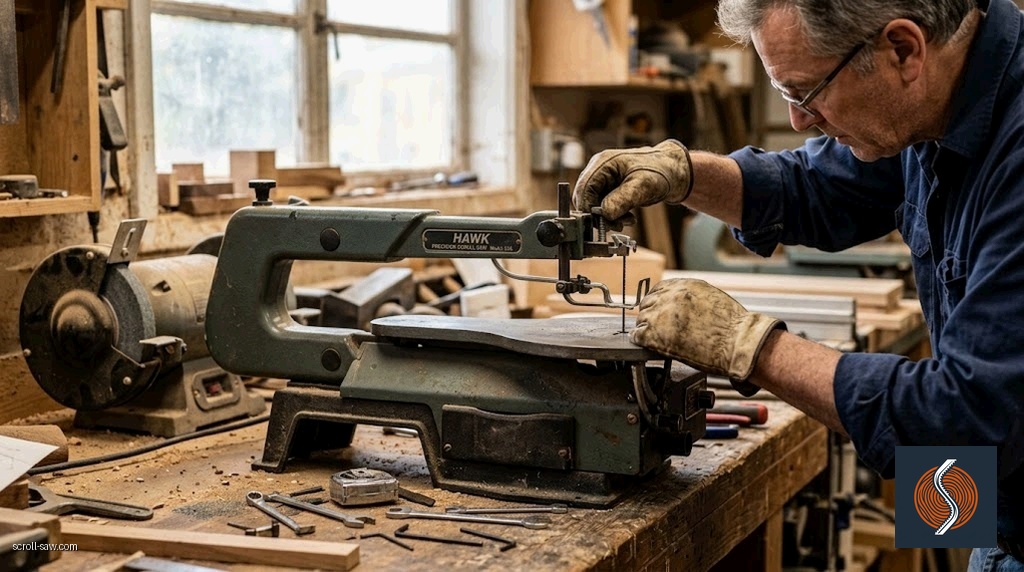
Hawk Precision Scroll Saw: What to Check Before Buying or Repairing
Hawk precision scroll saws (G4, BM Hawk, older RBI models) command premium prices new and used. That’s earned; they’re built to serve for decades. But not every used Hawk on the market is a good buy, and not every repair on an aging Hawk is economical. A short inspection checklist and a few honest repair-decision rules keep you out of the wrong deal.
Pre-purchase inspection
1. Confirm the generation and model.
Read the nameplate. Hawks have been made under RBI, RBI Industries, and now Bushton Manufacturing. Common models:
-
G4 (current-era, various throat sizes)
-
BM Hawk (Bushton Manufacturing designation)
-
Older RBI Hawks (Model 216 Ultra, Model 226 Ultra, others)
Photograph the nameplate entirely: model, serial number, manufacturer branding.
2. Motor check.
Hawks use induction motors. Symptoms of good motor: quiet running, smooth start, no vibration from the motor itself, no burning smell.
Run through the full speed range. Any unusual sound is a flag. Induction motor rebuild is expensive; a bad motor can be a deal-breaker unless the price reflects it.
3. Walking-beam mechanism.
This is the specialty component. With the saw off, gently move the arm through its range. Motion should be smooth, no clunks, no excessive play at any pivot.
4. Blade holder condition.
Install a standard 5-inch blade. Both upper and lower holders should grip firmly with no slippage. Try a test cut on scrap.
5. Table condition.
Look for pitting, warp, or damage. Verify the tilt mechanism operates smoothly and locks firmly.
6. Frame and casting.
Inspect the cast base and steel arm for cracks, damage, or repair welds. Structural damage on a Hawk is rare but effectively terminal for the unit.
7. Included accessories.
Original manual, blade tension tool, dust port hardware, foot switch (if applicable). These add real value.
8. Ownership history if available.
Hobby-use ownership by a scroll saw enthusiast is much better than unclear-use history.
Repair decision rules
Cheap fixes almost always worth it:
-
Blade holder replacement
-
Motor brush replacement (if a universal-motor variant; most Hawks are induction)
-
Drive belt replacement
-
Bearing replacement (per manual bearing numbers)
-
Table insert replacement
-
Speed control potentiometer
-
Power switch
-
Wiring cleanup
Moderately expensive but still worth it:
-
Full blade tensioning mechanism rebuild
-
Complete linkage bearing set replacement
-
Motor service by Bushton Manufacturing
-
Table refinishing
Expensive; evaluate carefully:
-
Complete motor replacement
-
Walking-beam mechanism major service
-
Frame damage repair
Not economical:
-
Motor failure on very old RBI Hawks where parts sourcing is uncertain (rare but possible)
-
Frame damage that requires welding structural castings
-
Combined multiple major failures on a very old unit
Rule of thumb: total repair cost approaching 40-50% of a comparable used Hawk price means you’re better off buying a different used Hawk.
Where parts flow
Bushton Manufacturing supports both current G4 Hawks and older RBI Hawks. Single manufacturer with decades of consistent parts channels is a defining Hawk advantage. Contact Bushton directly for parts research and service.
Community forums (Scroll Saw Village, Scroll Saw Woodworking and Crafts forum) have long-time Hawk owners who share parts experience and occasional cross-references.
Generic suppliers for standard bearings, belts, and switches by number.
Fair-price framing
Working Hawks with all key components functional typically trade 60-80% of new price on the used market. Damaged or incomplete units trade lower but require careful evaluation of parts sourcing before purchase.
Signs of a good deal:
-
Confirmed working with test cut
-
Complete accessories
-
Clean maintenance history
-
Price 60-75% of new
Signs of a bad deal:
-
Motor uncertainty
-
Walking-beam mechanism symptoms unexplained
-
Missing specialty accessories
-
Price close to new (should include seller support that used sales don’t)
Blade choice for any Hawk
Standard 5-inch plain-end blades across all Hawk generations:
-
Pégas Modified Geometry for hardwood work
-
Olson FR49202 reverse-tooth for general craft cutting
-
Flying Dutchman Ultra Reverse for detailed pattern work
-
Olson SP46300 spiral for tight interior cuts
Setup after purchase
-
Level the saw on the intended installation location.
-
Verify table alignment to blade at zero tilt.
-
Install fresh premium blade.
-
Set tension per manual specification.
-
Test cut on scrap to verify tracking.
-
Contact Bushton for any residual questions.
The verdict
A Hawk precision scroll saw is worth serious money when it’s the right one. Inspect carefully, focus on the walking-beam mechanism and motor, and buy only what you’ve confirmed working. For repairs, cheap fixes are almost always worth it and major fixes need honest math against a comparable used unit. Bushton Manufacturing’s continued parts support is a defining Hawk advantage; use it. These tools reward the owner who treats them well and can be a lifetime purchase for serious scroll saw work.
FAQ
How do I identify a Hawk scroll saw generation? Nameplate. Look for RBI Industries (older) or Bushton Manufacturing (current). Model number specifics also identify the generation.
Are older RBI Hawks still supported? Yes, through Bushton Manufacturing. Single manufacturer with continued support.
What’s the most common Hawk problem? Blade holder wear on heavily used units. Standard wear item, replaceable.
Is a used Hawk a good buy? At fair price with confirmed working condition, yes. Hawks hold value because they earn it.
Can I service a Hawk myself? Basic service (blade holders, belts, bearings) yes. Motor and walking-beam major service benefit from Bushton direct.
How does a Hawk compare to a DeWalt DW788? Different tiers. Hawk is premium (US-made, induction motor, walking-beam design). DW788 is mid-range but very capable.
Where do I buy Hawk parts? Bushton Manufacturing directly. Standard parts from generic suppliers with correct specifications.
Should I repair or replace an old Hawk? Depends on repair cost vs. a comparable used Hawk price. Cheap fixes almost always worth it; major fixes need honest math.


