
How to Use a Ryobi Scroll Saw: Setup, Blades, and Real-World Cutting
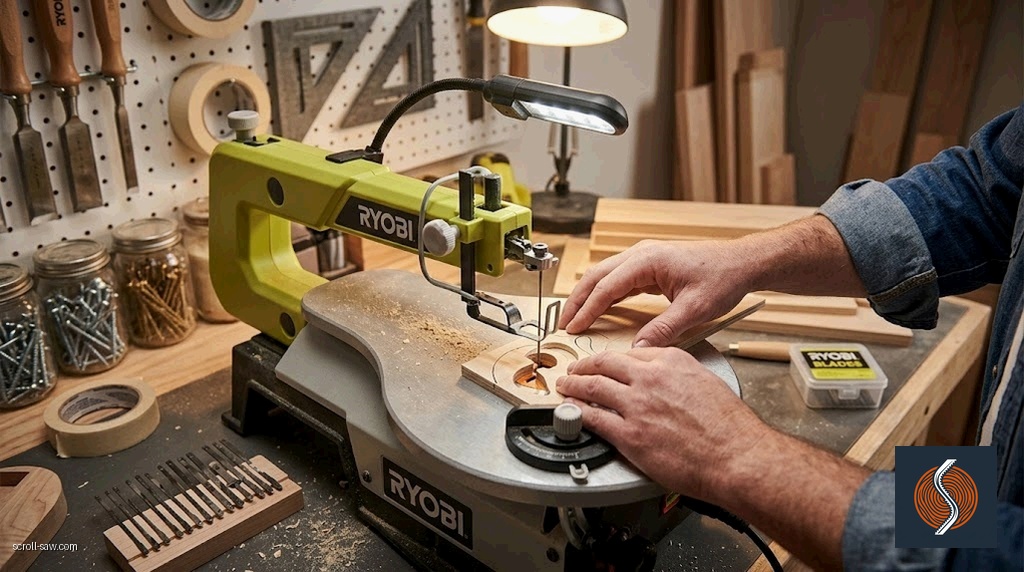
How to Use a Ryobi Scroll Saw: Setup, Blades, and Real-World Cutting
Ryobi scroll saws (SC165VS 16-inch and similar variants) target hobbyist buyers with a moderate budget. Not the tool for professional production, but they handle craft-scale pattern work when set up correctly. Understanding what they do well and where they hit their limits keeps expectations honest.
Setup basics
Mount solid. Bolt to bench or use the Ryobi stand. Loose base means every vibration reaches the workpiece.
Level. Machinist level or small carpenter’s level on the table.
Table squareness. Machinist square between blade and table at zero tilt. Adjust zero-stop.
Blade installation. Most current Ryobi models accept standard 5-inch plain-end blades. Some older or smaller variants use pin-end; verify with manual.
Set tension. Blade rings clearly when flicked. Correct tension is the single biggest factor in cut quality.
Test cut. Scrap material, verify tracking.
Blade choice
-
General craft: Olson FR49202 reverse-tooth
-
Softwood fast cuts: Olson FR49400 skip-tooth
-
Hardwood pattern work: Pégas Modified Geometry
-
Detailed pattern work: Flying Dutchman Ultra Reverse
-
Tight interior cuts: Olson SP46300 spiral
Pin-end variants: Olson FR41001 pinned 7 TPI.
Cutting technique
Feed rate. Let the blade cut. Ryobi bogs down under heavy feeds.
Hand position. Both hands on workpiece, fingers away from blade path.
Speed. Variable-speed models: high for softwood, mid for hardwood, low for plastic.
Line following. Look slightly ahead of blade, correct continuously.
Interior cuts. Starter hole, thread blade, reattach top holder, cut, release.
Corners. Approach, stop feeding, rotate workpiece around blade, resume.
Bevel cuts. Tilt table, verify angle, test on scrap.
Where it fits
Craft-scale pattern cutting, hobbyist woodworking, weekend projects, learning technique, budget-conscious first scroll saw.
Where it doesn’t fit
Serious portrait fretwork, extended production, very thick hardwood, professional cut quality expectations.
Common issues and fixes
Cut wanders: Tension low or feed too fast.
Blade breaks quickly: Tension too high or wrong blade.
Rough cut edge: Wrong blade. Try reverse-tooth.
Vibration: Mounting isn’t solid or table isn’t level.
Motor bogs down: Material too thick or feed too heavy.
Maintenance
Dust removal after each session. Weekly blade holder area clean. Blade replacement as needed. Occasional lubrication per manual.
The verdict
Ryobi scroll saws work well within their limits. Setup properly, use premium blades, feed modestly, stay within reasonable material thickness. Not a Hegner or a DW788, but they handle craft-scale hobby work at a much lower price. If you outgrow it, that’s a signal to upgrade. Until then, honest hobbyist capability.
FAQ
Do Ryobi scroll saws use standard blades? Most current models yes; some older or smaller variants use pin-end.
Is a Ryobi scroll saw good for beginners? Yes for casual hobbyist use.
How thick can a Ryobi cut? Most 16-inch Ryobis cut up to about 2 inches.
Where do I buy Ryobi scroll saw parts? Ryobi customer service or authorized service dealers.
Can I upgrade a Ryobi scroll saw? Blades and setup yes. Motor/mechanical upgrades not economical.
How long does a Ryobi last? Casual hobby use with maintenance: many years.
Is a Ryobi worth it over a DW788? Lower price, less capability. Occasional use yes; serious pattern work no.
What speed for hardwood? Mid-range on variable-speed models.


