
Scroll Saw Bird Feeder: Material Thickness, Blade Size, and Finishing Notes
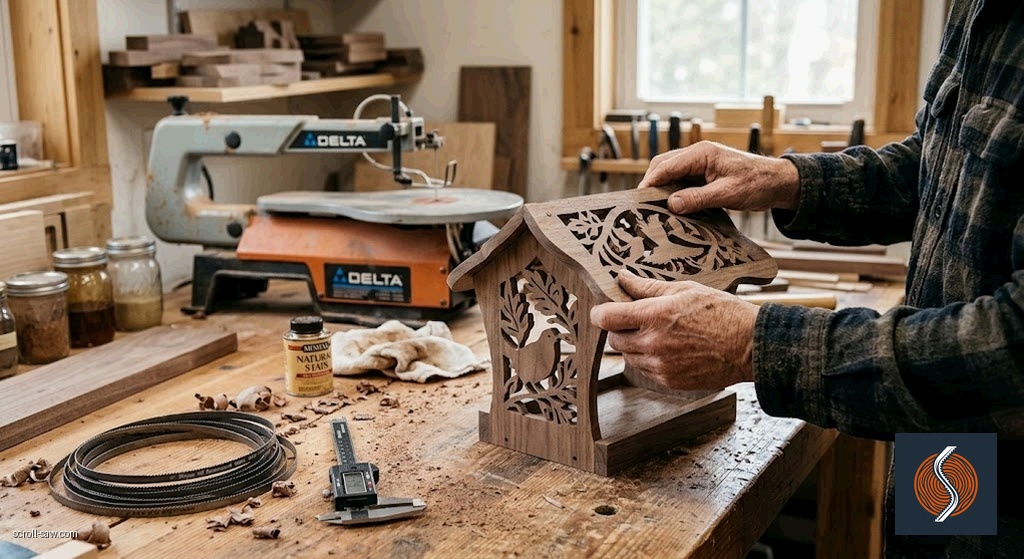
Scroll Saw Bird Feeder: Material Thickness, Blade Size, and Finishing Notes
A scroll saw bird feeder is a project that has to survive weather. It sits outside year-round in most yards, and cheaply built feeders come apart in the first hard winter. That constraint changes every material and finish decision from what a scroll saw hobbyist might use for indoor projects.
Good outdoor bird feeders have specific requirements: a wood species that resists rot, joinery that stays tight through humidity cycles, a finish that seals the wood without harming birds, and access points for both the birds and the person who fills the feeder.
What a scroll saw bird feeder actually is
Most scroll saw bird feeders are one of three types. A hanging box feeder (four scroll-cut sides, a base, and a roof, filled with seed through a top opening). A platform feeder with decorative scroll-cut sides. A hopper feeder with a scroll-cut window and roof.
Quick answer: cut from 1/2 to 3/4 inch red cedar, white oak, or exterior-grade cedar plywood. Use a #7 skip-tooth blade for structural cuts and a #5 for decorative pierced detail. Assemble with exterior wood glue and stainless steel screws. Finish with exterior spar urethane or leave raw for the cedar’s natural rot resistance.
Wood choice for outdoor durability
Western red cedar in 1/2 or 3/4 inch thickness. Naturally rot-resistant, ages to a silver-gray, easy to cut on the scroll saw. The default choice.
White oak in 1/2 or 3/4 inch. Very rot-resistant (the same wood used in wine barrels), but harder to cut and heavier.
Exterior-grade Baltic birch or ACX plywood in 1/2 inch for painted feeders. The waterproof glue in exterior plywood holds up outside, though the wood species itself needs sealed protection.
Avoid pine (rots within a season), poplar (rots quickly), and interior plywoods.
Material thickness by feeder size
Half-inch stock for smaller feeders (under 8 inches wide). Light enough to hang without stressing the branch.
Three-quarter inch stock for larger feeders (over 8 inches wide) or for feeders that will hold a lot of seed weight.
Stay under 1 inch. Very thick stock adds weight without adding durability.
Blade size
A #7 skip-tooth blade for structural body cuts on 1/2 to 3/4 inch cedar. Wider kerf clears sawdust from the deeper cuts.
A #5 skip-tooth for decorative pierced sides with medium detail.
A #3 reverse-tooth for fine decorative detail (leaf pierces, name inscription, filigree work).
Outdoor projects don’t need the fine detail of indoor display pieces. Simpler decorative cuts hold up better through weather cycles.
Design elements to include
A bird feeder needs specific features to actually work:
-
A seed access opening for the birds. Usually a 2 to 3 inch diameter hole on one or two sides. Birds land on the opening’s edge and eat from the seed inside.
-
A perch. A wooden dowel through the body just below the seed opening gives birds a place to stand.
-
A drainage system in the base. Drill 1/8 inch drainage holes in the base to let rainwater escape.
-
A refill access point. Either a removable roof (attached with screws that can be unscrewed) or a hinged roof panel.
-
A hanging attachment. Screw eye or brass hook on the roof peak, or a wooden dowel projecting from the roof for chain attachment.
Cut sequence
-
Sand both faces of every panel to 220 grit before cutting.
-
Apply patterns for each panel to their respective panels.
-
Cut every panel with a #7 skip-tooth blade for structural cuts, #5 for decorative pierced detail.
-
Drill drainage holes in the base panel.
-
Drill perch dowel holes in the side panels.
-
Cut the seed access openings in the side panels.
Assembly with exterior wood glue
-
Dry-fit all panels before glue.
-
Apply exterior wood glue (Titebond III or equivalent) to all mating edges.
-
Assemble body first: two sides, front, back, and base.
-
Clamp with corner clamps or bar clamps.
-
Reinforce with stainless steel screws pre-drilled through the corners. Stainless is essential; regular steel rusts and stains the wood.
-
Attach the roof last, either fixed with glue and screws or hinged for refill access.
Where bird feeders fail
The base rots. Missing drainage holes or the wrong wood species. Add drainage holes and use cedar or white oak.
A panel warps. The wood wasn’t sealed on all six faces (top, bottom, edges). Seal every face before assembly.
Seams leak. Exterior glue applied to a dirty or dusty edge. Sand or wipe every mating edge before glue.
Hardware rusts. Regular steel screws or hooks. Use stainless steel or brass for all outdoor hardware.
Birds don’t come. Feeder placed too close to walls or windows, or filled with the wrong seed. Move at least 10 feet from any wall and use a proven seed mix for local species.
Finishing options
Unfinished cedar. The most common choice. Cedar’s natural rot resistance means unfinished feeders last 5 to 10 years, aging to a silver-gray.
Exterior spar urethane for painted or sealed feeders. Three coats over three days. Sand lightly with 220 between coats. Spar urethane flexes with humidity cycles.
Milk paint or exterior latex for decorative color. Prime first with an exterior wood primer, then two coats of paint, then a spar urethane top coat.
Avoid interior finishes (polyurethane not labeled for exterior, shellac, wax). All fail outside within a season.
Comparing three bird feeder projects
Simple hanging box feeder in 1/2 inch red cedar, unfinished, with pierced heart cutout on two sides. The reliable first feeder. Assembles in a weekend.
Hopper feeder with clear plexiglass front window and pierced decorative sides in 1/2 inch cedar, unfinished. The mid-range piece. Reserve a weekend for cutting and glass fitting.
Decorative platform feeder with pierced filigree sides and painted roof in 3/4 inch white oak, sealed with spar urethane, painted roof. The heirloom piece.
Conclusion
A scroll saw bird feeder survives weather when the wood species resists rot (cedar or white oak), drainage holes let rainwater escape, hardware is stainless or brass, and joinery includes both exterior glue and stainless screws. Half-inch to 3/4 inch stock. A #7 skip-tooth for structural cuts, #5 for decorative pierced detail. Unfinished cedar for natural aging or exterior spar urethane for sealed protection. Do those and the feeder hangs in the yard for 5 to 10 years while every seasonal crop of birds finds it.
Frequently asked questions
What wood works best for an outdoor scroll saw bird feeder? Western red cedar for the default choice, white oak for maximum durability, or exterior-grade plywood for painted versions.
Which blade cuts feeder panels cleanest? A #7 skip-tooth blade for 1/2 to 3/4 inch stock structural cuts, #5 for decorative pierced detail.
Do I need to seal cedar? Optional. Cedar’s natural rot resistance means unfinished feeders last 5 to 10 years. Sealing extends life and preserves the fresh cedar color.
What size seed opening should I cut? 2 to 3 inches for most songbird species. Smaller openings suit smaller birds; larger openings admit larger species like cardinals.
How do I keep the feeder from rotting? Drainage holes in the base, cedar or white oak stock, and sealed edges if using a finish. Elevate off the ground or hang.
What hardware should I use? Stainless steel or brass. Regular steel rusts and stains the wood within a season.
Should I paint the feeder? Optional. Cedar looks natural unfinished. Paint requires exterior primer, exterior latex, and spar urethane top coat, all rated for outdoor use.
References
-
Titebond III exterior wood glue product notes: titebond.com
-
Cornell Lab of Ornithology feeder guidance: birds.cornell.edu
-
Scroll Saw Woodworking & Crafts, Fox Chapel Publishing: foxchapelpublishing.com


