
Olson Scroll Saw Files: Design, Use, and Where They Fit in a Shop
Olson Scroll Saw Files: Design, Use, and Where They Fit in a Shop
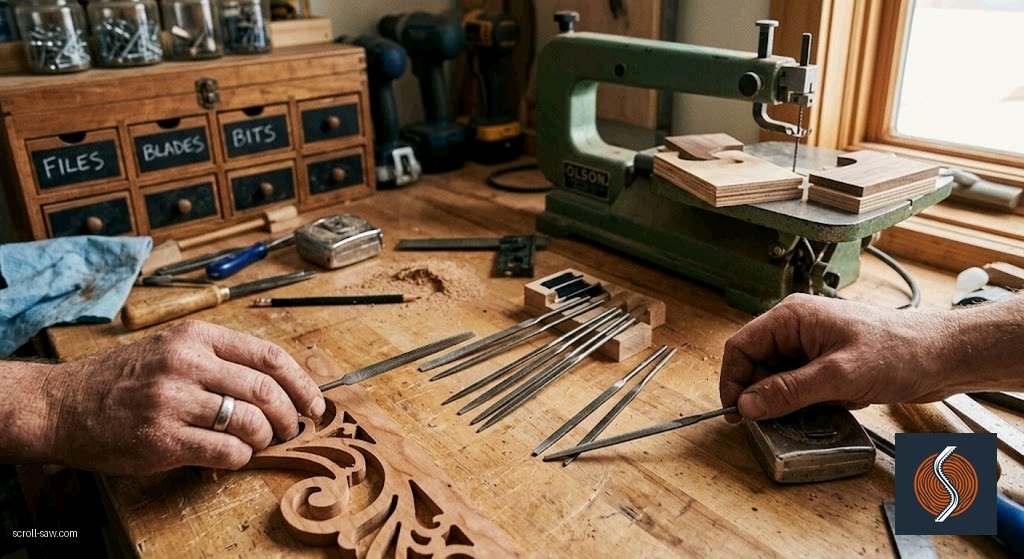
Olson makes a line of scroll saw files that install in a scroll saw the way a blade does. Instead of cutting, they file. That opens a set of shop uses a scroll saw doesn’t otherwise do: shaping wood edges, smoothing tight interior cuts, and quick refinement of pattern work that would otherwise need hand filing.
What a scroll saw file is
A scroll saw file is a short file rod with mounting ends designed to fit scroll saw blade holders. The file body has abrasive faces in various cuts (bastard, second-cut, smooth). When the scroll saw runs, the file reciprocates like a blade, filing material where you present it.
Olson scroll saw files come in shapes matching common hand file profiles:
-
Flat file (rectangular cross-section)
-
Half-round (curved and flat)
-
Round (rat-tail)
-
Triangular
-
Square
Where scroll saw files earn their spot
Interior fret work refinement. After cutting an interior fret pattern, a scroll saw file smooths the edges without dismounting the workpiece.
Tight radius shaping. Round and half-round files smooth curves the scroll saw blade cut roughly.
Notch refinement. Triangular files refine V-notches to precise angles.
Edge dressing. Flat files square up cut edges quickly.
Metal work. With appropriate file cut, scroll saw files work on softer metals.
Where they don’t fit
-
Heavy material removal (use hand files or bench files)
-
Very fine finishing (use sandpaper and hand tools)
-
Precision flatness (use bench-mounted tools)
-
Long workpiece edges (use bench tools)
Fit compatibility
Olson scroll saw files are made in formats that fit standard plain-end scroll saw blade holders. Verify that your scroll saw’s holders accept the file’s mounting end profile before ordering.
For pin-end scroll saws, verify whether Olson offers a compatible file variant or use the Olson conversion kit to add plain-end capability first.
Setup
-
Remove any installed blade.
-
Install the scroll saw file in the blade holders per manufacturer manual.
-
Set tension per manual (typically slightly less than blade tension).
-
Verify file alignment.
-
Run at low to medium speed for control.
Technique
Speed. Lower speeds give more control. Files remove material with less speed than blades cut.
Pressure. Light. Let the file work. Heavy pressure loads the teeth and reduces file life.
Direction. Move workpiece into and along the file face.
Cleaning. Brush loading from the file with a file card as it accumulates.
Cooling. Some materials load files quickly. Take breaks or use lubricant appropriate to the material.
File selection
Bastard cut for heavy shaping.
Second-cut for general shaping.
Smooth cut for final refinement.
Shape. Match to the shape of the surface you’re filing:
-
Flat: straight edges and flat surfaces
-
Half-round: outside curves and inside curves
-
Round: circular holes and tight interior curves
-
Triangular: V-notches, corners, and internal angles
-
Square: square notches and flat corners
Where scroll saw files fit in a shop
-
Intarsia and fretwork finishing
-
Pattern work refinement without dismounting
-
Small parts shaping
-
Detail work where bench-mounted files are awkward
-
Custom shaping in wood, plastic, and softer metals
Common frustrations
File loads quickly. Wrong cut for material, or heavy pressure. Use lighter pressure, clean more often.
File breaks. Tension too high, or side-load stress. Reduce tension slightly, use axial pressure only.
Poor removal rate. Wrong cut. Bastard cut removes more; smooth cut refines less.
Vibration. Ensure scroll saw is mounted solidly.
Blade companions in the shop
Even with files, you still need blades for cutting. For general scroll saw work:
The verdict
Scroll saw files are a specialized addition that opens finishing capability the scroll saw alone doesn’t have. Not essential for every hobbyist, but useful for intarsia, fretwork, and detail refinement without workpiece dismount. Match file cut and shape to the work, use light pressure, keep the teeth clean, and they’ll serve for many projects. For occasional shaping needs, bench-mounted files still make more sense. For pattern work refinement in place, scroll saw files earn their spot.
FAQ
Do scroll saw files fit all scroll saws? Plain-end holder scroll saws yes. Pin-end scroll saws may need conversion first.
What cut should I start with? Second-cut flat and half-round covers most work.
Can scroll saw files cut metal? Yes on softer metals with appropriate cut and technique.
How long do scroll saw files last? Depends on material, technique, and cleaning. With light pressure and regular cleaning, many hours per file.
What’s the difference between scroll saw files and hand files? Scroll saw files mount in scroll saw holders and reciprocate mechanically. Hand files are for manual use.
Where do I buy Olson scroll saw files? Amazon, Olson dealers, scroll saw specialty retailers.
What tension for a scroll saw file? Slightly less than blade tension. Check manufacturer guidance.
Are scroll saw files essential? No. Useful for specific work, not required for basic scroll saw use.


