
Porter-Cable 1.6 Amp Scroll Saw: What to Check Before Buying or Repairing
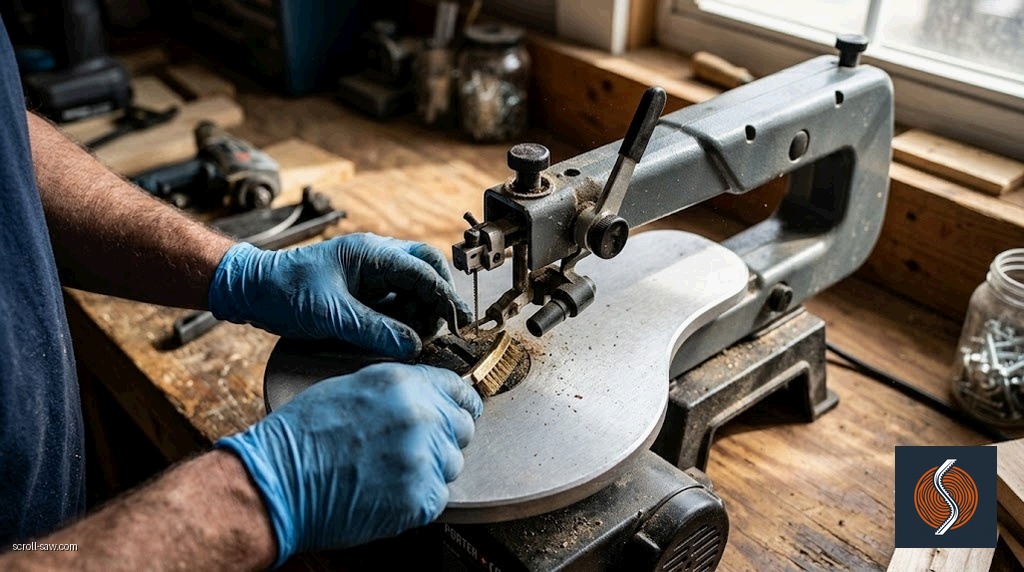
Porter-Cable 1.6 Amp Scroll Saw: What to Check Before Buying or Repairing
The Porter-Cable 1.6 amp scroll saw is a used-market machine now. It has not been in production for years. Porter-Cable, once independent, then part of Delta, then part of Stanley Black & Decker, quietly stopped refreshing the scroll-saw line, and what remains is a supply of older units passing between owners at yard sales, estate cleanouts, and Craigslist. That is not a reason to skip the saw. It is a reason to know what you are looking at.
What this saw is
The Porter-Cable 1.6 amp scroll saw is an 18-inch throat, single-phase, variable-speed, set-screw-clamp benchtop machine that shipped in a few closely related revisions. The most common model designations are the PC16SS series and unlabeled units that carry only Porter-Cable 18 inch on the badge. The motor pulls 1.6 amps at 120 volts, which puts it firmly in the light-duty category by modern standards.
The saw uses a rocker-arm parallel linkage, tilts the table left up to 45 degrees, right to about 5 degrees, and accepts standard 5-inch pinless blades. Some late units accept pin-end blades with an adapter.
Direct answer
If a Porter-Cable 1.6 amp scroll saw is offered at a modest ask and the arm bushings are quiet, buy it. It is a competent detail saw for hobby work, especially thin plywood, softwood ornaments, and pattern practice up to about half-inch thickness.
Skip it if the seller is asking near-new figures, if the arms rattle when you rock them by hand, or if the set-screw clamps have visible thread damage. Parts are hard to find, and a saw needing significant service is not worth the hunt.
What to check before buying
Do these inspections in the seller’s driveway.
Rock both arms up and down by hand with the power off. You are feeling for sloppy pivot bushings. Any perceptible knock is a warning.
Open and close the set-screw clamps with the supplied key or your own 4mm hex. Feel for stripped threads. Look at the jaw face under a phone flashlight for score marks or glazing.
Plug the saw in. Run it up from low to high speed. Listen for a rasping sound at mid speed, which usually means motor brushes or a dry drive linkage.
Check the table for flatness with any straight edge you brought. A cupped table cannot be shimmed without work.
Ask about the manual, the original blade set, and the hex key. If none of these are with the saw, budget for a manual request to Stanley Black & Decker service.
Service items you can still find
Motor brushes for the Porter-Cable 1.6 amp motor are still stocked by a handful of specialty parts sellers, and generic 6mm x 8mm carbon brushes with the correct spring often fit with minor sanding.
Belts, on machines that use them, are commonly available as generic ribbed profiles.
Blade clamps are the hard part. Original clamps are no longer stocked. Aftermarket set-screw clamps from generic scroll-saw parts suppliers can be adapted with time and patience, but this is not a fast fix.
Table inserts can be cut from 1/8-inch plywood or acrylic if the original is missing.
Blade choices that work
Standard 5-inch pinless blades in #3 to #9 sizes cover most of what this saw does well. Olson PGT and Flying Dutchman blades run cleanly. Pégas modified-geometry blades work but the saw’s frame is not stiff enough to fully show their advantage.
For pin-end operation, use the adapter clips if you have them and stay in the #5 to #9 range.
Where this saw fits
The Porter-Cable 1.6 amp is a good first serious scroll saw for someone learning pattern work, and a competent second saw for a workshop that already has a heavier machine. It is not a production tool and it is not a good choice for thick or dense hardwood.
Verdict and takeaways
-
Buy on used market only if pivots are tight, clamps are clean, and asking figure is modest.
-
Motor brushes and belts are findable; original clamps are not.
-
Runs standard 5-inch pinless blades in a useful range.
-
Best suited to thin stock and pattern practice, not production or thick hardwood.
Frequently asked questions
Is the Porter-Cable 1.6 amp scroll saw still in production? No. It has been discontinued for several years.
Where can I get a manual? Stanley Black & Decker service (as the current Porter-Cable rights holder) will email a PDF on request if you provide the model badge photograph.
Can I upgrade this saw with a Pégas chuck? No. The arm interface is not compatible with any current thumb-wheel chuck.
What blades fit the Porter-Cable 1.6 amp saw? Standard 5-inch pinless scroll saw blades in most tooth counts. Pin-end blades with an adapter on some units.
Is 1.6 amps enough to cut hardwood? For thin hardwood up to about half inch, yes. For thicker or denser stock, the saw will slow noticeably.
Are Porter-Cable and Delta scroll saw parts interchangeable? Some blade clamps are similar visually but the fit is not guaranteed. Verify part numbers before ordering.
References
-
Porter-Cable historical product literature (Stanley Black & Decker archive).
-
Owner service reports, Scrollsaw Village and Sawmill Creek forums, 2019-2025.
-
Generic brush and belt fit reports from parts specialists.


