
Scroll Saw Christmas Tree Topper: Material Thickness, Blade Size, and Finishing Notes
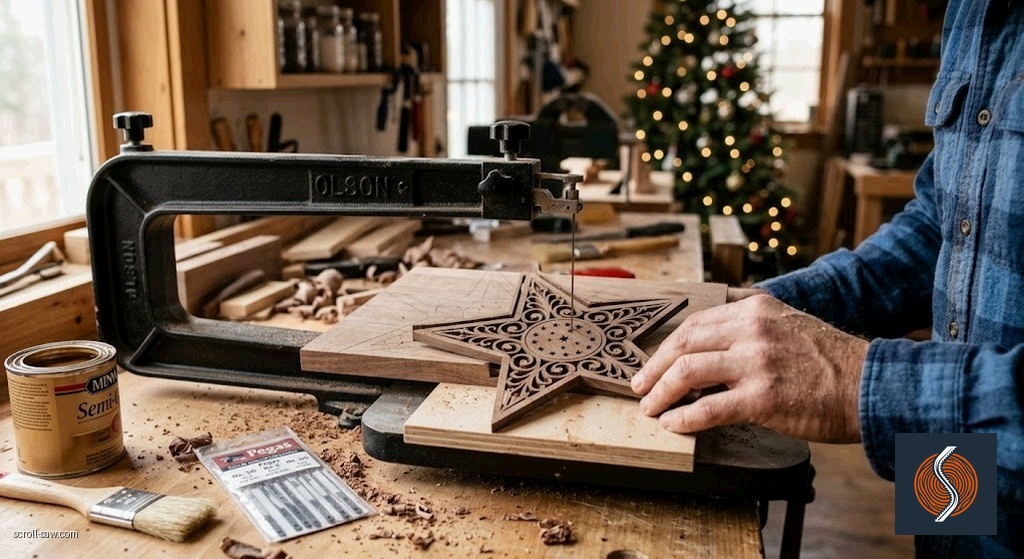
Scroll Saw Christmas Tree Topper: Material Thickness, Blade Size, and Finishing Notes
A Christmas tree topper is one of those pieces that carries emotional weight beyond its actual size. It sits at the top of the tree, everyone in the house looks at it every day for the whole month of December, and it’s often the first ornament a family unpacks and the last one they put away. That kind of visibility means the topper has to look right, and the fragile star points or angel wings have to survive year after year of storage and handling.
Most scroll saw hobbyists cut a topper once and use it for decades. Which changes the material and construction choices from what would suit a disposable ornament.
What tree toppers usually show
Most scroll saw Christmas tree toppers are one of three types. A star topper (five-pointed or six-pointed star with pierced interior detail). An angel topper (winged angel figure with pierced detail on wings, robe, and halo). A bow or wreath topper (decorative bow, small wreath, or star burst).
Quick answer: cut from 3/8 inch quartersawn cherry, walnut, or basswood. Use a #3 reverse blade for pierced detail and a #5 skip-tooth for outer star points. Drill entry holes first. Cut interior detail before points to keep the topper supported. Attach a wooden dowel or brass tube mount for tree attachment. Finish with wipe-on oil or sealed metallic paint.
Material thickness
Three-eighths inch quartersawn cherry, walnut, or basswood for most toppers. Substantial enough to feel like a real ornament, light enough not to bend the tree top.
Half-inch stock for large toppers over 8 inches tall. Adds weight but reads more substantial.
Quarter-inch stock only for very small toppers on small tabletop trees.
Stay under 1/2 inch for full-sized indoor trees. Weight matters on the tree’s top branch.
Blade size
A #5 skip-tooth for the outer perimeter of star points and angel outline.
A #3 reverse-tooth for pierced interior detail (star interior filigree, angel wing feather detail, robe folds, halo pierces).
A #1 blade for the finest detail on high-detail patterns.
Fresh blades matter. A dulled blade on a star point creates a wobble that reads visible from across the room, and the topper sits directly in the family’s line of sight for a month.
Cut sequence for a star topper
-
Sand both faces of the panel to 220 grit.
-
Apply the pattern with painter’s tape and spray adhesive.
-
Drill every entry hole for pierced interior detail.
-
Cut interior detail smallest to largest.
-
Cut the outer star perimeter last. Cut each star point in one continuous cut from the point’s tip to the next inner corner. Alternate which point gets cut, working symmetrically to keep the piece balanced.
Cut sequence for an angel topper
-
Same first three steps as a star.
-
Cut wing feather detail first.
-
Cut robe fold and body detail next.
-
Cut halo and facial features.
-
Cut the outer perimeter last: base of robe, up one side, around the head, down the other side, back to the base.
Where tree toppers fail
A star point breaks during storage. Points drawn too pointy or the topper was stored loose in a box. Blunt star points slightly on the pattern; store the topper in a padded box.
Angel wing tips shear off. Wing tips drawn thinner than 3/16 inch. Thicken on pattern.
The topper doesn’t sit straight on the tree. Mount not vertical to the topper’s face. Test-mount before finishing; adjust mount angle if the topper leans.
Metallic paint chips after a few years. Missing shellac sealer under the paint. Seal first, always.
Mount options for tree attachment
Wooden dowel mount: drill a 3/8 inch diameter hole in the bottom of the topper, glue a 4 to 6 inch wooden dowel into the hole with Titebond II. Dowel slides down over the tree’s top branch.
Brass tube mount: drill a slightly larger hole, epoxy a brass tube into the hole. The tube slides over the top branch and is more durable than a wooden dowel.
Wire loop mount: drill two small holes in the bottom of the topper, thread wire through both holes forming a loop underneath, twist tight. The loop wraps around the top branch.
Wooden dowel is the most common. Brass tube is the most durable.
Finishing options
Wipe-on boiled linseed oil for cherry, walnut, and basswood. Two coats over two days.
Gold metallic acrylic paint for classic gold-star toppers: shellac sanding sealer, two coats of gold metallic acrylic, matte water-based polyurethane top coat.
Silver metallic acrylic paint for silver-star toppers: same technique with silver metallic acrylic.
White-painted toppers for angel toppers: sealer, flat white acrylic, matte polyurethane.
Gold leaf for heirloom-grade star toppers: apply gold leaf over sizing adhesive after sealing the wood. More labor but reads truly formal.
Storage between seasons
A topper that survives decades of use needs careful storage:
-
Wrap in acid-free tissue paper.
-
Store in a rigid box (a small cardboard gift box or wooden storage box).
-
Label the box clearly for identification when unpacking.
-
Store in a temperature-controlled space (not an attic that gets extreme heat, not a basement that gets damp).
Avoid plastic bags for long-term storage; they trap moisture and can affect the finish.
Comparing three topper projects
Simple five-pointed star in 3/8 inch cherry, oiled, with wooden dowel mount. The reliable first topper. Cuts in an afternoon.
Pierced star with interior filigree in 3/8 inch walnut, oiled, wooden dowel mount. The mid-range piece.
Heirloom angel with pierced wings, robe, and gold-leaf accents in 3/8 inch cherry, sealed and gold-leafed, brass tube mount. The signature piece.
Conclusion
A scroll saw Christmas tree topper survives decades of storage and handling when the star points are slightly blunted, the angel wing tips are thickened, the mount is vertical to the topper’s face, and every finish gets shellac sealer under any paint layer. Three-eighths inch cherry, walnut, or basswood. A #5 skip-tooth outline with #3 reverse for interior detail. Wipe-on oil, metallic paint, or gold leaf finishes. Wooden dowel or brass tube tree mount. Acid-free tissue paper storage between seasons. Do those and the topper reads warm and reverent from the top of the tree every Christmas for the family’s lifetime.
Frequently asked questions
What thickness works for a scroll saw tree topper? Three-eighths inch quartersawn cherry, walnut, or basswood for most toppers. Half-inch for large 8-plus inch toppers.
Which blade cuts star points cleanest? A fresh #5 skip-tooth blade for outer star points with a #3 reverse for interior filigree.
How do I attach a topper to a tree? Wooden dowel glued into a hole in the bottom, or brass tube epoxied into the hole. Dowel slides over the tree’s top branch.
How do I keep star points from breaking? Blunt points slightly on the pattern before cutting. Store the topper in acid-free tissue paper inside a rigid box between seasons.
Should I paint the topper gold or silver? Optional. Metallic acrylic paint over shellac sealer gives a durable metallic look. Gold leaf gives a truly heirloom finish for reserve pieces.
How do I keep the topper from leaning on the tree? Mount vertical to the topper’s face. Test-mount on the tree before finishing to check the topper sits straight.
How should I store a topper between Christmas seasons? Wrap in acid-free tissue paper, store in a rigid box, keep in a temperature-controlled space (not attic or basement).
References
-
Steve Good, Scrollsaw Workshop Christmas pattern archive: scrollsawworkshop.blogspot.com
-
Sue Mey, Scroll Saw Artist: scrollsawartist.com
-
Scroll Saw Woodworking & Crafts, Fox Chapel Publishing: foxchapelpublishing.com


