
Delta 40-130 Scroll Saw Blades: TPI, Kerf, Radius, and Finish Explained
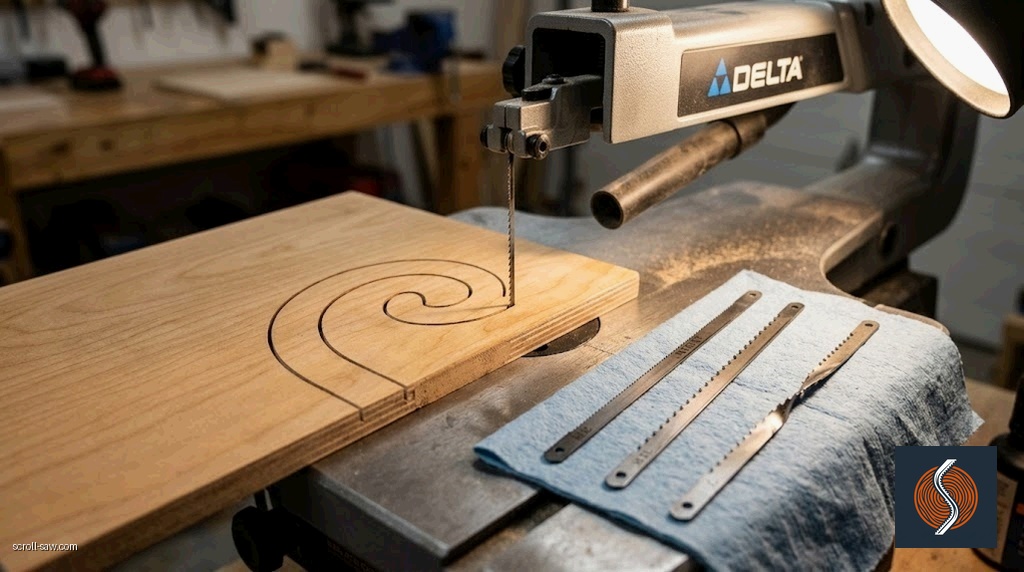
Delta 40-130 Scroll Saw Blades: TPI, Kerf, Radius, and Finish Explained
The Delta 40-130 belongs to the same family of 16-inch Delta scroll saws as the 40-530, 40-540, 40-150, and 40-560. Blade selection across this family follows the same logic: match teeth per inch (TPI), kerf width, and minimum cutting radius to the material and detail level of the project, rather than treating one blade as universal.
Direct answer
For general wood pattern work on the 40-130, a standard 5-inch blade in the #5 range with roughly 15 to 18 TPI is a solid default. Move to a finer blade (higher TPI, narrower kerf) for detailed inside cuts, and a coarser blade (lower TPI, wider kerf) for thicker stock or faster material removal.
Understanding TPI
Teeth per inch determines how aggressively a blade cuts and how smooth the resulting edge is.
Higher TPI (21 or more): finer cut, smoother edge, slower feed rate. Best for thin material, veneer, and fine detail.
Medium TPI (15 to 18): balanced general-purpose cutting for most wood pattern work.
Lower TPI (7 to 12): faster material removal, rougher edge, better suited to thicker stock where surface finish matters less.
Understanding kerf
Kerf is the width of the slot the blade cuts. A narrower kerf allows tighter turns and less material waste, useful for detailed patterns. A wider kerf clears sawdust more effectively in thicker material but produces a slightly wider cut line.
For most 40-130 work in wood up to about 20 mm, a standard kerf 5-inch blade balances control and chip clearance well.
Understanding minimum cutting radius
Minimum cutting radius describes the tightest curve a blade can turn without binding or snapping. Finer, narrower blades manage tighter radii; coarser, wider blades need larger turning room.
If a pattern includes small interior details or tight curves, drop to a finer blade even if it means slower cutting overall. Forcing a coarse blade through a tight radius is a common cause of blade breakage.
Finish quality by blade type
Standard tooth blades leave a moderate finish suitable for most projects, especially where sanding follows.
Skip tooth blades (every other tooth removed) cut faster and clear chips better in thick stock, at the cost of a slightly rougher edge.
Reverse tooth blades have a few teeth reversed near the bottom to reduce splintering on the underside of the workpiece, useful for plywood or veneer-faced material.
Modified geometry blades (such as Pégas modified tooth patterns) are designed for a cleaner finish with less drift, often worth the extra cost for showpiece projects.
Blade recommendations by material
Softwood pattern work, 6 to 20 mm: medium TPI standard tooth, #5 equivalent.
Hardwood pattern work, 6 to 12 mm: modified geometry blade in a similar size range for a cleaner cut with less burning.
Plywood and veneer: reverse tooth blade to reduce underside splintering.
Thick stock, 20 mm and above: skip tooth blade, coarser TPI, to clear chips and avoid overheating.
Fine detail and tight interior cuts: high TPI, narrow kerf blade, accepting a slower feed rate.
Where to buy
Standard 5-inch scroll saw blades from Olson, Pégas, and other major manufacturers fit the 40-130 and related Delta models. These are stocked at Amazon and specialty woodworking suppliers.
Verdict and takeaways
-
Match TPI and kerf to material thickness and detail level, not a single universal blade.
-
Finer blades handle tight radii and detail; coarser blades handle thickness and speed.
-
Modified geometry and reverse tooth blades improve finish quality for specific use cases.
-
Standard 5-inch blades from any major brand fit the 40-130’s clamp system.
Frequently asked questions
What TPI is best for general scroll saw work on the Delta 40-130? Around 15 to 18 TPI covers most general wood pattern projects.
Do I need a special blade for plywood? A reverse tooth blade reduces splintering on the underside, which helps with plywood and veneer-faced stock.
Why does my blade keep breaking on tight curves? The blade is likely too coarse or wide for the radius. Switch to a finer, narrower blade for tight interior cuts.
Are Pégas blades compatible with the Delta 40-130? Yes, standard 5-inch Pégas blades fit the same clamp system as other major brands.
What is the difference between skip tooth and standard tooth blades? Skip tooth removes every other tooth, improving chip clearance in thick stock at the cost of a slightly rougher finish.
How often should I change blades? When cuts start drifting, burning, or requiring noticeably more feed pressure than a fresh blade of the same type.
References
-
Delta scroll saw owner manuals for the 40-series lineup.
-
Blade manufacturer specification charts (Olson, Pégas).


