
A Practical DeWalt DW788 1.3 Amp 20 Inch Variable Speed Scroll Saw Setup Guide by Material and Thickness
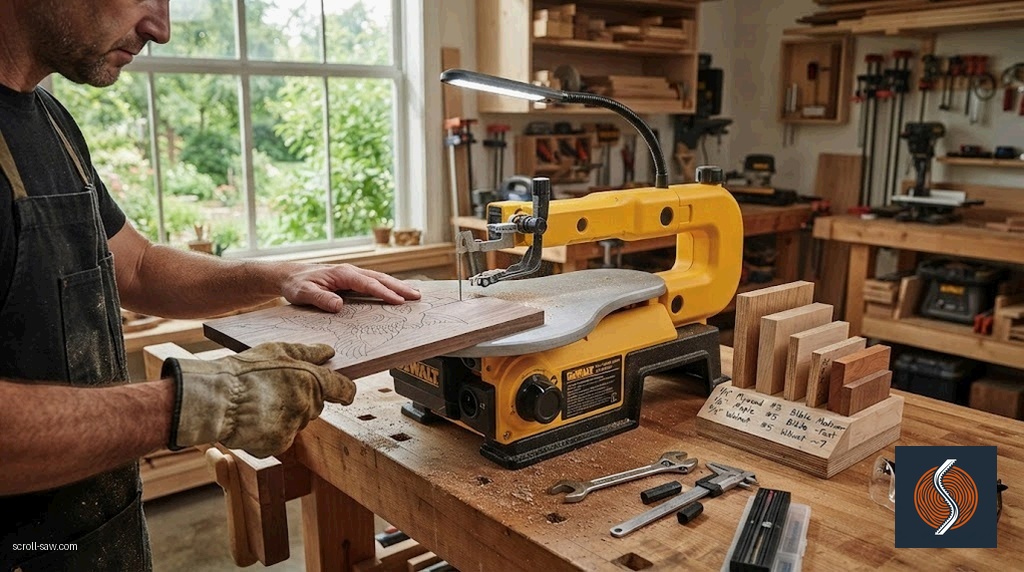
A Practical DeWalt DW788 1.3 Amp 20 Inch Variable Speed Scroll Saw Setup Guide by Material and Thickness
The DeWalt DW788 is a 1.3-amp, 20-inch variable speed scroll saw built around a double parallel-link arm design. Its variable speed range is one of its strongest features, but new owners often run every material at the same speed, which leads to burning in hardwood or blade breakage in thin material. Matching speed and blade to the job is what actually gets the best results from this saw.
Direct answer
Run slower speeds for hardwood, thick stock, and detailed work; run faster speeds for softwood, thinner material, and less detailed cuts. As a practical range: start near the low third of the speed dial for hardwood and detail work, the middle range for general softwood pattern cutting, and the upper range only for thin, soft material where control is less critical.
Setup by material
Softwood, 6 to 20 mm (pine, basswood): medium to upper speed range, standard tooth blade around #5. This combination cuts efficiently without excessive burning.
Hardwood, 6 to 12 mm (oak, maple, walnut): lower to medium speed range, modified geometry or standard blade around #5. Slower speed reduces burn marks and blade wear in dense material.
Thick hardwood, 12 to 25 mm: lower speed range, coarser blade such as a #7 or #9 skip tooth to help clear chips and prevent binding.
Thick softwood, 20 to 40 mm: medium speed, skip tooth blade in the #7 range for efficient material removal without excessive heat buildup.
Plywood and MDF: medium speed, standard or skip tooth blade. Lower the speed if you notice excessive splintering on the underside.
Thin material and veneer, under 3 mm: lower speed with a fine blade (#2/0 to #3) for control, since thin material moves faster relative to blade speed and is easy to tear if run too fast.
Acrylic and plastics: low to medium speed to avoid melting the material from friction heat, paired with a blade designed for plastic cutting where possible.
Thin metal (brass, aluminum sheet): low speed, dedicated metal-cutting blade, with a wax lubricant stick applied periodically to the blade if the manufacturer permits it.
Reading the results and adjusting
Burn marks on the cut edge mean the speed is too high or the blade is dull. Lower the speed or switch to a fresh blade first before assuming the material is the problem.
Blade breaking frequently in hardwood often means the speed is too high for the blade and material combination, generating excess heat and stress. Slow down and confirm blade tension is correct.
Rough or torn edges in softwood usually mean the blade is too coarse for the detail level required, not a speed problem. Switch to a finer blade before adjusting speed further.
Excessive drift off the pattern line in thick material often indicates the blade is too fine for the thickness, requiring a coarser blade rather than a speed change.
General technique notes
Let the blade do the work. Forcing the feed rate faster than the blade and speed setting can comfortably manage causes drift, burning, and breakage regardless of how well the speed is dialed in.
Recheck blade tension whenever you change speed settings significantly, since a loose blade compounds problems at any speed.
Where to buy
The DW788 remains in current production and widely available, including through Amazon, along with compatible blades from major manufacturers.
Verdict and takeaways
-
Slower speeds suit hardwood, thick stock, and detail work; faster speeds suit softwood and less detailed cuts.
-
Blade choice and speed work together; adjust both rather than one in isolation.
-
Burn marks point to speed or blade dullness; rough edges point to blade coarseness; drift points to blade thickness mismatch.
-
Recheck tension after changing speed settings.
Frequently asked questions
What speed should I use for hardwood on the DW788? The lower to medium range of the speed dial, paired with a sharp, appropriately sized blade.
Why does my cut edge have burn marks? Speed is likely too high for the material, or the blade is dull. Lower the speed and check blade condition first.
What causes frequent blade breakage on this saw? Often excessive speed for the material combined with a feed rate that is too aggressive for the blade to manage.
Can I cut thin metal on the DW788? Yes, at low speed with a dedicated metal-cutting blade and appropriate lubrication where recommended.
Do I need to change blade tension when I change speed? Recheck tension whenever you make a significant speed change, since a loose blade compounds problems at any setting.
What blade works best for general pattern cutting on this saw? A standard or modified geometry blade around the #5 size for most softwood and moderate hardwood pattern work.
References
-
DeWalt DW788 owner’s manual, speed and blade guidance sections.
-
Blade manufacturer material compatibility charts (Olson, Pégas).


