
Getting Useful Results From 16 Inch Direct Drive Scroll Saw: Setup and Technique
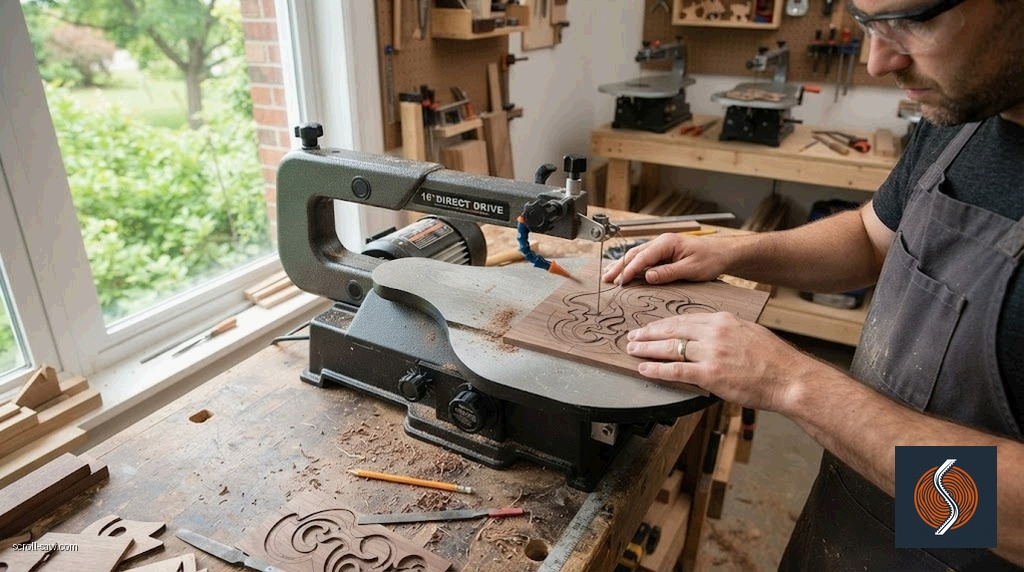
Getting Useful Results From 16 Inch Direct Drive Scroll Saw: Setup and Technique
A 16-inch direct drive scroll saw, common on older Craftsman and Sears models, rewards a slightly different setup approach than modern variable speed parallel-link saws. Since the motor is connected straight to the arm mechanism, technique and blade choice do more of the work that a wide speed range would otherwise handle.
Direct answer
Focus on three things for consistent results: secure bench mounting to manage the vibration characteristic of direct drive designs, careful blade selection matched to material since your speed adjustment range is narrower, and a controlled, patient feed rate that lets the blade cut at its natural pace rather than forcing it.
Setting up the saw
Bench mounting. Bolt the saw securely to a stable, heavy bench. Direct drive mechanisms can transmit more vibration to a lightweight or unsecured surface than some belt-driven designs, which affects cut accuracy.
Table alignment. Check the table sits square to the blade using a small square, adjusting as needed, especially on an older unit that may have shifted out of alignment over years of use.
Blade clamp inspection. Confirm both upper and lower clamps hold the blade securely and straight, since a worn clamp is a common source of drift on older saws regardless of drive type.
Blade selection for this saw type
Since you have less ability to fine-tune speed compared to a variable speed saw, lean on blade choice to match the job:
General softwood pattern work: a standard medium blade, around #5, handles most everyday cutting well.
Hardwood or detailed work: a finer blade reduces the burning and drift that a fixed higher speed can otherwise cause in dense material.
Thicker stock: a coarser, skip tooth blade clears chips more effectively, compensating for the saw’s less flexible speed range.
Technique adjustments
Feed rate control. Let the blade set the pace rather than pushing material through faster than it can cleanly cut. This matters more on a direct drive saw since you cannot simply lower the speed to compensate for an aggressive feed.
Material temperature awareness. Watch for burn marks, which on a direct drive saw usually mean the blade is dull or mismatched to the material rather than a speed problem you can dial down.
Session pacing. Take brief breaks during long cutting sessions on hardwood or thick stock, since a direct drive motor working at a fixed higher relative speed can build heat faster in both the blade and the material.
Troubleshooting common results
Cuts drift off the line. Check blade tension and clamp condition first, since these matter more when you cannot compensate with a speed adjustment.
Burn marks appear consistently. Switch to a fresher or finer blade, since speed reduction is a more limited option on this saw type.
Excess vibration during cuts. Recheck bench mounting and confirm the base is fully seated and secured, since direct drive designs are more sensitive to an unstable mounting surface.
Verdict and takeaways
-
Direct drive scroll saws need more reliance on blade selection than speed adjustment for controlling cut quality.
-
Secure bench mounting matters more given this design’s vibration characteristics.
-
Let the blade set the feed pace rather than forcing the cut.
-
Troubleshoot drift and burning through blade and clamp checks first, since speed options are more limited.
Frequently asked questions
Why does my direct drive scroll saw vibrate more than expected? Check that it is bolted securely to a heavy, stable bench, since this design can transmit more vibration than some belt-driven saws.
What blade should I use for hardwood on this saw? A finer blade than you might use on a variable speed saw, since you have less ability to slow down to compensate for dense material.
How do I reduce burn marks on my cuts? Switch to a sharper or finer blade, since speed adjustment options are typically more limited on direct drive designs.
Is this saw type good for detailed pattern work? Yes, with the right blade choice and a controlled, patient feed rate.
What causes drift on an older direct drive saw? Usually blade tension or clamp wear rather than the drive mechanism itself. Check these first.
How often should I inspect the mechanism on this type of saw? Periodically, especially if the saw sees regular use, since older direct drive linkages can accumulate wear over time.
References
- Legacy Craftsman and Sears direct drive scroll saw owner’s manuals.


