
18 Scroll Saw Explained: Purpose, Fit, and Practical Setup
18 Scroll Saw Explained: Purpose, Fit, and Practical Setup
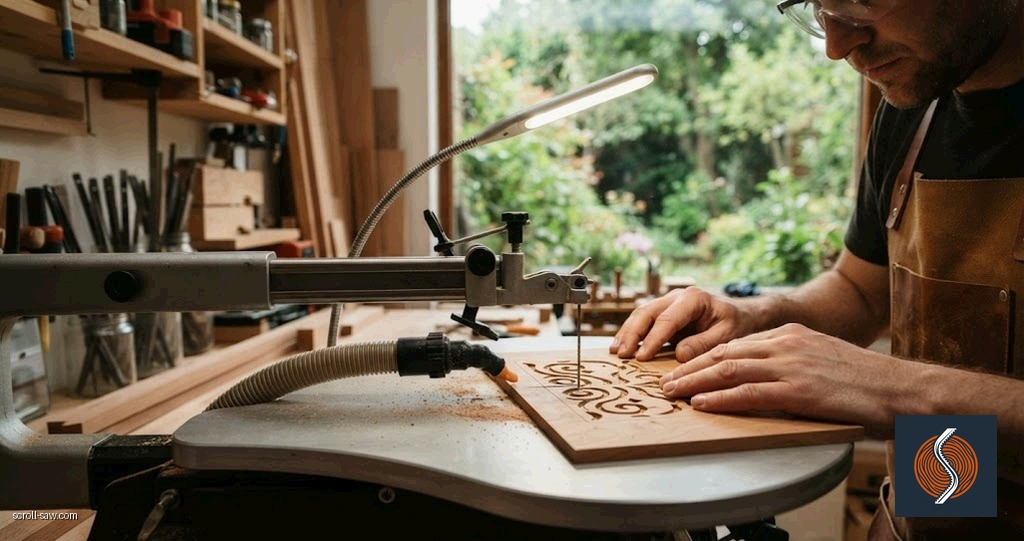
An 18-inch scroll saw sits in the middle of the common throat depth range, larger than compact 13 to 16-inch models but smaller than premium 20-inch-plus machines. Various brands, including several store and import brands alongside recognizable names, have offered saws at this size, and the fundamentals of setup are the same regardless of label.
Direct answer
An 18-inch throat depth comfortably handles most hobby pattern work, including moderately large clock faces, decorative panels, and general project work, while remaining a manageable size for a home shop bench. It represents a practical middle ground for hobbyists who want more working room than an entry-level saw without stepping up to a premium production-oriented machine.
What the throat measurement means
Throat depth is the distance from the blade to the back of the arm, determining how far from any edge you can make an interior or centered cut. At 18 inches, you can comfortably work with material up to roughly 36 inches wide for centered cuts, approaching from either side, which covers the vast majority of hobby-scale projects.
Setting up an 18-inch scroll saw
Bench mounting. Secure the saw firmly to a stable bench appropriate for its weight, which varies by model and construction quality.
Blade format. Most 18-inch saws take standard 5-inch scroll saw blades, in either pin-end or plain-end configuration depending on the specific clamp design.
Speed range. Check whether your specific model offers variable speed, and if so, start in the middle of the range for general work, adjusting up or down based on material and detail level.
Table alignment. Confirm the table sits square to the blade using a small square before beginning work, adjusting as needed.
Choosing between brands at this size
Because 18-inch scroll saws span everything from budget store brands to established names, build quality and parts support vary considerably even at the same nominal throat size. When comparing options:
Check the blade clamp design and confirm standard blade compatibility, since some budget saws use proprietary or unusual clamp systems that limit blade sourcing.
Look at the arm design and construction, since a well-built parallel-link arm generally produces smoother, more accurate cuts than a lower-quality mechanism regardless of throat size.
Consider parts and support availability, particularly for less established brands, since a saw with limited parts support becomes harder to maintain over its working life.
What this size handles well
General pattern work, moderate-sized clock faces, intarsia projects of reasonable scale, and most craft and hobby cutting needs fall comfortably within an 18-inch throat’s working range.
What to consider for larger projects
If you regularly work on very large panels or oversized decorative pieces, a 20-inch or larger saw provides additional headroom. For most hobbyists, though, 18 inches covers the practical range of common project sizes without excess bulk.
Verdict and takeaways
-
An 18-inch throat handles most hobby pattern work comfortably, including moderately large projects.
-
Blade format is typically standard 5-inch regardless of brand at this size.
-
Build quality and parts support vary more than throat size across brands offering 18-inch saws.
-
This size is a practical middle ground between compact and premium production saws.
Frequently asked questions
What does an 18-inch throat depth allow me to cut? Material up to roughly 36 inches wide for centered or interior cuts, approaching from either edge.
What blade size do 18-inch scroll saws use? Most use standard 5-inch scroll saw blades, in pin-end or plain-end format depending on the clamp.
Are all 18-inch scroll saws similar in quality? No, build quality and parts support vary significantly across brands even at the same throat size.
Is 18 inches enough for most hobby projects? Yes, it covers general pattern work, clock faces, and most craft-scale projects comfortably.
When would I need a larger throat than 18 inches? For very large panels or oversized decorative pieces that need deep interior cuts.
What should I check before buying an 18-inch scroll saw? Blade clamp design and compatibility, arm construction quality, and parts and support availability.
References
- General scroll saw specification guides across major and store brands.


