
22 Scroll Saw Explained: Purpose, Fit, and Practical Setup
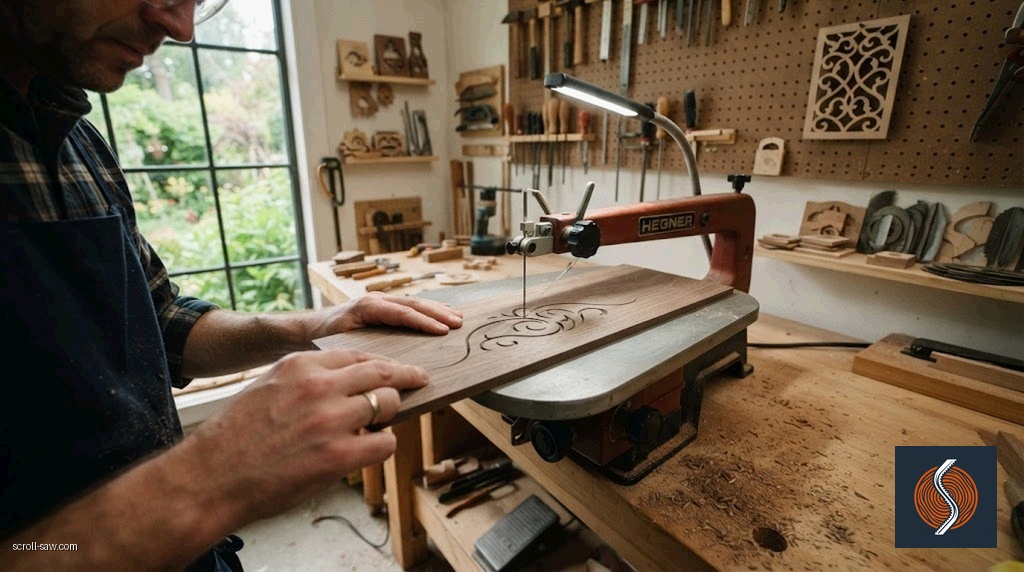
22 Scroll Saw Explained: Purpose, Fit, and Practical Setup
A 22-inch scroll saw is built for hobbyists and small production users who need more working room than a standard 18 to 20-inch saw offers, without stepping up to the largest premium sizes on the market. Understanding its purpose helps you set expectations correctly and set the saw up for the work it is best suited to.
Direct answer
A 22-inch scroll saw is purpose-built for larger clock faces, decorative panels, intarsia projects, and general pattern work that benefits from extra throat depth, while remaining manageable for a well-equipped home shop. Setup follows the same fundamentals as any scroll saw: secure mounting, correct blade tensioning, and table alignment, scaled to this size’s typical weight and working capacity.
What this size is built for
Larger pattern designs. A 22-inch throat reaches further into material than standard hobby saws, accommodating bigger clock faces and decorative pieces without repositioning.
Serious hobby and semi-production use. This size often appeals to hobbyists producing work for sale in moderate volume, where the extra capacity supports a wider range of project sizes.
Intarsia and multi-piece projects. Larger intarsia panels benefit from the additional working room this throat depth provides.
Setting up a 22-inch scroll saw
Bench mounting. Secure the saw to a stable, appropriately sized bench that can support its typical weight at this size.
Blade format. Confirm whether your specific model takes standard 5-inch blades in pin-end or plain-end format, since this varies by clamp design even within the same throat size category.
Blade tensioning. Follow your model’s tensioning procedure carefully; correct tension is essential for straight, accurate cuts.
Table alignment. Check square alignment between table and blade using a small square, adjusting as needed.
Speed range. If variable speed is available, familiarize yourself with the full range and how it responds, since this varies by model even at the same throat size.
Who this size suits
Hobbyists working regularly on larger pattern designs, small business owners producing pattern work for sale at moderate volume, and anyone who finds an 18-inch throat occasionally too limiting for their typical projects.
Who might not need this size
Casual hobbyists working mostly on small to moderate projects are often better served by a smaller, typically less expensive saw that takes up less bench space.
Verdict and takeaways
-
A 22-inch scroll saw is built for larger pattern work, intarsia, and semi-production hobby use.
-
Setup fundamentals are the same as any scroll saw, scaled to this size’s weight and capacity.
-
Confirm blade format compatibility for your specific model rather than assuming.
-
Casual hobbyists working at smaller scale may not need the extra capacity this size offers.
Frequently asked questions
What is a 22-inch scroll saw best used for? Larger clock faces, decorative panels, intarsia projects, and general pattern work needing extra throat depth.
Do 22-inch scroll saws all use the same blade format? Most use standard 5-inch blades, but confirm pin-end versus plain-end compatibility for your specific clamp.
Is a 22-inch saw a good choice for a casual hobbyist? Only if projects regularly need the extra throat depth; otherwise a smaller saw is often more practical.
What should I check before mounting a 22-inch saw to my bench? Confirm the bench can support the saw’s typical weight at this size securely.
How is setup different from a smaller scroll saw? The fundamentals are the same: secure mounting, blade tensioning, and table alignment, just scaled to this size.
Who benefits most from stepping up to this size? Hobbyists producing larger pattern work regularly or small businesses selling pattern work at moderate volume.
References
- Delta and general 22-inch scroll saw owner’s manuals and specification guides.


