
How 30 Inch Scroll Saw Fits Into a Scroll-Saw Workflow
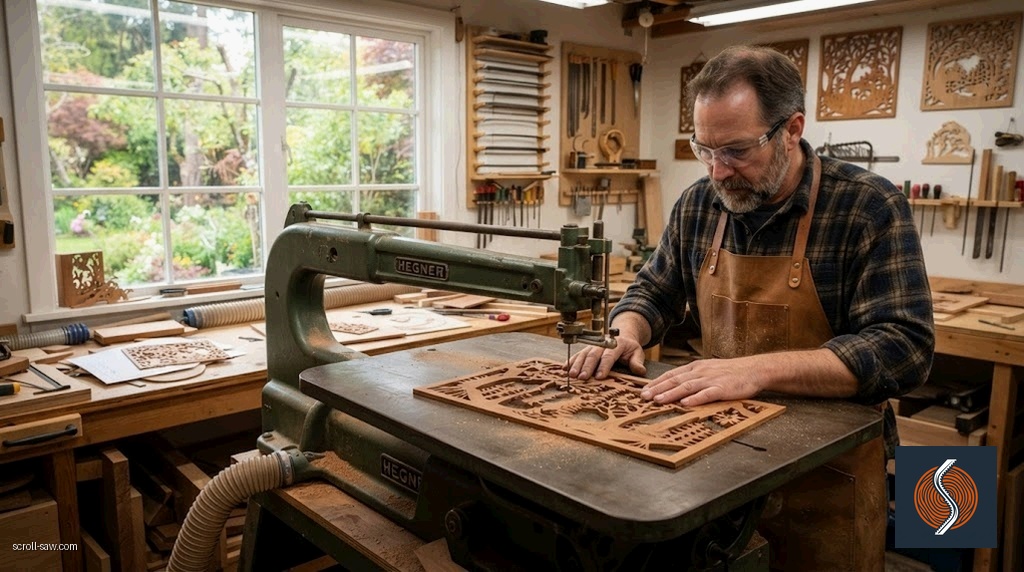
How 30 Inch Scroll Saw Fits Into a Scroll-Saw Workflow
Thirty inches represents the top end of the scroll saw market, with premium names like Excalibur, King Industrial, and Pégas building machines at this scale for serious hobbyists and small production operations. A saw this size is a workflow-defining purchase, not an incremental upgrade, so understanding exactly where it fits matters before committing.
Direct answer
A 30-inch scroll saw fits into a workflow as the central cutting station for large-format pattern work, portrait commissions, intarsia production, or any operation where throat depth and sustained-duty reliability directly affect throughput and project scope. It is built around features like foot switches, magnifying lamps, and quick-release blade systems specifically because it is designed for extended, repeated use rather than occasional hobby sessions.
What sets this tier apart
Sustained-duty construction. Saws at this size are built to run for extended periods reliably, which matters for anyone using the tool as a primary income-generating asset rather than an occasional hobby tool.
Workflow-specific accessories. A momentary foot pedal lets you control the saw hands-free during intricate cuts. A magnifying lamp supports extended detail work without eye strain. A quick-release blade lever minimizes downtime between blade changes during long sessions.
Large-format capacity. A 30-inch throat accommodates the biggest pattern designs and panel work in the hobby, removing size constraints that smaller saws impose on project scope.
Where it fits in a full workflow
Design and pattern preparation. Happens independently of saw size, though larger available throat depth does open up bigger pattern options during this planning stage.
Rough stock preparation. A band saw or table saw still handles breaking down raw material efficiently; a scroll saw of any size is not the tool for this stage.
Precision cutting. This is where a 30-inch saw becomes the centerpiece of the operation, handling everything from small detail work to the largest panels the throat allows, all on one machine.
Repeat and production cutting. The accessories and sustained-duty build specifically support cutting the same or similar patterns repeatedly across long sessions without the fatigue or downtime smaller saws introduce.
Who this size genuinely serves
Small businesses producing scroll saw pattern work for sale at meaningful volume, where saw downtime and session fatigue directly affect output.
Serious hobbyists regularly working on the largest-scale portrait and intarsia projects the hobby supports.
Anyone whose current saw’s throat depth has become a real, recurring constraint on the projects they want to take on.
Who does not need this size
Casual and even regular hobbyists working at moderate project scale are well served by an 18 to 22-inch saw, which covers the vast majority of pattern designs without the cost, footprint, and bench requirements of a 30-inch machine.
Verdict and takeaways
-
A 30-inch scroll saw is a workflow-defining tool built for sustained, large-format, and production-scale cutting.
-
Its accessories (foot switch, magnifying lamp, quick-release clamp) exist specifically to support extended, repeated use.
-
Most hobbyists do not need this size; it serves production operations and the largest-scale project work specifically.
-
A band saw still handles rough stock preparation regardless of scroll saw size.
Frequently asked questions
Who actually needs a 30-inch scroll saw? Small production operations and serious hobbyists regularly working at the largest project scale the hobby supports.
What do the foot switch and magnifying lamp add? Hands-free saw control and reduced eye strain during extended, detailed cutting sessions.
Does a 30-inch saw replace a band saw in my workflow? No, a band saw still handles rough stock breakdown more efficiently than any scroll saw.
Is this size worth it for occasional hobby use? Generally not; an 18 to 22-inch saw covers most hobby project needs without the added cost and footprint.
What construction differences set this tier apart? Sustained-duty build quality intended for extended, repeated use rather than occasional sessions.
What kind of projects justify this throat depth? The largest pattern designs, portrait commissions, and intarsia panels the hobby supports.
References
- Excalibur, King Industrial, and Pégas large-format scroll saw product documentation.


