
GMC 16 Scroll Saw: Fit, Setup, and Workflow Guide
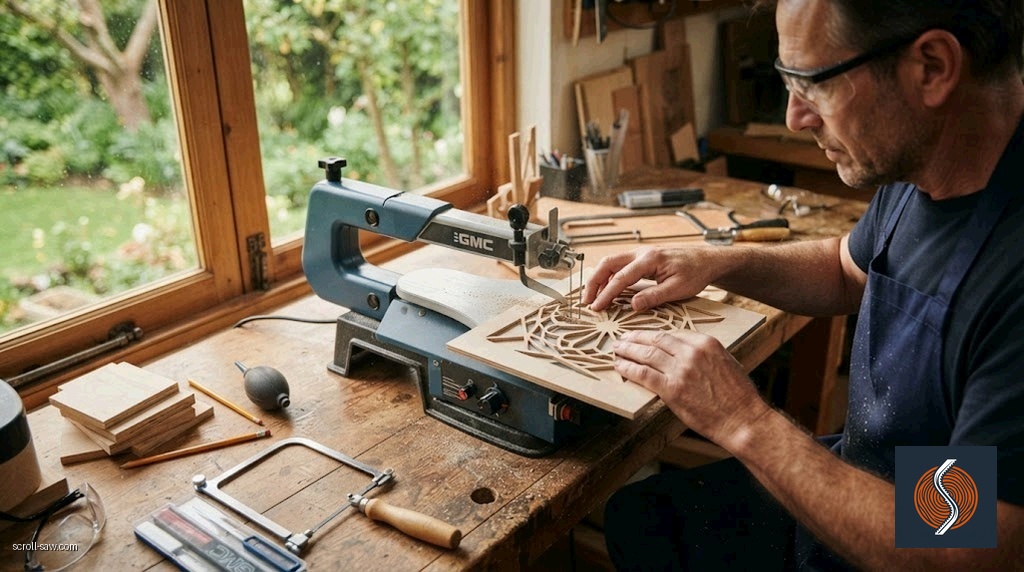
GMC 16 Scroll Saw: Fit, Setup, and Workflow Guide
The GMC 16 is one of those tools you inherit rather than shop for. It shows up in a garage sale, a father-in-law’s shed, or the back of a Facebook Marketplace listing under a name most people don’t recognise anymore. If you’re standing over one right now wondering whether it deserves a spot on your bench, the answer isn’t a simple yes or no. It depends on what you cut, how patient you are with blade changes, and whether you’re willing to feed a machine that hasn’t been made in over a decade.
Here’s what a GMC 16 actually is, what it does well, where it quietly holds you back, and how to slot it into a working scroll-saw setup without spending a weekend fighting it.
What the GMC 16 actually is
GMC stands for Global Machinery Company, an Australian-owned brand that flooded hardware stores in the 2000s with affordable power tools before the parent company went into liquidation. The GMC 16 (also sold as the FS-16, and rebadged in some markets as the King 16) is a 16-inch throat scroll saw built around a C-arm, cast-metal table, and a pin-end blade clamp. Throat depth is 16 inches from the blade to the back of the arm, cutting capacity is around 2 inches at 90 degrees, and the table tilts left to roughly 45 degrees for bevel cuts.
It’s a hobby-class machine, not a production one. That’s not an insult, it’s a category, and it matters when deciding what work to give it.
Where it fits in a real workflow
A scroll saw’s job is to make curved and interior cuts in relatively thin material, and the 16-inch class is the entry point for most home shops. The GMC 16 handles that basic scope reliably: silhouettes in 1/4 to 3/4-inch pine, plywood puzzles, small clock faces, hobby signs, foam and cork for craft use, and thin non-ferrous materials with the right blade.
Where it sits in a workflow depends on what else is on your bench.
If it’s your only saw, treat it as your main curve-and-detail tool and let the band saw (if you have one) handle rough shaping and thicker rip work. Rough your stock close to the line on the band saw or with a jigsaw, then finish curves and interiors on the GMC 16 where the blade is finer and the kerf is smaller.
If you already own a modern variable-speed scroll saw such as a WEN 3921 or a Dremel MS20, the GMC 16 becomes a dedicated station. Set it up with a coarse pin-end blade for rough pattern removal and puzzle blanks, and reserve the newer machine for detail work where the finer plain-end blades really pay off. Splitting jobs this way saves the constant blade swap that eats an evening.
The GMC 16 doesn’t earn a spot in a workflow that demands frequent interior cuts through hardwood, tight fretwork, or long production runs. The pin-end clamp system, the shorter stroke, and the noise it makes at higher speeds all wear on you across a day.
The blade question, which is really the whole story
More GMC 16s get retired than fail, and the reason is almost always blades.
The stock clamp accepts 5-inch pin-end blades, the kind with a small crosspin at each end that snaps into a slot in the upper and lower blade holder. Pin-end blades are wider and coarser than the plain-end blades most serious scroll-sawyers use today, so the minimum radius you can cut is larger, the kerf is wider, and the finish off the saw needs more sanding.
For general 1/4 to 3/4-inch wood, a mixed pin-end blade assortment in 10, 15, 18, and 24 TPI covers most work. Skil also sells an 18-piece set that mixes pin-end and plain-end blades, which is worth keeping around if you own more than one scroll saw.
The real upgrade for a GMC 16 isn’t a new blade brand. It’s an aftermarket pinless blade adapter, a small pair of clips or chucks that let you use standard 5-inch plain-end blades in a machine originally built for pins. Once you can run Olson reverse-tooth plain-end blades or the excellent Pegas skip-tooth line, the whole feel of the machine changes. Cuts get cleaner, radii get tighter, and the workpiece stops trying to lift off the table on the upstroke.
If you plan to keep the saw, buy the adapter before you buy anything else.
Setup that matters before your first cut
A GMC 16 that fights you is almost always one of three things: unbalanced tension, a worn blade holder, or a bench that turns vibration into a resonating drum.
Tension. Tighten the blade so it rings a clear note when you pluck it, not a dull thud. Under-tensioned blades wander and snap early. Over-tensioned blades bend the arm arc on the downstroke and stress the pins.
Blade holders. Check the small brass or steel seats where the pins sit. If they’re rounded or gouged from years of use, the blade rocks slightly at the top of the stroke and every cut wanders. Replacement holders for GMC-era saws are hard to source new, but a machinist or a competent hobby friend can often make a replacement pair from bar stock.
Mounting. Bolt it to a heavy bench or a dedicated stand. A GMC 16 sitting loose on a wobbly card table sounds like a jackhammer and cuts like one too. Rubber isolation pads under the feet drop the vibration by a noticeable amount.
Check the table for square to the blade with a small engineer’s square before every serious session. On these older saws the table lock loosens over time and a millimetre of tilt at the table becomes a visible slope in your inlay.
Who should keep a GMC 16 and who should move on
Keep it if you’re an occasional user cutting hobby-scale work, the machine runs quietly, and the price of admission was free or close to it. Add a pinless blade adapter, bolt it down, and it will happily produce puzzles, ornaments, and craft cutouts for years.
Move it on if you’re doing serious fretwork, if the arm has visible play at the pivot, if the motor bogs down in 3/4-inch hardwood at full speed, or if you’re finding yourself talking about upgrading. That last one is telling. Once a tool becomes an obstacle to the work you actually want to do, no amount of tuning fixes it.
For most people replacing a GMC 16, the natural step up is a modern 16-inch variable-speed saw with tool-less plain-end blade clamps. Even entry-level models today cut smoother, quieter, and with a lot less setup friction than the GMC 16 was ever capable of.
Sourcing parts, manuals, and support
GMC went into liquidation years ago, so there is no active manufacturer support, no warranty channel, and no official parts catalogue online. Realistic sources for parts:
-
Australian and New Zealand tool forums, where GMC was most heavily sold, often have members parting out non-runners.
-
eBay listings for GMC FS-16 or King 16 (the rebadged equivalent) show up periodically with spare blade holders, drive belts, and switches.
-
Generic replacements work for consumables. Any standard scroll-saw drive belt of the correct length and profile will fit. Blades are universal 5-inch pin-end.
For the manual, the original GMC FS-16 instruction sheet occasionally surfaces on machinery archive sites. If you can’t find one, the operating principles are identical to any other pin-end 16-inch scroll saw, and a general scroll-saw guide covers everything the missing manual would have told you.
The verdict
The GMC 16 is a fine second saw, an acceptable first saw for someone who cuts casually and paid nothing for it, and the wrong saw for anyone who plans to grow into intricate work. The single change that unlocks the most from it is a pinless blade adapter and a set of quality plain-end blades. Do that first, judge the machine after, and only then decide if it stays on the bench.
FAQ
Is the GMC 16 the same as the King 16 scroll saw? Essentially yes. GMC-made scroll saws were rebadged and sold under several house-brand names, and the King 16 shares the same casting, arm design, and blade clamp system. Parts and blades are interchangeable in most cases, but always confirm by measuring your existing blade holder before ordering anything.
Can I put pinless (plain-end) blades in a GMC 16? Not without an adapter. The factory clamp is designed for pin-end blades. Aftermarket pinless conversion clips exist and are the single best upgrade you can make to the machine.
What size blades does the GMC 16 take? Standard 5-inch pin-end scroll saw blades, the same universal size used by most 15 and 16-inch hobby scroll saws including WEN, Dremel, and older Delta models.
How thick a piece of wood can it cut? Roughly 2 inches at 90 degrees in soft wood, less in hardwood. The motor and stroke length aren’t ideal for anything close to that maximum, so a practical daily working range is 1/8 to 3/4 inch.
Where can I find a GMC 16 scroll saw manual? GMC no longer exists as a company, so there is no official download. Try Australian tool forums, the Internet Archive machinery collection, and eBay listings which sometimes include a scanned copy. A general scroll-saw setup guide will cover the same ground.
Is a GMC 16 worth buying secondhand today? Only at a very low price, and only if the machine runs smoothly with no arm play. Modern entry-level scroll saws outperform it in almost every way, so paying more than $50 to $75 for a used GMC 16 rarely makes sense.
Why does the workpiece jump on the upstroke? Almost always a pin-end blade issue. Pin-end blades have a coarser tooth pattern and a slight upstroke pull. A hold-down foot pressed firmly against the workpiece, plus a slower speed setting, fixes most of it. Switching to reverse-tooth plain-end blades through an adapter fixes it entirely.
What’s a fair replacement if I retire mine? Any modern 16-inch variable-speed scroll saw with tool-less plain-end blade changes. The specific model matters less than the two features: variable speed and plain-end blade compatibility.
References
-
Scroll Saw Association of the World, general operating and safety guidance for hobby scroll saws.
-
Olson Saw Company technical data sheets, blade sizing and TPI recommendations for pin-end and plain-end blades.
-
Fine Woodworking magazine archive, scroll saw setup and blade tension articles.
-
Australian Woodworker forum archives, GMC and King brand tool discussions.
Title tag: GMC 16 Scroll Saw: Fit, Setup, and Workflow Guide Meta description: What the GMC 16 scroll saw is good for, where it holds you back, the blade upgrade that changes everything, and when to move on. URL slug: gmc-16-scroll-saw Excerpt: The GMC 16 is a discontinued hobby-class scroll saw that still turns up in sheds and yard sales. Here’s what it does well, the pin-end blade limitation that defines it, and the single adapter that unlocks its real potential in a modern workflow.


