
Makita SJ401 Scroll Saw: Purpose, Fit, and Setup Guide
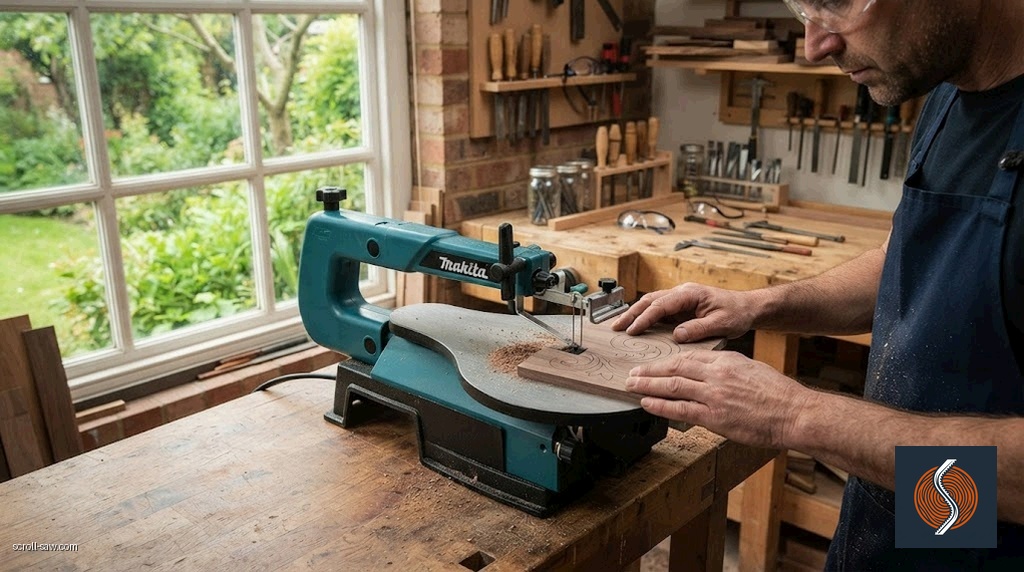
Makita SJ401 Scroll Saw: Purpose, Fit, and Setup Guide
A Makita SJ401 doesn’t come up in modern scroll-saw shopping conversations, which tells you most of what you need to know about it: it’s an older, out-of-production model, still in the wild in older shops, and it earns questions today mostly from people who’ve inherited one or found one on a second-hand listing. That’s a fair place to start, because whether the SJ401 belongs on your bench today is a different question from whether it was a good saw when Makita first sold it.
Here’s what the SJ401 was built for, where it fits (and doesn’t) in a modern shop, and how to set it up if you have one and want it to earn its keep.
What the SJ401 actually is
The Makita SJ401 is a 16-inch throat scroll saw from Makita’s earlier woodworking machinery line, built to the same general pattern as most Japanese-manufactured saws of its era: a C-arm frame, cast metal table, plain-end blade holders on most versions, and a variable-speed motor.
Makita’s woodworking-machinery presence has shrunk over the years as their business shifted toward portable power tools and outdoor equipment, and the SJ401 was quietly discontinued. Support for parts and documentation is limited today, though the machine itself was built to a decent standard and the survivors tend to keep working.
Purpose: what Makita built this saw to do
The SJ401 was aimed at the enthusiast and light-professional market. Its intended purpose:
-
Precise curve and interior cuts in wood up to about 2 inches thick.
-
Bevel cuts up to 45 degrees using the tilt table.
-
Fretwork, marquetry, and puzzle work at hobby to semi-professional scale.
-
Occasional cutting of soft non-ferrous metals and plastics with the right blade.
It was not built for production. The motor size, stroke length, and blade change process all reflect a design intended for careful use in short sessions, not for turning out fifty parts a day.
Fit: where the SJ401 belongs today
A well-preserved SJ401 fits three types of shops.
Primary machine for occasional hobby use. For someone cutting a few evenings a month, an SJ401 in good condition is perfectly adequate. It won’t feel modern, but it will cut cleanly.
Second saw in a shop that already has a modern machine. Set up permanently with a coarse blade for pattern removal and rough shapes, freeing the newer saw for detail work without constant blade changes.
Restoration project for a hands-on owner. If you enjoy tuning older equipment, an SJ401 that runs rough but has intact castings is a fair candidate for bearing and belt refresh work.
Where it doesn’t fit:
-
First-time buyer who wants tool-free convenience. Modern entry-level saws are friendlier to learn on.
-
Production shop. The blade change process and modest motor aren’t up to sustained daily use.
-
Fine detail specialist. Newer premium saws with parallel-arm geometry produce a smoother stroke and less blade wander.
Practical setup
With the saw unplugged, work through this order.
Bolt it down. The SJ401 has enough mass to sit still on a solid bench, but vibration transfer through the feet turns into blade chatter. Bolt to a heavy bench or dedicated stand, with rubber pads under the feet.
Square the table to the blade. Set the tilt to zero, use a small engineer’s square against the blade at three points along the stroke. If any reading differs from the others, the blade is bent or the arm has developed pivot play.
Check the blade holders. The clamping surfaces should be flat and unmarked. Gouged or rounded holders let the blade rock at each end of its stroke and every cut wanders slightly.
Verify the tilt lock holds. Set the table to 45 degrees, tighten the lock, then push firmly at each corner. If it moves, the lock or the trunnion is worn.
Check the tension mechanism. Cycle the blade tension lever or knob through its full range. Smooth operation with no gritty spots means the internal linkage is intact. Rough operation means grit or wear in the mechanism, which shows up later as inconsistent tension and premature blade breakage.
Test speed control. With no blade in place, run the motor through its full speed range. Smooth ramp up and down without electrical whine or hunting means the controller is healthy.
Adjust the hold-down foot. Rest it lightly on the workpiece surface, close to but not touching the blade. Purpose is to prevent lift on the upstroke, not to clamp the piece down.
Point the dust blower. Aim the small tube at the cut line, upstream of the direction of travel, so sawdust clears rather than piling on your line.
Blade choice for the SJ401
The SJ401 takes standard 5-inch plain-end scroll saw blades on most versions. Any current-production quality blade fits.
-
General woodwork: Reverse-tooth #5 or #7 for 1/4 to 3/4-inch stock. Olson’s reverse-tooth assortment.
-
Detail and fretwork: Skip-tooth #1 or #3. Pegas skip-tooth blades.
-
Cuts that change direction: Spirals for lettering and irregular silhouettes. Olson SP46500 spirals.
The SJ401’s smoother stroke rewards better blades. Cheap bulk blades will cut, but the machine’s underlying quality is wasted if you don’t feed it quality steel.
Technique habits that suit the SJ401
Steady feed pressure. Firm and consistent, not aggressive. The SJ401’s motor is modest, and a hard push against a coarse blade just bogs the machine.
Turn the workpiece around the blade. Never steer by twisting sideways. Lateral pressure bends the blade and produces angled cuts.
Match speed to the cut. Long straight or gentle-curve runs at higher speed. Tight corners and delicate bridges at slower speeds.
Use starter holes for all interior cuts. Drill a small pilot in the waste area, thread the plain-end blade through, re-tension, cut.
Support long stock. Set up an auxiliary support at exact table height for pieces that overhang.
Common problems and what causes them
Frequent blade snaps. Over-tensioning first, side-loading second, wrong blade for the material third.
Wandering cuts. Bent blade, dull blade, uneven blade holder grip, or side-loading with lateral steering pressure.
Vibration at speed. Loose motor mount, loose base bolts, stretched belt. Work outward from the loudest area.
Motor bogs in hardwood. Feed slower, switch to a coarser blade. A #7 skip-tooth cuts oak faster with less strain than a #3 run hard.
Table drifts from square over time. Older saws sometimes develop play in the tilt trunnion. Verify square before each serious session.
Parts and support
Makita’s current support for the SJ401 is limited. Practical sources:
-
Makita service centres occasionally hold legacy parts for older models. Worth an email with the exact model number.
-
Independent power tool repair shops with long-established supplier networks.
-
eBay listings for non-running SJ401 saws sold as parts machines.
-
Scroll saw and woodworking forums where owners occasionally sell spares.
Consumables are universal. Blades, belts, bearings, and the dust blower tube are all standard sizes.
Model-specific parts (blade holder assemblies, speed controller, motor) are harder. If the machine you’re evaluating has a failed blade holder, price it accordingly.
The verdict
A Makita SJ401 in good condition is a decent older scroll saw, worth keeping if you already own one and worth buying only at a used price that reflects the parts-support limitations. It won’t outperform a modern equivalent in convenience or in the smoothness of the stroke, but it will cut cleanly for years with a solid setup and quality blades.
If you’re starting from scratch today, buy a modern 16-inch variable-speed saw with tool-free blade change. If you already have an SJ401, tune it well and it will serve.
FAQ
Is the Makita SJ401 still available new? No. It was discontinued and is only available on the used market today.
What blade does the SJ401 use? Standard 5-inch plain-end scroll saw blades on most versions. Confirm by checking the blade holder.
How thick a piece can it cut? Roughly 2 inches in soft wood at 90 degrees. Comfortable everyday range is 1/8 to 3/4 inch.
Where can I find a manual? Makita’s global support archives sometimes list legacy documentation. Aggregator sites and woodworking forums are the usual fallbacks.
Are parts still available? Consumables (blades, belts, bearings) are universal. Model-specific parts are limited and require patience to source.
Is it worth restoring one? If the frame, arm, and table casting are sound, yes. If the arm pivot is worn or the casting is cracked, generally not.
Why does my blade break in the middle of a cut? Over-tensioning is the most common cause. Check tension by feel: the blade should ring a clear musical note when plucked, not a dull thud or a straining high pitch.
What’s a fair used price? Depends heavily on local market and condition. Compare against modern entry-level scroll saw prices and adjust for the SJ401’s limited parts support.
References
-
Makita corporate documentation and legacy product resources.
-
Olson Saw Company blade selection and tensioning technical resources.
-
Scroll Saw Association of the World, operating and safety guidance.
-
Fine Woodworking magazine archive, scroll saw setup and blade selection articles.
Title tag: Makita SJ401 Scroll Saw: Purpose, Fit, and Setup Guide Meta description: What the Makita SJ401 scroll saw was built for, where it still fits today, and how to set one up for clean, reliable cutting in a modern shop. URL slug: makita-sj401-scroll-saw Excerpt: The Makita SJ401 is a discontinued 16-inch scroll saw that still runs well in many older shops. Here’s what it was built for, how it fits into a modern workflow, and the setup and blade choices that keep it earning its bench space.


