
Performax 16 Scroll Saw: Useful Applications and Fit
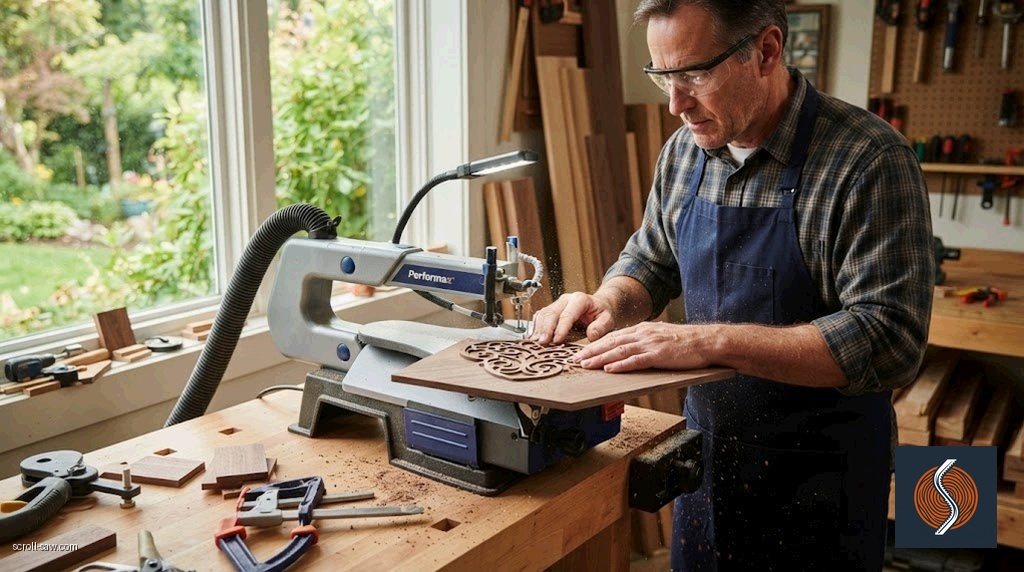
Performax 16 Scroll Saw: Useful Applications and Fit
The Performax 16 is worth exactly what you paid for it, and slightly more if you know what to do with it. That’s not damning, that’s the whole picture on a house-brand hobby saw from a discontinued line. If you inherited one, found one at a thrift store, or are sizing up a used listing, the question isn’t “is this a great saw” but “is this a useful saw for the work I actually do.”
Here is where the Performax 16 genuinely earns its bench space, where it holds you back, and the specific applications it handles well enough to keep around.
What the Performax 16 was built for
Menards sold the Performax line as an entry-level alternative to the mid-priced brands. The 16-inch scroll saw fit that positioning: acceptable specifications, basic build quality, low retail price. Its intended user was a first-time buyer, a casual weekend hobbyist, or someone who wanted a scroll saw without committing to a bigger tool budget.
That design brief shows up in every part of the saw. The castings are adequate rather than robust, the blade holders are functional rather than refined, and the motor is honest for its power class but not oversized.
Where the Performax 16 is genuinely useful
Learning the craft. For someone starting out, the Performax 16 is a reasonable teacher. The stroke is smooth enough to develop line-following technique, the tilt table works well enough for a first set of bevel cuts, and the price of admission is low enough that mistakes don’t sting.
Puzzles and craft cutouts. Where the Performax 16 shines. Puzzle blanks in 1/4 to 1/2-inch plywood, hobby signs, seasonal ornaments, and craft cutouts all sit comfortably in the machine’s sweet spot. A steady blade and a steady hand produce work you’d be proud to give away.
Silhouettes and small clock faces. With a decent blade and modest speed, the Performax 16 tracks silhouette outlines cleanly. Small clock faces up to about 8 inches diameter work well; larger clocks are possible but the throat depth becomes the limit long before the machine does.
Second saw in a two-machine shop. With a coarse blade installed permanently, a Performax 16 can serve as a dedicated pattern-removal and blank-cutting station while a better machine handles detail work. Splitting jobs across two saws avoids constant blade swaps and keeps each machine in its comfort zone.
Cutting foam, cork, and thin plastic. With the right blade, the Performax 16 handles craft materials that a bigger, more expensive machine would also handle, at zero extra cost since the saw is already there.
Non-ferrous metal up to about 1/16 inch. With a fine-tooth blade meant for metal, the Performax 16 will cut brass, copper, and aluminum sheet cleanly enough for hobby jewelry, model work, and small brackets.
Where it isn’t useful
Being honest saves time.
Fine fretwork with hair-thin bridges. The stroke smoothness and blade clamp precision aren’t in a class where 1/32-inch bridges survive cutting. If your work requires that, the Performax 16 will disappoint every time.
Production runs. Any workflow that involves cutting the same shape fifty times will wear you out through blade change friction long before it wears the machine out.
Consistent thick hardwood. Anything over about an inch of oak or maple slows the motor and stresses the blade. Not impossible for occasional cuts, painful for regular work.
Extreme precision over long cuts. Older Performax 16s often have some play in the arm pivot that shows up as small wander on cuts over 6 or 8 inches long. Fine on short cuts, frustrating on long ones.
Blades that make the Performax 16 useful
Blade choice does more for cut quality than any adjustment to the machine itself.
Pin-end Performax 16 versions take standard 5-inch pin-end blades. A general pin-end assortment in mixed TPI covers everyday work.
Plain-end versions benefit from a small working kit:
-
Reverse-tooth #5 or #7 for general 1/4 to 3/4-inch wood: Olson’s reverse-tooth assortment.
-
Skip-tooth #1 or #3 for finer detail: Pegas skip-tooth blades.
-
Spirals for cuts that need to change direction: Olson SP46500 spirals.
If your Performax 16 is pin-end and you want plain-end capability, aftermarket pinless blade adapters (small clips that install in the existing pin-end holders) are the single most useful upgrade you can make.
Applications-by-material quick reference
Soft wood (pine, poplar, basswood) up to 3/4 inch: Reverse-tooth #5 or #7, medium to high speed. Excellent results.
Hardwood (oak, maple, walnut) up to 3/4 inch: Skip-tooth #5 or #7, medium speed. Good results with patience on feed.
Plywood up to 1/2 inch: Reverse-tooth #5, medium to high speed. Clean underside finish.
Foam and cork: Coarse blade, low to medium speed. Sharp, clean cuts.
Thin plastic sheet (up to 1/8 inch): Fine-tooth blade meant for plastic or a #3 skip-tooth, low speed. Watch for heat build-up on continuous cuts.
Non-ferrous metal (up to 1/16 inch): Fine metal blade, low speed, occasional oil for lubrication. Slow and steady wins.
Hardwood over 1 inch: Beyond the machine’s comfort zone. Try a band saw first.
Who should keep a Performax 16 and who should move on
Keep it if you paid little or nothing for it, you cut occasionally at hobby scale, and the mechanical condition is sound (no arm play, blade holders unmarked, motor smooth).
Move on if you’re doing serious fretwork, if the arm has visible play at the pivot, if you’re finding yourself talking about the machine’s limits during projects, or if the repair cost of a failed part approaches the price of a modern equivalent scroll saw.
For most owners considering replacement, the natural upgrade is a modern 16-inch variable-speed saw with tool-free plain-end blade change. The improvement in stroke smoothness, blade change convenience, and long-term parts support is significant even at modest price points.
The verdict
A Performax 16 is a useful hobby scroll saw within a narrow but real zone. It won’t do fine fretwork, it won’t survive production runs, and it won’t outperform a modern equivalent in any measurable way. What it will do is cut cleanly enough for puzzles, silhouettes, ornaments, and craft work at zero or near-zero acquisition cost. That’s a fair deal, and it’s exactly the deal the saw was originally sold as.
Don’t ask it to be more than that and it will serve you well. Ask it to be a premium machine and it will disappoint every time.
FAQ
Is a Performax 16 good for beginners? Yes, if the price is right and the machine is mechanically sound. A modern entry-level saw with tool-free blade change is friendlier to learn on, but a Performax 16 can teach the fundamentals.
What can I cut on a Performax 16? Soft and medium hardwood up to 3/4 inch, plywood up to 1/2 inch, foam, cork, thin plastic, and non-ferrous metal up to about 1/16 inch. Anything beyond that is outside the machine’s comfort zone.
Can I do fretwork on a Performax 16? Simple fretwork with 1/8-inch or wider bridges, yes. Fine fretwork with hair-thin bridges, no.
Is it worth buying a used one today? At a low price with the arm free of lateral play and blade holders unmarked, yes. Modern equivalents are available if used pricing is too high.
Where can I find replacement parts? Menards service departments sometimes hold or source legacy parts. eBay and forums are usual fallbacks for model-specific items. Consumables are universal.
What’s the best upgrade for the machine? Quality blades. A pinless blade adapter for pin-end versions is a close second.
Why does my blade break so quickly? Over-tensioning is the most common cause. Check tension by feel: a clear ringing note when plucked, not a dull thud or a straining high pitch.
Can it cut metal? Non-ferrous metal up to about 1/16 inch, with a fine metal blade and slow speed. Steel is not recommended.
References
-
Olson Saw Company blade selection and material recommendations.
-
Scroll Saw Association of the World, operating and material guidance.
-
Fine Woodworking magazine archive, scroll saw applications and workflow articles.
-
General industrial supplier resources for consumables and blades.
Title tag: Performax 16 Scroll Saw: Useful Applications and Fit Meta description: Where the Performax 16 scroll saw is genuinely useful, the applications it handles well, and where its class limits are worth respecting. URL slug: performax-16-scroll-saw-applications Excerpt: A Performax 16 scroll saw earns its bench space within a real but narrow zone. Here are the applications it genuinely handles well, the ones it doesn’t, and how to decide whether it fits your work.


