
Powermatic 15 Scroll Saw: Selection and Fit Guide
Powermatic 15 Scroll Saw: Selection and Fit Guide
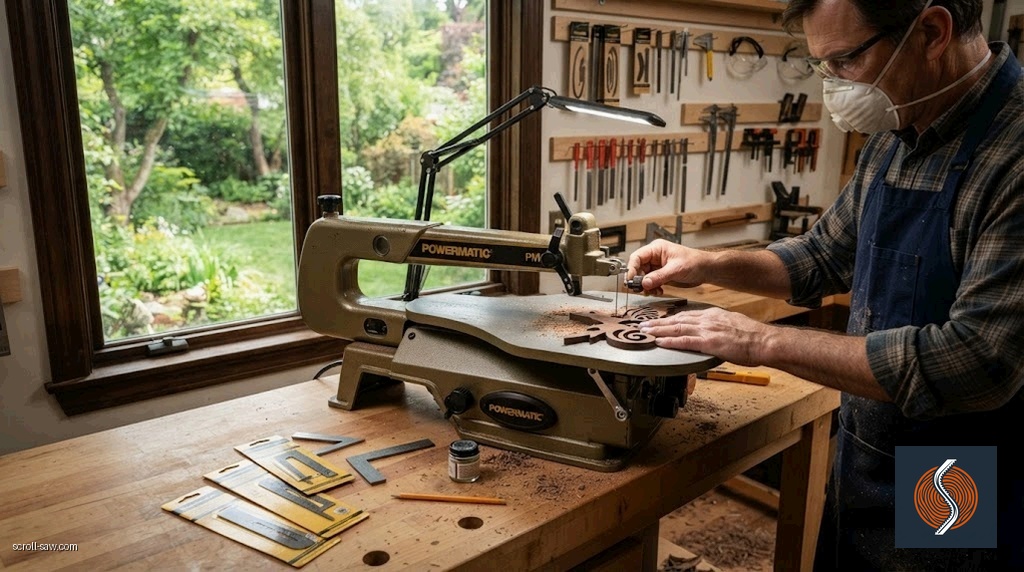
Powermatic built its reputation on serious cast iron woodworking machinery, the kind of tools that outlive the person who bought them. The Powermatic 15-inch scroll saw fits that tradition. It isn’t a small hobby machine dressed up in industrial paint, it’s a genuine mid-weight scroll saw built to earn its keep in a working shop.
That also means the selection question is different from picking a big-box hobby saw. You aren’t choosing between one Powermatic 15 and another. You’re deciding whether a Powermatic-class scroll saw is what your work actually needs.
What the Powermatic 15 actually is
The Powermatic 15-inch scroll saw is a mid-size industrial-grade machine, historically part of Powermatic’s stationary woodworking lineup. Typical build:
-
15-inch throat depth with cast iron frame and table.
-
Parallel-arm or C-arm design depending on the specific model generation.
-
Substantial induction motor with variable speed on most versions.
-
Plain-end blade holders with a proper clamping mechanism.
-
Cast iron table with substantial mass and a well-fitted tilt mechanism.
Weight and rigidity are what set a Powermatic scroll saw apart from the hobby class. The extra mass damps vibration, keeps the blade tracking straight, and lets you cut for hours without the machine walking across the bench.
Selection criteria: does a Powermatic 15 fit your work
Yes, if:
-
You cut regularly enough that a small saw feels like a compromise.
-
Detail work matters and you want a stroke smooth enough to hold a hair-thin bridge.
-
You expect the saw to last decades and don’t want to replace it.
-
The shop has bench space for a fixed-position machine.
-
You already own quality blades and know how to tension them by feel.
Not really, if:
-
You cut a few evenings a month at hobby scale. The Powermatic is more machine than that work needs.
-
Bench space is tight. A cast iron scroll saw wants a permanent spot.
-
You need portability for job sites or classes.
-
The used price is close to a new mid-tier machine with modern conveniences (tool-free blade change, integrated dust collection).
Fit in a workflow
The Powermatic 15 sits at the middle of the scroll-saw class ladder. Above it in throat depth are 21 and 30-inch machines for larger work. Below it are the hobby-class 16-inch imports. Its 15-inch throat is generous enough for most work but not designed for full-panel intarsia or mantel-scale signs.
Where it earns its keep:
-
Everyday detailed cutting where the stroke smoothness pays off.
-
Fine fretwork where blade tension consistency matters.
-
Multi-hour sessions where a lighter machine would beat you up with vibration.
-
Stock up to about 2 inches thick in soft wood, or 1 inch in dense hardwood.
Hand off to another tool when:
-
Workpieces regularly exceed 15 inches in width (upgrade to a larger throat).
-
Cuts are long and straight (table saw or band saw beats any scroll saw).
-
Rough shape removal is the goal (band saw is faster and less stressful on blades).
Blades: matched to the class
A Powermatic-class scroll saw rewards better blades. The stroke smoothness is wasted on soft, poorly ground blades.
A working kit for a Powermatic 15:
-
Reverse-tooth #5 or #7 for general 1/4 to 3/4-inch woodwork: Olson’s reverse-tooth assortment is a fair starting point.
-
Skip-tooth #1 or #3 for detailed fretwork: Pegas skip-tooth blades hold their edge longer than most alternatives.
-
Modified geometry blades from Pegas for extremely fine detail work: Pegas modified geometry line.
-
Spirals for cuts that need to change direction: Olson SP46500 spirals.
-
Flying Dutchman ultra-reverse blades for the cleanest bottom-side finish: Flying Dutchman variety pack.
Buy blades in bulk. A Powermatic 15 in regular use will eat through a dozen blades a month without breaking a sweat.
Setup and mounting
The Powermatic 15 is heavy enough to sit still on almost any surface, but it isn’t immune to how you set it up.
Level the machine. Use shims under the feet to eliminate any rock in the frame. A saw that rocks even slightly transmits vibration through the base and into your cuts.
Bolt it to a solid stand. Powermatic sold matching stands for many of their scroll saws. If yours doesn’t have one, a heavy shop-built stand of comparable mass works equally well.
Square the table to the blade with an engineer’s square at three points along the stroke. Adjust the tilt stop screw until the scale zero equals true square.
Verify the tilt lock by setting to 45 degrees, tightening, and pushing firmly at each corner.
Check the tension mechanism through its full range. Powermatic tension systems are usually well-built, but decades of use can develop small issues.
Tensioning technique
Blade tension on a Powermatic scroll saw is set the same way as any other scroll saw: by feel and sound. Pluck the tensioned blade with a fingernail near the middle of its length. A clear, ringing musical note means correct tension. The Powermatic’s more sensitive blade clamp system rewards the fingernail test more than a rougher machine would, because inconsistent tension shows up more clearly in cut quality.
Technique that matches the machine
The Powermatic 15 handles the fundamentals well. Where technique matters:
Feed pressure. Firm and steady, matching the blade to the material. Don’t try to force the machine, but don’t be timid either. The heavier motor and stroke can handle real cutting pressure.
Turn the workpiece around the blade. Never steer by lateral pressure. Even a premium scroll saw suffers from side-loading.
Match speed to the cut. Variable speed is a real tool, not a marketing feature. Use it deliberately.
Use starter holes for interior cuts. Even on a machine with good blade access, drilling a small pilot hole in the waste area is faster than plunging with a plain-end blade.
Support long stock with an auxiliary support at exact table height for pieces that overhang.
Buying a used Powermatic 15
Good used Powermatic scroll saws hold their value well because the market recognises their build quality. What to check:
-
Arm pivot for lateral play (there shouldn’t be any).
-
Blade holder condition (clamping surfaces flat and unscored).
-
Motor bearings by listening for rumble during a test run.
-
Table for cracks around the blade slot and tilt trunnion.
-
Belt condition and tension mechanism smoothness.
-
Overall castings for cracks or repair welds.
A sound Powermatic 15 is worth paying reasonable money for. A rough one with pivot play or a stripped tilt trunnion is generally not worth restoring.
The verdict
A Powermatic 15 is a serious scroll saw for serious work. If your cutting justifies the class, it’s a lifetime tool at a used price that beats most modern equivalents on build quality. If your work is casual and occasional, it’s more saw than you need, and a modern hobby machine with tool-free blade change is a better daily match.
Select on the basis of what your work actually demands, not on the appeal of a premium brand name.
FAQ
What blade does the Powermatic 15 use? Standard 5-inch plain-end scroll saw blades. Any current-production quality blade fits.
How thick can it cut? Roughly 2 inches in soft wood at 90 degrees. Comfortable working range is 1/8 to 1 inch.
Is a Powermatic 15 much better than a hobby-class scroll saw? For sustained use and detail work, noticeably. For casual hobby use, the difference matters less because the workload doesn’t demand the extra capability.
How much does it weigh? Substantial. Depending on the specific model and generation, well over 100 pounds. Not a portable machine.
Where do I find replacement parts? Powermatic’s current parts support network handles many legacy models. Independent industrial tool repair shops are useful for older versions.
Is the Powermatic 15 still made? Powermatic’s scroll saw lineup has shifted over the years. Check current Powermatic product listings for the exact model status.
What’s a fair used price? Depends heavily on condition, location, and specific model generation. Sound Powermatic scroll saws hold value well because buyers recognise the quality.
Is it worth restoring one that needs work? Usually yes, if the frame, arm, and table castings are sound. Bearings, belts, and blade holders are all replaceable. A cracked casting or worn arm pivot generally means it’s time to move on.
References
-
Powermatic (JPW Industries) product documentation and support resources.
-
Olson Saw Company blade selection and technical resources.
-
Pegas blade sizing and application guides.
-
Scroll Saw Association of the World, operating and setup guidance.
Title tag: Powermatic 15 Scroll Saw: Selection and Fit Guide Meta description: Whether a Powermatic 15 scroll saw fits your work, how it compares to hobby-class machines, and what to check before buying used. URL slug: powermatic-15-scroll-saw Excerpt: The Powermatic 15 is a serious cast iron scroll saw built for real workshop use. Here’s who it fits, who it doesn’t, and how to decide whether it’s the right selection for your work.


