
Ridgid 16 Scroll Saw: Fit, Setup Guide Before First Use
Ridgid 16 Scroll Saw: Fit, Setup Guide Before First Use
Ridgid built its reputation on plumbing tools and job-site power equipment, and their scroll saws share that lineage: solid, workmanlike, occasionally quirky, backed by a Home Depot warranty program that made them attractive to buyers who valued long-term support. The Ridgid 16-inch scroll saw fit that pattern. It wasn’t the flashiest saw at the store, but it was built with a clarity of purpose that showed up during use.
Here’s what to know before making the first cut on one.
What the Ridgid 16 actually is
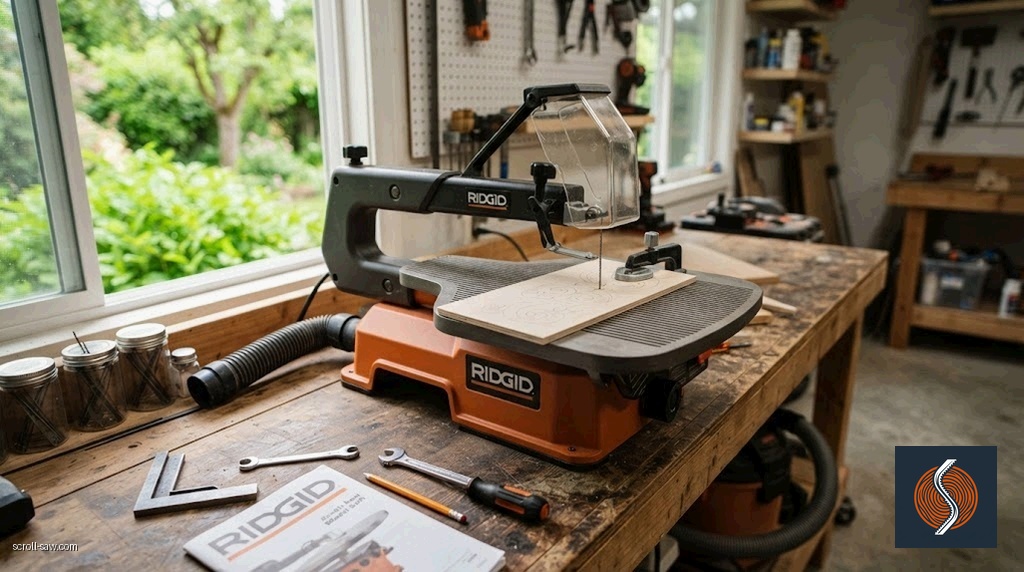
The Ridgid 16-inch scroll saw is a mid-tier hobby-class C-arm machine with:
-
16-inch throat depth, roughly 2 inches maximum cutting capacity at 90 degrees.
-
Cast aluminum table with tilt from 0 to 45 degrees.
-
Variable-speed induction or high-quality universal motor depending on the specific model.
-
Plain-end blade clamps with a tool-free blade change mechanism on later versions.
-
Integrated dust extraction port and blower.
-
Standard hold-down foot and work light.
Build quality is a step above the entry-level house-brand imports and a step below industrial-grade cast iron scroll saws. Fit and finish are good, blade holders are well-machined, and the motor and speed control are typically more refined than what you’d find on comparable-priced saws from budget brands.
Fit: does the Ridgid 16 belong in your shop
Yes, if:
-
You want a saw that lasts for years of hobby to moderate use.
-
Tool-free blade change matters to you (later Ridgid models have it).
-
You value active manufacturer support and the Home Depot warranty network.
-
You cut regularly and want a machine that won’t fight you.
-
Bench space is available for a permanent 16-inch class installation.
Not really, if:
-
You need larger throat depth for wide workpieces (upgrade to 21 or 30-inch class).
-
You’re doing serious production work (industrial-grade machines pay off there).
-
The used price approaches new modern equivalents from other brands.
-
You’re set on cast iron mass for vibration damping (the Ridgid is heavier than budget imports but not in the cast iron class).
Setup checks before the first cut
With the saw unplugged, work through these in order.
Mount solidly. The Ridgid 16 has enough mass to sit fairly still, but bolting it to a heavy bench or dedicated stand makes a noticeable difference in cut quality and blade life. Rubber pads under the feet reduce vibration transfer.
Level the table to the blade. Set to zero degrees on the tilt scale, verify with a small engineer’s square against the blade at three points along the stroke. All three readings should be identical. Adjust the underside stop screw if the tilt scale zero doesn’t equal true square.
Check blade holder condition. On a used Ridgid 16, the blade holders are the most common wear point. Clamping surfaces should be flat and unscored. Ridgid’s blade holders are generally more durable than budget-import equivalents, but they still wear with use.
Verify the tilt lock. Set to 45 degrees, tighten, push firmly at each corner. The Ridgid trunnion is usually robust, but check anyway.
Test the tension mechanism through its full range for smooth operation.
Check speed control by cycling through the full range with no blade under tension. Smooth ramp with no electrical whine.
Test the tool-free blade change (later models). Release and reset the upper clamp several times to confirm smooth operation.
Set the hold-down foot lightly on the workpiece surface.
Aim the dust blower at the cut line and connect the dust extraction port to a shop vac if you have one.
Blade selection
The Ridgid 16 takes standard 5-inch plain-end blades. A working kit:
-
Reverse-tooth #5 or #7 for general 1/4 to 3/4-inch woodwork: Olson’s reverse-tooth assortment.
-
Skip-tooth #1 or #3 for detail: Pegas skip-tooth blades.
-
Spirals for cuts that need to change direction: Olson SP46500 spirals.
-
Flying Dutchman variety pack if you want to test which blade line suits your work: Flying Dutchman variety pack.
Buy in bulk. A Ridgid 16 in regular use will consume a dozen blades a month without difficulty.
Tensioning correctly
Set by feel and sound. Pluck the tensioned blade with a fingernail near the middle of its length. A clear ringing note means correct tension. Dull thud is loose. Rising pitch that won’t settle is overtight, and the blade will snap.
The Ridgid 16’s more refined blade holders and stroke smoothness make correct tension especially noticeable in cut quality and blade life.
Technique that matches the machine
Steady feed pressure. Firm and matched to the material. The Ridgid handles real feed pressure well.
Rotate the workpiece around the blade. Never steer with lateral pressure.
Match speed to the cut. Use variable speed deliberately.
Use starter holes for interior cuts. A small pilot in the waste area lets you thread a plain-end blade cleanly.
Support long stock with an auxiliary support at exact table height for pieces that overhang.
Use the dust extraction port. Ridgid provides one because it makes a real difference in visibility and shop cleanliness.
Common issues and their causes
Blade snaps often. Over-tensioning first, side-loading second, wrong blade for the material third.
Cut wanders. Bent blade, dull blade, blade holder wear, or lateral steering pressure.
Vibration builds at higher speeds. Loose base bolts, motor mount, or belt tension.
Speed control acts erratically. The variable-speed controller is a service-replaceable part. Check the switch and wiring first.
Tool-free blade change stiffens over time. Sawdust in the release mechanism. Blow out with compressed air and cycle several times to restore smooth operation.
Parts and support
Ridgid’s active parts network handles current and recent scroll saw models. Blade holders, drive belts, speed controllers, and switches are usually available directly. Home Depot service centres handle warranty work under Ridgid’s lifetime service agreement for tools registered under that program.
Older discontinued Ridgid scroll saws still enjoy better parts support than most house-brand equivalents thanks to Ridgid’s active service network.
The verdict
A Ridgid 16 in good mechanical condition is a strong hobby-class scroll saw with the parts support and warranty backing to last for years of regular use. Tool-free blade change on later models is a real productivity gain over the older manual clamp designs. Setup carefully, blade selection well, and it earns its bench space for the vast majority of scroll saw work.
Select on the basis of your actual work volume and cut quality expectations. For committed hobbyists at the mid-tier price point, the Ridgid 16 is a fair benchmark to compare other options against.
FAQ
What blade does a Ridgid 16 use? Standard 5-inch plain-end scroll saw blades. Any current-production quality blade fits.
How thick can it cut? Roughly 2 inches in soft wood at 90 degrees. Comfortable working range is 1/8 to 1-1/2 inch.
Does the Ridgid 16 have tool-free blade change? Later versions do. Older versions use conventional blade clamps.
Is the Ridgid Lifetime Service Agreement worth registering for? For a scroll saw you’ll own long-term, yes. The warranty covers a lot of parts wear that would otherwise become an expense.
Where do I find replacement parts? Ridgid’s active parts network handles most current and recent items. Home Depot service centres handle warranty work.
Is a used Ridgid 16 a good buy? At a fair price with sound mechanical condition, yes. Check the arm pivot and blade holders before committing.
Why does my blade break so quickly? Over-tensioning first, side-loading during cutting second, wrong blade for the material third.
How does the Ridgid 16 compare to a DeWalt DW788? The DW788 has a smoother stroke and better fine detail capability at a higher price point. The Ridgid is more forgiving on price and handles general work well. Different buyers land in different places.
References
-
Ridgid product documentation and service network.
-
Olson Saw Company blade selection and technical resources.
-
Pegas blade sizing and application guides.
-
Scroll Saw Association of the World, operating and setup guidance.
Title tag: Ridgid 16 Scroll Saw: Fit, Setup Guide Before First Use Meta description: The setup checks, blade selection, and technique habits to get the most out of a Ridgid 16 scroll saw before your first cut. URL slug: ridgid-16-scroll-saw Excerpt: The Ridgid 16-inch scroll saw is a solid mid-tier machine backed by real manufacturer support. Here’s what to check before your first cut, the blades that suit its class, and the technique that gets the smoothest results.


