
Makita SJ401 Scroll Saw: Setup and Technique Guide
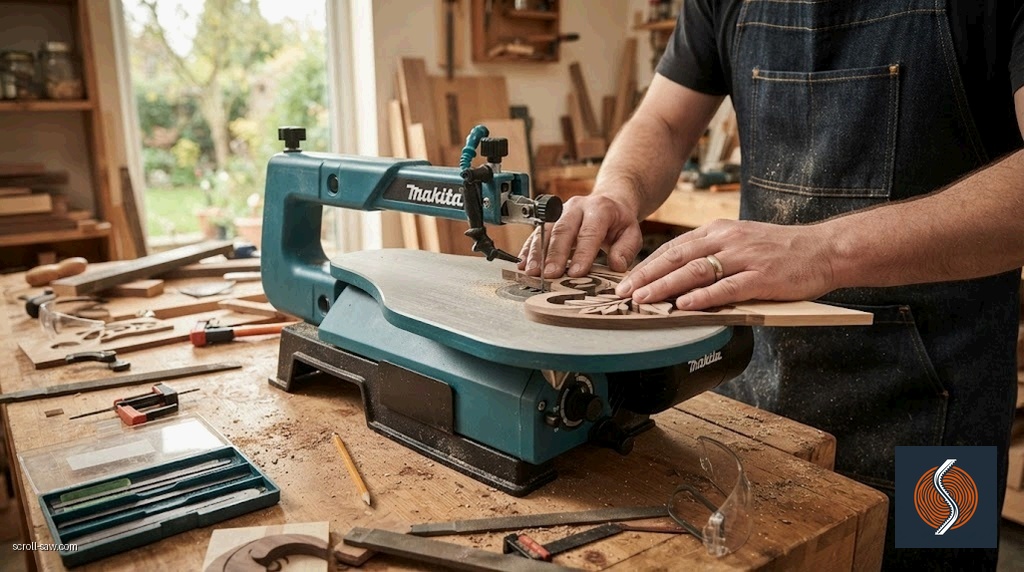
Makita SJ401 Scroll Saw: Setup and Technique Guide
The Makita SJ401 has a small but loyal following. Makita is better known for cordless drills and grinders than for scroll saws, and their scroll saw production has been limited, which makes the SJ401 more of a specialist’s tool than a mainstream choice. What it lacks in market share it makes up for in Makita’s typical build quality: solid castings, refined mechanisms, and the kind of engineering care that turns a modest machine into a good one.
Here is how to set up and use an SJ401 to get cuts that reflect what the machine can actually do.
What the SJ401 actually is
The Makita SJ401 is a benchtop scroll saw with:
-
Approximately 400 mm (16 inch) throat depth on most versions.
-
Variable-speed induction motor.
-
Cast metal table with tilt capability.
-
Plain-end blade clamps.
-
Standard hold-down foot and dust blower.
-
Weight and rigidity above the budget-import class.
Build quality is Makita-grade, which for a scroll saw means well-machined blade holders, a stable table, and reliable speed control across the range.
Where the SJ401 fits
As a serious hobby saw. For committed hobbyists who value build quality, the SJ401 earns its bench space.
As a small-shop production tool. For occasional small-batch scroll work at semi-commercial scale, the reliability suits.
Not the right fit for:
-
Casual weekend users. More saw than the work justifies.
-
Very large workpieces beyond the throat depth.
-
Portable applications.
Setup that matters
With the saw unplugged:
Bolt to a solid bench or stand. Rubber pads reduce vibration transfer.
Level the table. Zero degrees on the tilt scale, engineer’s square at three points, adjust stop screw as needed.
Check blade holders. Clamping surfaces flat and unmarked. Makita blade holders are durable but wear over time.
Verify the tilt lock. Set to 45 degrees, tighten, push each corner.
Test tension through full range.
Check speed control. Smooth ramp with no whine.
Set hold-down foot lightly on workpiece.
Aim dust blower at cut line.
Blade selection
Standard 5-inch plain-end blades fit.
-
Reverse-tooth #5 or #7 for general woodwork: Olson’s reverse-tooth assortment.
-
Skip-tooth #1 or #3 for detail: Pegas skip-tooth blades.
-
Modified geometry for finest work: Pegas modified geometry line.
-
Spirals for direction-changing cuts: Olson SP46500 spirals.
-
Flying Dutchman variety pack: Flying Dutchman variety pack.
Buy in bulk. The SJ401 handles blade turnover at hobbyist to semi-commercial rates.
Tensioning correctly
Pluck the blade at midpoint. Clear ringing note is correct. Dull thud is loose. Rising pitch is overtight.
The SJ401’s refined stroke makes correct tension visible in cut quality. A blade tensioned by feel outperforms one tensioned by mechanism position every time.
Technique that pairs with the machine
Steady feed pressure. The SJ401 handles real feed pressure. Push what the blade wants.
Rotate the workpiece around the blade. Never steer sideways.
Match speed to the cut. Variable speed is a deliberate tool.
Starter holes for interior cuts. Small pilot in waste area.
Support long stock with an auxiliary support at exact table height.
Common problems and their causes
Blade snaps often. Over-tensioning first, side-loading second, wrong blade third.
Cut wanders. Bent blade, dull blade, blade holder wear, or lateral pressure.
Vibration. Loose mount, base bolts, or belt tension.
Speed control acts erratically. Service the controller through a Makita service centre.
Motor bogs in dense hardwood. Feed slower or switch to coarser blade.
Parts and support
Makita’s active service network handles current parts. For discontinued items, independent industrial tool repair shops and forums help. Blade holders, belts, and speed controllers are the usual wear items.
The verdict
A Makita SJ401 in good condition is a well-built hobby to semi-commercial scroll saw that repays a careful setup. The build quality shows up in cut smoothness and blade life. For serious hobbyists who value engineering care over flash, the SJ401 is a legitimate option worth considering.
FAQ
What blade does the Makita SJ401 use? Standard 5-inch plain-end scroll saw blades.
How thick can it cut? Roughly 2 inches in soft wood at 90 degrees.
Is the Makita SJ401 still made? Makita’s scroll saw production is limited. Check Makita’s current product listings for exact status.
Where do I find a manual? Makita’s support resources archive documentation for most models.
Is a used SJ401 a good buy? In good condition with sound blade holders, yes. Well-built and holds value.
Where do I find replacement parts? Makita’s service network handles most items. Independent tool repair shops help with older parts.
Why does my blade break so quickly? Over-tensioning first. Check tension by feel.
How does the SJ401 compare to a DeWalt DW788? Both are well-built hobby saws. The DW788 has a wider North American parts network; the SJ401 has typical Makita build quality. Different regional availability drives most buying decisions.
References
-
Makita product documentation and support network.
-
Olson Saw Company blade selection resources.
-
Pegas blade sizing and application guides.
-
Scroll Saw Association of the World, operating guidance.
Title tag: Makita SJ401 Scroll Saw: Setup and Technique Guide Meta description: How to set up and get clean cuts from a Makita SJ401 scroll saw, with the blade choices and technique that suit its build quality. URL slug: sj401-scroll-saw Excerpt: The Makita SJ401 is a well-built benchtop scroll saw that rewards careful setup. Here’s how to prepare one, choose blades that suit its class, and use technique that gets the most from a serious hobby machine.


