
Skil 16 Inch Scroll Saw: Purpose, Fit, and Setup Guide
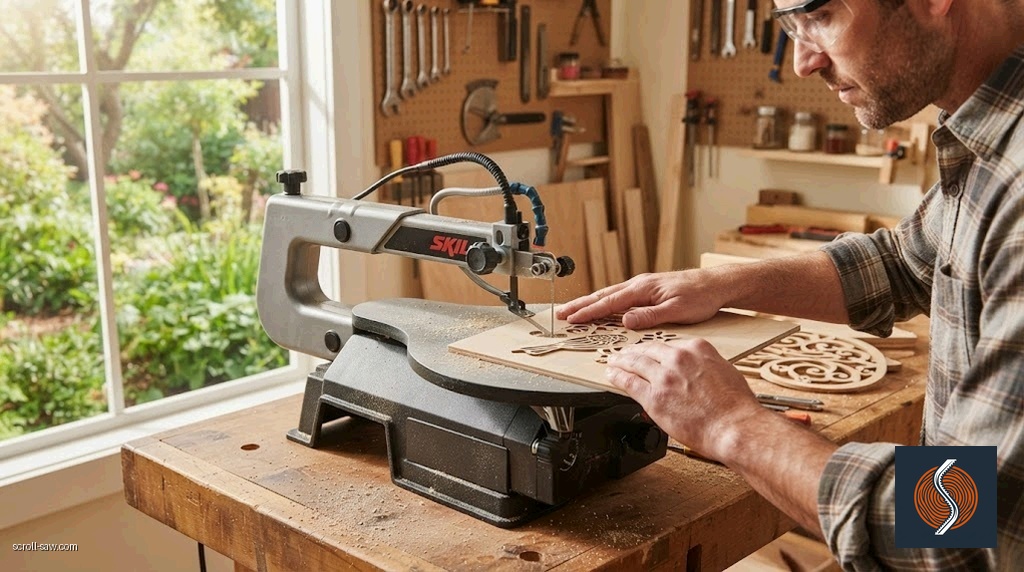
Skil 16 Inch Scroll Saw: Purpose, Fit, and Setup Guide
Skil is one of those household names in North American power tools. Not high-end, not budget-basement, sitting comfortably in the middle where reliability and price meet. Their 16-inch scroll saw fits that positioning: a competent hobby machine built for the weekend woodworker who wants to get real work done without spending premium money.
The Skil 16-inch scroll saw has appeared under several model designations over the years (3330, 3335, 3335-07, and others). This guide covers what the class represents, how to set one up, and where it fits in a real workflow.
What the Skil 16-inch scroll saw actually is
A Skil 16-inch scroll saw is a hobby-class C-arm machine with:
-
16-inch throat depth.
-
Approximately 2 inches maximum cutting capacity at 90 degrees.
-
Cast aluminum table with tilt from 0 to 45 degrees.
-
Variable-speed universal motor on most versions.
-
Blade clamps accepting both pin-end and plain-end blades on most versions (a genuinely useful feature).
-
Integrated work light on most versions.
-
Standard hold-down foot and dust blower.
Build quality is honest for the mid-range hobby class. Not premium, not disposable, right in the middle of the market Skil built its reputation on.
Purpose: what the Skil 16 was built to do
Skil aimed the 16-inch scroll saw squarely at the committed hobby user. Its intended applications:
-
Puzzle blanks, hobby signs, ornaments, and craft cutouts.
-
Silhouettes and small to medium clock faces.
-
Simple to moderate fretwork.
-
Bevel cuts up to 45 degrees for boxes and inlays.
-
Occasional cuts in soft plastic, foam, and thin non-ferrous metal.
What Skil didn’t build the saw for:
-
Fine fretwork with hair-thin bridges.
-
Production runs.
-
Consistent thick hardwood work.
-
Industrial or semi-commercial daily use.
Fit: where the Skil 16 belongs
Good fit:
-
Weekend and evening hobby use.
-
Beginner to intermediate skill level.
-
Shops where budget matters and premium-class machines are out of scope.
-
Two-saw shops where the Skil handles general work while a specialised machine covers detail.
Not a good fit:
-
Fine detail work at professional standards.
-
Sustained daily production.
-
Anyone who prioritizes cast-iron mass or premium stroke smoothness.
Practical setup before your first cut
With the saw unplugged:
Bolt it to a solid bench or stand. The Skil 16 vibrates enough to walk if unsecured. Rubber pads under the feet reduce noise transfer.
Level the table to the blade. Zero degrees on the tilt scale, engineer’s square against the blade at three points along the stroke, adjust the underside stop screw if needed.
Check blade holders. Clamping surfaces flat and unscored. Skil’s dual pin-end and plain-end capability uses a specific holder design; inspect both configurations.
Verify the tilt lock. Set to 45 degrees, tighten, push each corner.
Test the tension mechanism through its full range.
Check speed control by cycling through the full range with no blade under tension.
Set the hold-down foot lightly on the workpiece.
Aim the dust blower at the cut line.
Blade selection
The Skil 16’s dual pin/plain-end capability is genuinely useful, because it opens up the full blade market.
For plain-end use:
-
Reverse-tooth #5 or #7 for general 1/4 to 3/4-inch woodwork: Olson’s reverse-tooth assortment.
-
Skip-tooth #1 or #3 for detail: Pegas skip-tooth blades.
-
Spirals for cuts that change direction: Olson SP46500 spirals.
For pin-end use:
-
General pin-end assortment: pin-end blade assortment.
-
Mixed pin and plain kit: Skil 18-piece blade set.
Buy in bulk. A scroll saw in regular use consumes blades faster than most first-time buyers expect.
Tensioning correctly
Pluck the blade near the middle. Clear ringing note is correct. Dull thud is loose. Rising pitch is overtight.
Technique that pairs with the machine
Steady feed pressure. Firm and matched to the material.
Rotate the workpiece around the blade. Never steer sideways.
Match speed to the cut. Use variable speed deliberately.
Use starter holes for interior cuts.
Support long stock.
Common problems and their causes
Blade snaps often. Over-tensioning, side-loading, or wrong blade.
Cut wanders. Bent blade, dull blade, blade holder wear, or lateral pressure.
Vibration. Loose base bolts, motor mount, or belt.
Motor bogs. Feed slower or coarser blade.
Wood lifts on upstroke. Hold-down foot too high or over-tensioned blade.
The verdict
A Skil 16-inch scroll saw is a competent hobby machine. Dual pin/plain-end blade capability, variable speed, and mid-range build quality make it a fair choice for weekend woodworkers who want a working scroll saw at a working price. Setup carefully, blade selection well, and it earns its bench space for years.
FAQ
What blade does a Skil 16 scroll saw use? Most versions accept both standard 5-inch plain-end and pin-end blades.
How thick can it cut? Roughly 2 inches in soft wood at 90 degrees.
Which Skil 16 model should I look for? The 3335 series is generally regarded as one of the more refined versions. Check the specific model’s reviews before purchase.
Where do I find a manual? Skil’s support resources archive documentation for most current and recent models.
Is a Skil 16 worth buying used? At a fair price with sound mechanical condition, yes. Modern equivalents are available if the used market pricing is too high.
Why does my blade break so quickly? Over-tensioning first. Check tension by feel.
Can I do fretwork on a Skil 16? Simple to moderate fretwork with 1/8-inch or wider bridges, yes. Very fine fretwork with hair-thin bridges is outside the class.
Is a Skil 16 good for beginners? Yes. The dual blade capability, variable speed, and mid-range price all suit learners.
References
-
Skil product documentation and support network.
-
Olson Saw Company blade selection resources.
-
Pegas blade sizing and application guides.
-
Scroll Saw Association of the World, operating guidance.
Title tag: Skil 16 Inch Scroll Saw: Purpose, Fit, and Setup Guide Meta description: What the Skil 16-inch scroll saw was built for, where it fits, and how to set one up for productive hobby use. URL slug: skil-16-inch-scroll-saw Excerpt: The Skil 16-inch scroll saw is a mid-range hobby machine with dual pin and plain-end blade capability. Here’s what it was built for, where it fits, and how to set it up for years of productive weekend work.


