
Skil 16 Scroll Saw: Useful Applications and Limits
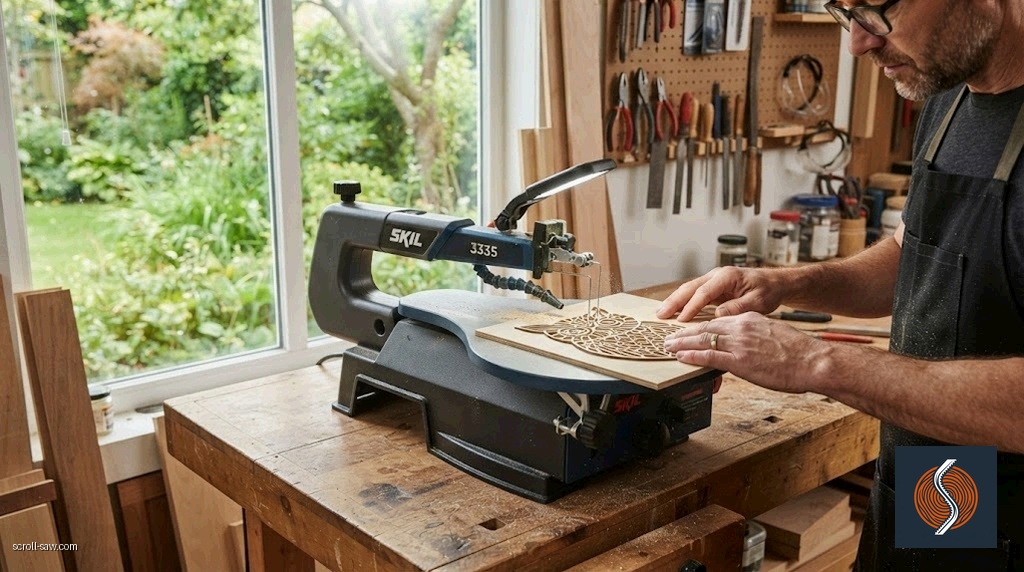
Skil 16 Scroll Saw: Useful Applications and Limits
A Skil 16 scroll saw is useful for a real but specific set of applications. Not everything, not nothing. If you’ve been staring at a used listing wondering whether to bring one home, or you already own one and are trying to figure out what it can actually handle, this is the straight answer.
Where a Skil 16 is genuinely useful
Puzzles and hobby cutouts. The Skil 16’s stroke and blade holder combination handles puzzle blanks in 1/4 to 1/2-inch plywood cleanly. Ornaments, seasonal decorations, small signs, and craft parts all sit comfortably in the machine’s sweet spot.
Silhouettes and clock faces. With a decent blade and steady feed, the Skil 16 tracks silhouette outlines well. Small to medium clock faces fit within the throat comfortably.
Simple to moderate fretwork. Larger interior cuts with generous bridges work well. Bridges of 1/8 inch or wider survive cutting without difficulty.
Bevel cuts up to 45 degrees. The tilt table handles bevels for small boxes and simple inlays.
Foam, cork, and thin plastic. With appropriate blades, the Skil 16 cuts craft materials cleanly for craft applications.
Non-ferrous metal up to 1/16 inch. With a fine metal blade and appropriate speed, brass, copper, and aluminum sheet cut cleanly for hobby jewelry and small brackets.
Learning the craft. The Skil 16 is friendly to beginners. Variable speed and dual blade capability let learners try different blade types without buying a new saw.
Where the Skil 16 isn’t useful
Fine fretwork with hair-thin bridges. The stroke smoothness and blade clamp precision aren’t in that class. If your work needs 1/32-inch bridges to survive, look elsewhere.
Production runs. Blade change friction and moderate motor endurance make daily production a chore.
Consistent thick hardwood. Anything over an inch of oak or maple slows the motor noticeably.
Precision over long cuts. Some Skil 16 units develop small arm pivot play over time, showing up as slight wander on long cuts.
Applications by material
Soft wood (pine, poplar, basswood) up to 3/4 inch: Reverse-tooth #5 or #7 at medium-to-high speed. Excellent results.
Hardwood (oak, maple, walnut) up to 3/4 inch: Skip-tooth #5 or #7 at medium speed. Good results with patience on feed.
Plywood up to 1/2 inch: Reverse-tooth #5 at medium-to-high speed. Clean underside finish.
Foam, cork: Coarse blade at low-to-medium speed.
Thin plastic sheet (up to 1/8 inch): Fine-tooth blade at low speed. Watch for heat buildup on continuous cuts.
Non-ferrous metal (up to 1/16 inch): Fine metal blade at low speed with occasional oil.
Hardwood over 1 inch: Outside the machine’s comfort zone. Band saw is faster.
Setup that matters
With the saw unplugged:
Bolt it to a solid surface. The Skil 16 vibrates enough to walk if unsecured.
Level the table. Zero degrees on the tilt scale, engineer’s square at three points, adjust stop screw if needed.
Check blade holders. Clamping surfaces flat and unscored.
Verify the tilt lock at 45 degrees.
Test the tension mechanism through its full range.
Check speed control across the full range.
Set the hold-down foot lightly on the workpiece.
Aim the dust blower at the cut line.
Blade selection
Skil 16 scroll saws accept both plain-end and pin-end blades on most versions.
Plain-end kit:
-
Reverse-tooth #5 or #7 for general woodwork: Olson’s reverse-tooth assortment.
-
Skip-tooth #1 or #3 for detail: Pegas skip-tooth blades.
-
Spirals for direction-changing cuts: Olson SP46500 spirals.
Pin-end kit:
-
General assortment: pin-end blade assortment.
-
Mixed set including plain and pin: Skil 18-piece blade set.
Tensioning correctly
Pluck the tensioned blade with a fingernail near the middle. Clear ringing note is correct. Dull thud is loose. Rising pitch is overtight.
Technique for the Skil 16
Steady feed pressure. Firm and matched to the material.
Rotate the workpiece around the blade. Never steer sideways.
Match speed to the cut.
Use starter holes for interior cuts.
Support long stock.
Who should keep a Skil 16 and who should move on
Keep it if you already own it and it runs well, you cut occasionally to regularly at hobby scale, and the mechanical condition is sound.
Move on if you’re doing serious fretwork, if the arm has visible play, or if you’re consistently hitting the machine’s limits.
The verdict
A Skil 16 scroll saw is useful for a genuine range of hobby applications. It won’t do everything, but what it does, it does well enough to earn its bench space. Set up carefully, blade selection matched to your work, and the machine cuts cleanly for years.
FAQ
What can I cut on a Skil 16? Soft and medium hardwood up to 3/4 inch, plywood up to 1/2 inch, foam, cork, thin plastic, non-ferrous metal up to 1/16 inch.
Can I do fretwork on a Skil 16? Simple to moderate fretwork with 1/8-inch or wider bridges, yes. Very fine fretwork is outside the class.
Is a Skil 16 good for beginners? Yes. Dual blade capability and variable speed suit learning.
What blade does a Skil 16 use? Most versions accept both standard 5-inch plain-end and pin-end blades.
How thick can it cut? Roughly 2 inches in soft wood at 90 degrees.
Is a Skil 16 worth buying used? At a fair price with sound condition, yes.
Why does my blade break so quickly? Over-tensioning first. Check tension by feel.
How does the Skil 16 compare to a WEN 3921? Both are mid-range hobby saws with dual blade capability. The Skil 16 has slightly different build details; the WEN 3921 has a different price point. Compare specific current model reviews before buying.
References
-
Skil product documentation and support network.
-
Olson Saw Company blade selection resources.
-
Scroll Saw Association of the World, operating guidance.
-
Fine Woodworking magazine archive, scroll saw applications.
Title tag: Skil 16 Scroll Saw: Useful Applications and Limits Meta description: Where a Skil 16 scroll saw is genuinely useful, the applications it handles well, and the limits worth respecting. URL slug: skil-16-scroll-saw-applications Excerpt: A Skil 16 scroll saw handles a genuine range of hobby applications. Here are the ones it does well, the ones it doesn’t, and how to set it up for the work it fits.


