
How to Cut Scroll Saw For Jewelry Making Without Losing the Fine Details
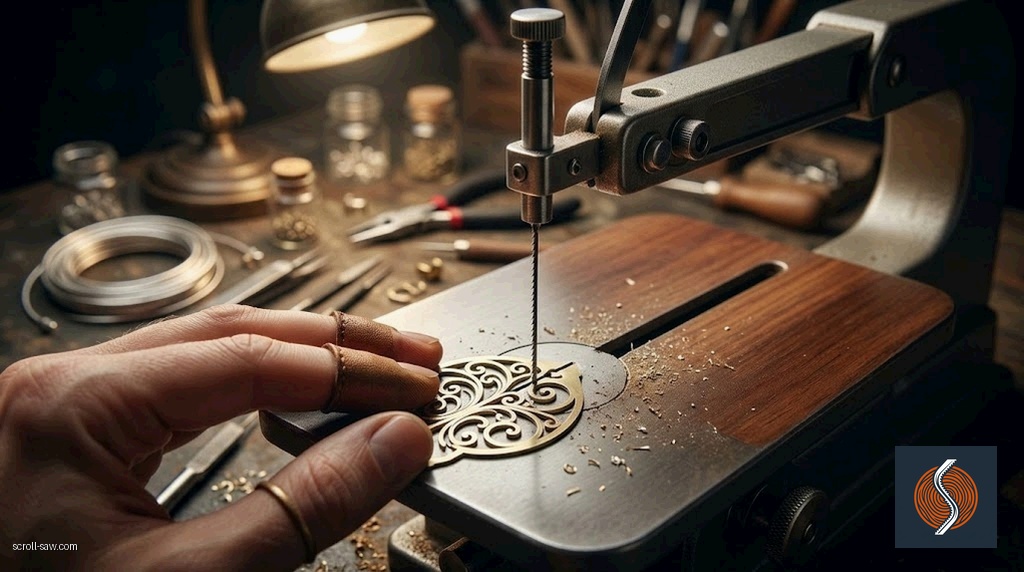
How to Cut Scroll Saw For Jewelry Making Without Losing the Fine Details
Wooden jewelry is a growing craft niche and the scroll saw fits it perfectly. Earrings, pendants, brooches, and hair ornaments can all be cut from thin exotic woods on a scroll saw, and the resulting pieces have a warmth and personality that stamped metal jewelry never quite matches. The category also carries specific technical demands that don’t apply to larger scroll saw work.
Jewelry pieces are small (typically 1 to 3 inches at largest dimension), thin (1/8 to 1/4 inch stock), and detailed (interior pierces down to 1/32 inch on fine pieces). Every choice from wood to blade to finish shifts toward the small end of the scale.
What scroll saw jewelry typically includes
Most scroll saw jewelry falls into a few categories. Earrings (paired pieces, usually pierced silhouettes). Pendants (single pieces on a chain or cord). Brooches (single pieces with a pin back). Hair ornaments (barrettes, hair sticks, or hair clips). Bracelets (either flat panels or articulated segments).
Quick answer: cut from 1/8 to 1/4 inch exotic hardwoods (bloodwood, walnut, ebony, maple, cocobolo). Use a #2/0 or #1 blade for pierced detail on thin stock. Drill entry holes with a 1/32 inch bit. Cut interior detail small to large before outer perimeter. Attach hardware (jump rings, ear wires, pin backs) after finishing. Finish with wipe-on oil or beeswax.
Wood choice for jewelry
Thin exotic hardwoods are the standard. Common choices:
-
Bloodwood in 1/8 inch: bright red, dramatic contrast against skin.
-
Walnut in 1/8 or 3/16 inch: dark warm brown, classic pairing.
-
Ebony in 1/8 inch: near-black, formal look. Cuts slowly.
-
Cocobolo in 1/8 inch: red-brown with dark streaks. Cuts easily but produces a fine dust that some people are sensitive to; use dust collection.
-
Maple in 1/8 inch: pale cream, takes stain and paint well.
-
Cherry in 1/8 or 3/16 inch: warm oiled tone, the reliable default.
Avoid pine (grain fights small detail) and MDF (dust and dulled blades).
Material thickness
One-eighth inch stock for lightweight earrings and pendants. Feels light in hand, hangs comfortably.
Three-sixteenths inch for slightly more substantial pendants and brooches.
Quarter-inch for larger brooches and hair ornaments where the piece can carry more weight.
Stay under 1/4 inch for jewelry. Thicker stock reads as chunky rather than as jewelry.
Blade choice
A #2/0 or #1 blade for the finest detail on 1/8 inch stock. Kerf around 0.010 inch. Interior counters can be as small as 1/32 inch.
A #3 skip-tooth for outer perimeter cuts and less detailed interior work.
A #5 skip-tooth for outer perimeter on 3/16 or 1/4 inch stock.
Fresh blades matter more on jewelry than on any other scroll saw work. A dulled blade on a piece with 1/32 inch detail destroys the piece.
Anticipating fragile cuts on jewelry
Mark every fragile element on the pattern with a highlighter. Jewelry fragile spots:
-
Interior pierces drawn thinner than 1/32 inch shear off.
-
Delicate script or floral pattern lines drawn thinner than 1/32 inch break during cutting.
-
Outer perimeter points (stars, hearts with pointed lobes, flower petal tips) with points drawn thinner than 1/16 inch break during cutting or handling.
-
Jump ring attachment areas: the small hole for jump ring attachment needs at least 1/16 inch of wood around it.
Thicken any element thinner than these minimums on the pattern.
Cut sequence
-
Sand both faces of the panel to 220 grit before cutting.
-
Apply the pattern with painter’s tape and light spray adhesive (heavy adhesive prevents peel later on thin stock).
-
Drill every entry hole with a 1/32 inch bit. Batch drill for the whole batch of jewelry pieces.
-
Drill jump ring attachment hole (typically 3/32 inch diameter) if the piece will attach to a chain.
-
Cut interior detail smallest to largest.
-
Cut the outer perimeter last in one continuous cutting path.
-
Peel the pattern paper from the finished piece.
Where scroll saw jewelry fails
Interior detail shears off. Detail drawn thinner than 1/32 inch. Thicken.
Outer point breaks. Point drawn thinner than 1/16 inch. Blunt slightly.
Jump ring attachment hole cracks. Hole drilled too close to the piece edge. Leave at least 1/16 inch of wood between the hole and the edge.
Earrings don’t match. Cut individually rather than stack-cut. Stack-cut earring pairs with double-sided tape to guarantee identical shape.
The piece cracks during wearing. Wood grain runs across the piece’s thin cross-section. Verify grain runs along the piece’s longest dimension.
Stack-cutting for earring pairs
Earrings must match. To guarantee identical shape:
-
Sandwich two identical panels of the same stock with double-sided tape between.
-
Apply the pattern to the top panel.
-
Cut through both panels in one operation.
-
Peel the tape to separate the two identical earring pieces.
Stack-cutting up to four earring pairs at once is possible on 1/8 inch stock. More than four risks alignment shift during cutting.
Finishing options
Wipe-on boiled linseed oil for cherry, walnut, and maple jewelry. Two coats over two days.
Mineral oil plus beeswax blend for jewelry that will contact skin: very safe, easily reapplied.
Carnauba wax paste finish for high-sheen jewelry: apply a thin coat, let dry, buff to a soft luster.
Spray lacquer for gloss finishes on painted jewelry: three light coats.
Avoid heavy polyurethane; the film thickness reads plastic-y on small jewelry pieces.
Hardware attachment after finishing
All finish work happens before hardware. After finishing:
-
Ear wires: thread a jump ring through the pre-drilled hole, close the jump ring, and attach the ear wire to the jump ring.
-
Pendant chain: thread the chain through the pre-drilled hole directly, or use a jump ring.
-
Pin backs: use jewelry epoxy to attach a metal pin back to the piece’s reverse.
-
Barrettes: use epoxy to attach a metal barrette clip to the piece’s reverse.
Comparing three jewelry projects
Simple pierced earring pair (heart, star, or floral silhouette) in 1/8 inch cherry, stack-cut for match, oiled, sterling silver ear wires with jump rings. The reliable first jewelry project. Cuts and assembles in an afternoon.
Detailed pendant with pierced monogram or initial in 3/16 inch walnut, oiled, silver chain. The mid-range piece.
Multi-color inlay brooch with contrasting wood species (bloodwood inlay in cherry base) with pierced decorative detail, waxed. The signature piece.
Conclusion
Scroll saw jewelry preserves its fine details when the stock is 1/8 to 1/4 inch exotic hardwood, the blade is a #2/0 or #1 for detail, entry holes are drilled with a 1/32 inch bit, and every interior detail is thickened to at least 1/32 inch on the pattern. Cherry, walnut, bloodwood, or maple. Stack-cut earring pairs for match. Wipe-on oil or beeswax finish. Hardware attached after finishing. Do those and the finished jewelry reads as a warm handmade piece with the personality that only wood carries.
Frequently asked questions
What wood works best for scroll saw jewelry? One-eighth to 1/4 inch exotic hardwoods: cherry, walnut, bloodwood, ebony, cocobolo, maple.
Which blade cuts jewelry detail cleanest? A fresh #2/0 or #1 blade for 1/8 inch stock detail work. A #3 skip-tooth for outer perimeter.
How do I make earring pairs match exactly? Stack-cut two identical panels with double-sided tape between, apply the pattern to the top, cut through both panels together.
How thin can I safely draw a pierced detail? Minimum 1/32 inch on the pattern at final size for pieces cut with a #2/0 blade.
How do I keep the jump ring hole from cracking? Leave at least 1/16 inch of wood between the hole and the piece edge. Drill after cutting interior detail but before cutting the outer perimeter.
What finish is safe for skin contact? Mineral oil plus beeswax blend. Non-toxic, easily reapplied, adds a soft luster.
How do I attach ear wires? Thread a jump ring through the pre-drilled hole, close the jump ring, attach the ear wire to the jump ring. All hardware goes on after finishing.
References
-
Steve Good, Scrollsaw Workshop jewelry pattern archive: scrollsawworkshop.blogspot.com
-
Sue Mey, Scroll Saw Artist: scrollsawartist.com
-
Scroll Saw Woodworking & Crafts, Fox Chapel Publishing: foxchapelpublishing.com


