
Skil 3335 Scroll Saw: Fit, Safety, and Performance Checks
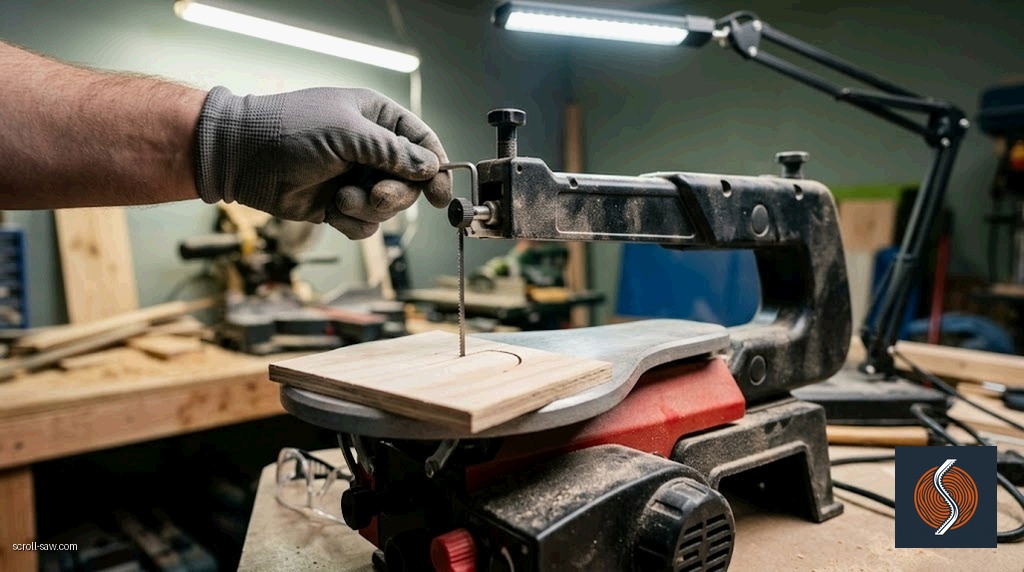
Skil 3335 Scroll Saw: Fit, Safety, and Performance Checks
The Skil Model 3335 is the polished successor to the 3330 and one of the more refined mid-range hobby scroll saws Skil has produced. Before making your first cut on one, a walk-through of fit, safety, and performance saves you from problems you’d otherwise chase for hours.
What the Skil 3335 actually is
A Skil Model 3335 scroll saw is a 16-inch throat class hobby machine with:
-
16-inch throat depth.
-
Roughly 2 inches maximum cutting capacity at 90 degrees.
-
Cast aluminum table with tilt from 0 to 45 degrees.
-
Variable-speed universal motor with electronic control.
-
Blade clamps accepting both pin-end and plain-end blades.
-
Improved dust management over the 3330.
-
Integrated work light.
-
Standard hold-down foot.
Build quality sits comfortably in Skil’s refined mid-range positioning.
Fit: does the 3335 belong in your shop
Yes, if:
-
Committed hobby use fits your pattern.
-
Dual pin/plain-end blade capability matters.
-
Bench space is available for a permanent 16-inch class installation.
-
You want a working scroll saw at a working price.
No, if:
-
You want tool-free blade change (later 3335 versions may have partial tool-free operation; verify).
-
You need cast-iron mass for stroke smoothness.
-
Your work regularly exceeds a 16-inch throat.
Safety checks before first cut
Inspect the power cord. Cracks in insulation, damage to plug, or a stiff cord suggest replacement.
Confirm the on/off switch operates cleanly. No hesitation, no sparks.
Verify the hold-down foot rests on the workpiece surface without touching the blade.
Wear safety glasses. Non-negotiable for any scroll saw work.
Position hands with intent. Never place fingers in front of the blade or in the cut path.
Ensure adequate lighting. Task lighting reduces fatigue and error.
Verify the dust blower operates so chips clear the cut line for visibility.
Performance checks with the saw unplugged
Bolt to a solid bench or stand. Loose mounting is the single biggest performance killer.
Level the table to the blade. Zero degrees on tilt scale, engineer’s square at three points, adjust stop screw as needed.
Check blade holders for wear on clamping surfaces.
Verify the tilt lock at 45 degrees.
Test the tension mechanism through its full range.
Check speed control by cycling through the full range with no blade under tension.
Aim the dust blower at the cut line.
Connect a shop vac to the dust extraction port if your version has one.
Blade selection
Dual pin/plain-end capability opens up the full blade market.
Plain-end kit:
-
Reverse-tooth #5 or #7 for general 1/4 to 3/4-inch woodwork: Olson’s reverse-tooth assortment.
-
Skip-tooth #1 or #3 for detail: Pegas skip-tooth blades.
-
Spirals for direction-changing cuts: Olson SP46500 spirals.
Pin-end kit:
-
General assortment: pin-end blade assortment.
-
Mixed set: Skil 18-piece blade set.
Tensioning correctly
Pluck the tensioned blade near the middle. Clear ringing note is correct. Dull thud is loose. Rising pitch is overtight.
Technique for the first session
Start with softwood scraps in the 1/4 to 1/2-inch range.
Cut simple curves before intricate patterns.
Use a #5 or #7 reverse-tooth blade to start.
Feed steadily. Firm and consistent.
Rotate the workpiece around the blade.
Take breaks on your first session.
Common problems and their causes
Blade snaps immediately. Over-tensioned.
Cut wanders. Bent blade, dull blade, blade holder wear, or lateral pressure.
Vibration. Loose base bolts or mount.
Speed control acts erratically. Service the controller.
Wood lifts on upstroke. Hold-down foot too high or over-tensioned blade.
The verdict
A Skil Model 3335 in good condition, bolted down solidly and blade-tensioned by feel, cuts cleanly for committed hobby use. Safety and performance checks separate a smooth first session from a frustrating one. The dual pin/plain-end blade capability opens up the full blade market and adds real value over pin-only budget saws.
FAQ
What blade does the Skil 3335 use? Both standard 5-inch plain-end and pin-end blades.
How thick can it cut? Roughly 2 inches in soft wood at 90 degrees.
Is the Skil 3335 safe for beginners? With standard scroll saw safety practice, yes.
Where do I find a manual? Skil’s support resources cover most current models.
What’s the biggest performance issue on a 3335? Loose mounting. Bolt it down.
Why does my blade break so quickly? Over-tensioning first. Check by feel.
How does the 3335 compare to the 3330? Refined clamps, improved dust management, same overall class.
Is the Skil 3335 still made? Skil’s scroll saw lineup evolves. Check current product listings.
References
-
Skil product documentation and support network.
-
Olson Saw Company blade selection resources.
-
Scroll Saw Association of the World, safety and operating guidance.
Title tag: Skil 3335 Scroll Saw: Fit, Safety, and Performance Checks Meta description: The fit, safety, and performance checks to run on a Skil 3335 scroll saw before your first cut, plus blade selection and technique. URL slug: skil-scroll-saw-model-3335 Excerpt: A Skil 3335 scroll saw rewards a careful walk-through before power goes on. Here are the fit, safety, and performance checks that make the difference between a smooth first session and a frustrating one.


