
Bosch Scroll Saw: Purpose, Fit, and Setup Guide
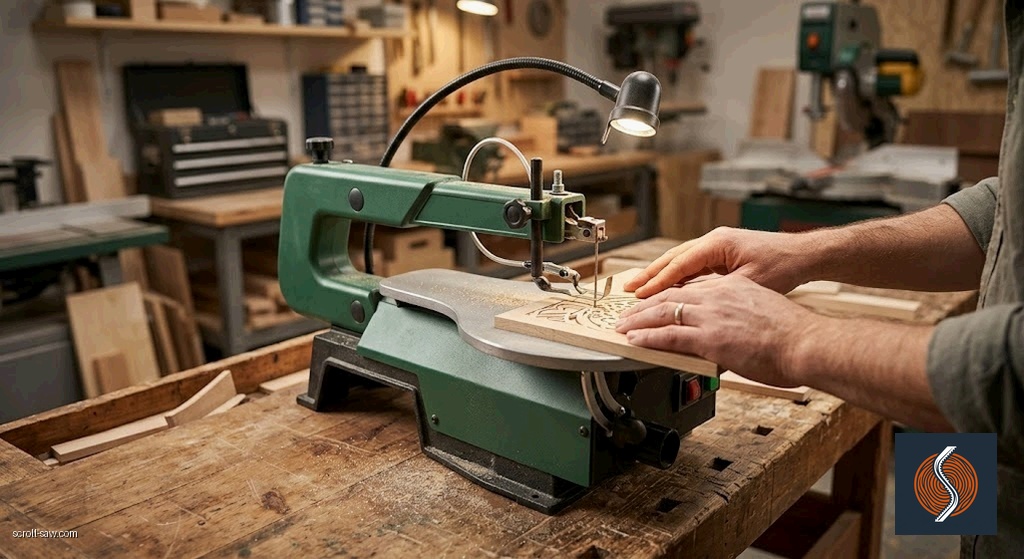
Bosch Scroll Saw: Purpose, Fit, and Setup Guide
Bosch is one of the giants of the power tool world. Their expertise in professional-grade drills, saws, and measuring tools is well established. Scroll saws are a smaller part of their catalog, and Bosch’s scroll saw offerings historically have been targeted at the European market more than North America, though some models have been sold globally.
Understanding what Bosch built their scroll saws for, where they fit, and how to set one up gets you real value from an engineering-first tool.
What a Bosch scroll saw actually is
Bosch scroll saws typically feature:
-
16-inch or 400 mm throat depth on most versions.
-
Cutting capacity in the 50-60 mm range at 90 degrees.
-
Cast metal table with tilt from 0 to 45 degrees.
-
Variable-speed operation.
-
Plain-end blade clamps on most versions.
-
Tool-free blade change on later versions.
-
Standard hold-down foot, dust extraction, and work light.
-
Weight and construction consistent with Bosch’s engineering standards.
Build quality is Bosch-grade: solid castings, well-machined components, refined controls.
Purpose: what Bosch built the saw for
Bosch aimed their scroll saws at the serious hobbyist and light-professional market. Intended applications:
-
General to detailed hobby scroll work.
-
Fine fretwork with careful setup.
-
Sign making and craft applications.
-
Bevel cuts up to 45 degrees.
-
Occasional non-ferrous metal and plastic work.
What Bosch didn’t design them for:
-
Full production shops (industrial-scale scroll work uses band saws or CNC).
-
Very large panels beyond typical throat depths.
Fit: where the Bosch scroll saw belongs
Good fit:
-
Committed hobby to light-professional use.
-
Users who value Bosch engineering.
-
European markets where Bosch parts and service are well established.
-
Shops that already run Bosch power tools and prefer brand consistency.
Not a good fit:
-
North American markets where Bosch scroll saw availability is limited.
-
Very large workpieces beyond typical throat depth.
-
Deeply budget-constrained buyers.
Practical setup
With the saw unplugged:
Bolt to a solid bench or stand. Rubber pads reduce noise.
Level the table. Zero degrees, engineer’s square at three points, adjust stop screw.
Check blade holders. Clamping surfaces flat and unmarked. Bosch’s tool-free blade clamps are well designed but still wear.
Verify tilt lock at 45 degrees.
Test tension mechanism.
Check speed control across full range.
Connect dust extraction if the version supports it. Bosch’s dust management is typically well thought out.
Set hold-down foot lightly on workpiece.
Aim dust blower at cut line.
Blade selection
Standard 5-inch plain-end blades fit most Bosch scroll saws.
-
Reverse-tooth #5 or #7: Olson reverse-tooth.
-
Skip-tooth #1 or #3: Pegas skip-tooth.
-
Modified geometry: Pegas modified geometry.
-
Spirals: Olson SP46500 spirals.
-
Fret blades: Pegas SK7 fret blades.
Tensioning correctly
Pluck the blade near the middle. Clear ringing note is correct.
Bosch’s refined blade clamps hold tension consistently, which shows up in cut quality on delicate work.
Technique
Steady feed pressure.
Rotate the workpiece around the blade.
Match speed to the cut.
Starter holes for interior cuts.
Support long stock.
Materials Bosch scroll saws handle well
Softwood up to 3/4 inch: Reverse-tooth #5 or #7 at medium-to-high speed.
Hardwood up to 3/4 inch: Skip-tooth at medium speed. Good results.
Plywood up to 1/2 inch: Reverse-tooth #5.
Non-ferrous metal (up to 1/16 inch): Fine metal blade at low speed.
Thin plastic (up to 1/8 inch): Fine-tooth at low speed.
Common problems
Blade snaps often. Over-tensioning or side-loading.
Cut wanders. Bent blade, blade holder wear, or lateral pressure.
Vibration. Loose mount.
Speed control acts erratically. Service the controller through Bosch’s network.
Parts and support
Bosch’s parts network is well developed in Europe and adequate in North America for current products. For discontinued Bosch scroll saws, aftermarket sourcing may be required.
The verdict
A Bosch scroll saw is a well-engineered choice for the serious hobbyist. Build quality, refined controls, and Bosch’s overall engineering standards all show up in daily use. Regional availability and price point are the main constraints, especially in North America. Where Bosch’s parts and service infrastructure is strong, the machine earns its bench space.
FAQ
What blade does a Bosch scroll saw use? Standard 5-inch plain-end blades on most versions.
How thick can it cut? Roughly 50-60 mm (about 2 inches) in soft wood at 90 degrees.
Is Bosch scroll saw availability good in North America? Limited. Bosch’s scroll saw production has favored European markets.
Where do I find a manual? Bosch’s global support network.
Is a used Bosch scroll saw a good buy? In good condition, yes.
Where do I find replacement parts? Bosch’s parts network handles current items. Discontinued items may require aftermarket sourcing.
Why does my blade break so quickly? Over-tensioning first.
How does a Bosch scroll saw compare to a DeWalt DW788? Similar class. Different design and market focus. Bosch is stronger in Europe; DeWalt DW788 has a wider North American parts and community network.
References
-
Bosch power tool product documentation and support network.
-
Olson Saw Company blade selection resources.
-
Pegas blade sizing and application guides.
-
Scroll Saw Association of the World.
Title tag: Bosch Scroll Saw: Purpose, Fit, and Setup Guide Meta description: What Bosch built their scroll saws for, where they fit, and how to set one up for productive hobby to light-professional work. URL slug: bosch-scroll-saw Excerpt: Bosch’s scroll saws bring engineering-first construction to serious hobby use. Here’s what they were built for, where they fit, and how to set one up for productive work.


