
Ryobi Scroll Saw Pinless Blades: Match Blade to Material
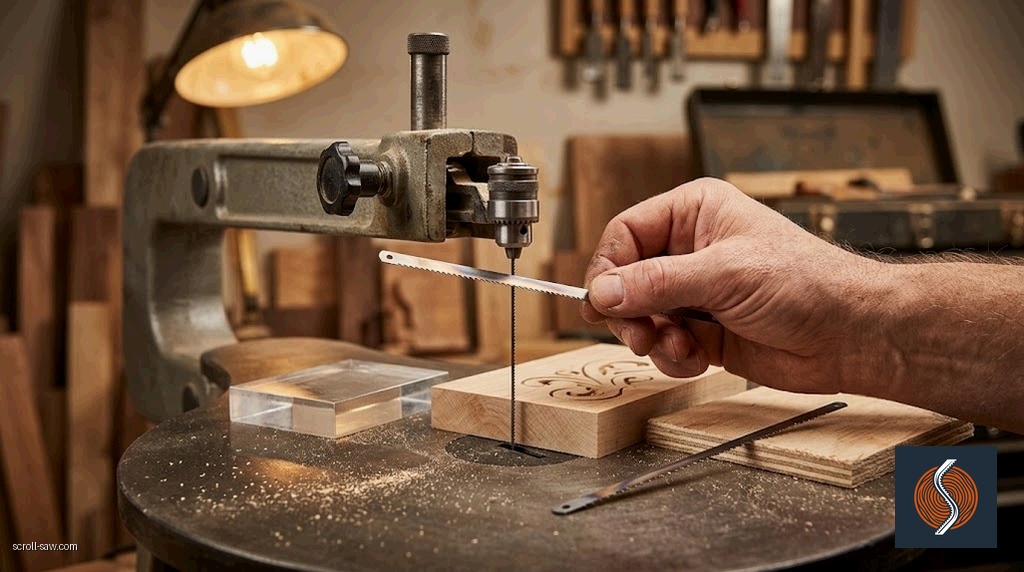
Ryobi Scroll Saw Pinless Blades: Match Blade to Material
Ryobi’s scroll saw line includes models that accept both pin-end and plain-end (pinless) blades, and the plain-end capability opens up the full specialty blade market. Getting good results comes down to matching the blade number to the material and thickness you’re cutting. This is the single decision that shapes cut quality more than any other on a Ryobi scroll saw.
How pinless blade numbering works
Scroll saw blade numbers correspond roughly to teeth per inch and blade width, with lower numbers meaning finer blades:
-
#2/0 and #1: Very fine. Fine detail, tight interior cuts in thin material.
-
#3 and #5: Detail work. Standard for hardwood detail, fretwork bridges.
-
#7 and #9: General woodwork. The workhorse range.
-
#11 and #12: Aggressive cutting. Thick soft wood, faster rough cutting.
Exact geometry varies by manufacturer (Olson, Pegas, Flying Dutchman, and others), but the numbering is consistent enough that a #5 from one maker feels similar to a #5 from another.
Matching blade to material
Softwood, 1/4 inch: #3 skip-tooth or #5 reverse-tooth. Medium speed.
Softwood, 1/2 inch: #5 reverse-tooth. Medium-to-high speed.
Softwood, 3/4 inch: #7 skip-tooth or reverse-tooth. Medium speed.
Hardwood, 1/4 inch: #3 skip-tooth. Slow-to-medium speed.
Hardwood, 1/2 inch: #5 skip-tooth. Medium speed.
Hardwood, 3/4 inch: #7 skip-tooth. Slow-to-medium speed. Patience on feed.
Plywood, 1/4 inch: #5 reverse-tooth. Medium-to-high speed. Reverse teeth clean underside cut.
Plywood, 1/2 inch: #7 reverse-tooth. Medium speed.
Fretwork with fine bridges: #3 skip-tooth or fret blade. Slow speed.
Very fine detail: #2/0 or #1 modified geometry. Slow speed. Steady, patient feed.
Foam and cork: #7 or larger coarse blade. Low speed.
Thin plastic (1/16 inch): #3 or #5 fine-tooth. Low speed. Watch for heat.
Non-ferrous metal (up to 1/16 inch): Fine metal blade. Low speed. Occasional oil.
Blade types explained
Skip-tooth: Every other tooth is missing. Cuts fast in soft to medium wood; clears chips efficiently. Standard for general work.
Reverse-tooth: Last few teeth at the bottom of the blade point upward. Cuts clean on the underside of the workpiece. Standard for plywood and where a clean underside matters.
Modified geometry: Refined tooth shape for finer cutting. Slower than skip-tooth but cleaner cut. Best for fine detail.
Spiral: Teeth wrap 360 degrees around the blade. Cuts in any direction without workpiece rotation. Useful for tight interior work but rougher cut than straight blades.
Fret: Very fine tooth for delicate fretwork.
Metal: Fine tooth designed for non-ferrous metal.
Working blade kit for Ryobi
Reverse-tooth #5 or #7: Olson reverse-tooth assortment.
Skip-tooth #1 or #3: Pegas skip-tooth.
Modified geometry for finest work: Pegas modified geometry.
Spirals: Olson SP46500 spirals.
Fret blades: Pegas SK7 fret blades.
Variety pack for experimenting: Flying Dutchman variety pack.
Ultra reverse for fine detail: Flying Dutchman Ultra Reverse #2/0.
Double tooth: Olson DT49300 double-tooth.
Stock roughly 1 to 2 dozen of your primary sizes.
Installation on a Ryobi
With the saw unplugged:
-
Loosen tension fully.
-
Open upper blade clamp.
-
Feed plain-end blade through table insert.
-
Seat lower end in lower clamp with teeth pointing down.
-
Seat upper end in upper clamp.
-
Restore tension.
-
Pluck blade; clear ringing note is correct tension.
Common mistakes
Blade too fine for the material. Cut is slow and blade wears fast.
Blade too coarse for the material. Cut is rough and hard to control.
Wrong blade type for the cut. Skip-tooth in plywood gives ragged underside; reverse-tooth in fine fretwork breaks bridges.
Over-tensioning any blade. Blade snaps early regardless of size.
The verdict
Matching blade number to material and thickness is the single most impactful skill in scroll saw work. On a Ryobi scroll saw with pinless capability, the full plain-end market is open, and the working kit in this guide covers essentially every material a hobby scroll saw sees. Buy in bulk, keep the right blade in the machine for the work at hand, and cut quality improves immediately.
FAQ
What size blade for 3/4 inch pine? #7 skip-tooth or reverse-tooth.
What size blade for fretwork? #3 skip-tooth or fret blade.
Can I use spiral blades on a Ryobi? Yes, on plain-end capable versions.
Where do I find pinless blades for Ryobi? Any standard 5-inch plain-end blade fits.
How do I know if my Ryobi accepts pinless blades? Check the manual or blade clamp design. Some Ryobi models are pin-end only.
Why does my blade break so quickly? Over-tensioning first, wrong blade for material second.
Do I need different blades for hardwood versus softwood? Same numbers, sometimes different types. Skip-tooth handles hardwood better than reverse-tooth.
What’s the best blade for beginners? #5 or #7 reverse-tooth for general work.
References
-
Ryobi product documentation and support.
-
Olson Saw Company blade selection resources.
-
Pegas blade sizing and application guides.
-
Scroll Saw Association of the World.
Title tag: Ryobi Scroll Saw Pinless Blades: Match Blade to Material Meta description: How to match pinless (plain-end) scroll saw blades to material and thickness on a Ryobi scroll saw, plus a working blade kit. URL slug: ryobi-scroll-saw-pinless-blades Excerpt: Matching pinless blade number to material and thickness shapes cut quality more than any other decision on a Ryobi scroll saw. Here’s the working kit and the matching guide.


