
Delta Scroll Saw Model 40 680: Buying and Repair Checklist
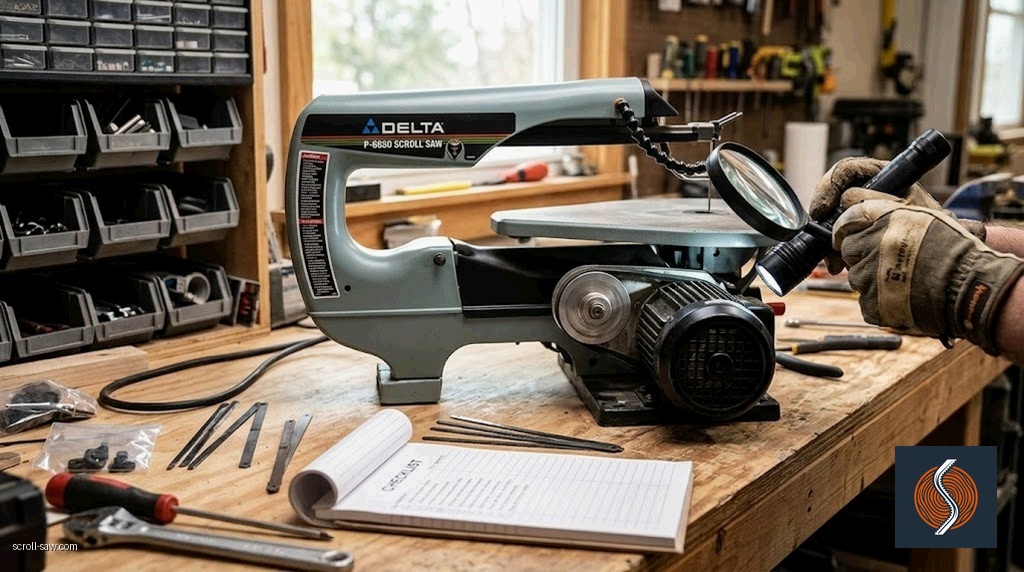
Delta Scroll Saw Model 40 680: Buying and Repair Checklist
The Delta 40-680 is one of the specific 20-inch throat scroll saws Delta produced. Delta made variations of this model number across production years, and understanding what to check before buying used or committing to a repair matters for the decision itself.
What the Delta 40-680 actually is
A Delta 40-680 scroll saw is a 20-inch throat class machine with:
-
20-inch throat depth.
-
Roughly 2 to 2.25 inches maximum cutting capacity at 90 degrees.
-
Cast metal table with tilt from 0 to 45 degrees.
-
Variable-speed operation (induction motor on most versions).
-
Plain-end blade clamps.
-
Standard hold-down foot, dust blower, and work light.
-
Delta-typical build quality.
Submodels include the 40-680 base and various suffix versions (like the 40-680 P20). Verify your ID plate for the specific variant.
What to check before buying used
ID plate readable. Model 40-680 with any suffix, serial, voltage, motor amperage.
Blade holders. Clamping surfaces flat and unmarked. Wear is the most common issue.
Arm pivot. No visible play with saw off. Play indicates worn bushings or bearings, which affect cut quality significantly.
Table. Flat, unwarped, no cracks around mounting bolts.
Tilt mechanism. Locks solidly at 45 degrees. Loose tilt is a common wear point.
Speed control. Smooth ramp across full range. Whining, hunting, or dead zones indicate controller issues (expensive to fix).
Motor. Runs quietly without unusual vibration. Induction motors are typically long-lived but not immortal.
Belt. Holds tension, no cracks or glazing. Universal replacement is easy.
Dust blower. Tube intact, delivers air. Universal replacement tubing works.
Base bolts. All present and tight. Missing bolts suggest careless prior ownership.
Power cord. No cracks, damage, or unusual stiffness.
Wiring. No exposed conductors, no burn marks near motor or switch.
Bench mounting condition. Rubber pads intact, mounting holes not enlarged.
What to check before committing to a repair
Before spending money on repair parts, evaluate:
Blade holders needed? Replaceable, but sourcing may be slow. Moderate cost.
Motor healthy? Motor replacement is often uneconomic. If motor is failed, evaluate against replacement cost.
Speed controller functional? Expensive replacement. Failed controller often tips the economics toward replacement.
Base and table castings sound? Cracked castings are uneconomic to repair.
Belt stretched? Universal replacement is easy.
Dust blower tube deteriorated? Universal replacement is easy.
Arm pivot bearings shot? Replaceable, but requires disassembly. Moderate cost and labor.
Switch failed? Standard tool switch, easy replacement.
Power cord damaged? Easy replacement.
Wiring compromised? Simple rewire is easy; motor rewind is uneconomic.
Total repair cost thresholds
Under 25% of a comparable new machine: Repair is easily justified.
25-50% of comparable new: Repair worth doing if you value the specific machine.
50-75% of comparable new: Evaluate carefully. Machine value versus repair investment.
Over 75% of comparable new: Replacement is usually the honest answer.
Setup after purchase or repair
With the saw unplugged:
-
Bolt to a heavy bench or stand.
-
Level table to blade at zero degrees.
-
Verify tilt lock at 45 degrees.
-
Test tension mechanism.
-
Check speed control across full range.
-
Set hold-down foot lightly on workpiece.
-
Aim dust blower at cut line.
Blade selection
Standard 5-inch plain-end blades.
-
Reverse-tooth #5 or #7: Olson reverse-tooth.
-
Skip-tooth #1 or #3: Pegas skip-tooth.
-
Modified geometry: Pegas modified geometry.
-
Spirals: Olson SP46500 spirals.
-
Variety pack: Flying Dutchman variety pack.
Tensioning correctly
Pluck the blade near the middle. Clear ringing note is correct.
Technique
Steady feed pressure. Rotate the workpiece around the blade. Match speed to the cut. Starter holes for interior cuts. Support long stock.
Parts sourcing
Delta parts network handles current items. Third-party distributors and eBay cover discontinued parts.
The verdict
A Delta 40-680 in good condition is a serious hobby to small-shop scroll saw worth buying used at a fair price. Careful inspection before purchase or repair prevents unwelcome surprises. The 20-inch throat and Delta build quality justify the investment for users whose work fits the class.
FAQ
What blade does the Delta 40-680 use? Standard 5-inch plain-end blades.
How thick can it cut? Roughly 2 to 2.25 inches in soft wood at 90 degrees.
Is the 40-680 still made? Delta’s scroll saw lineup evolves. Check current listings.
Where do I find a manual? Delta’s support resources.
Is a used 40-680 a good buy? In good condition at a fair price, yes.
What’s the biggest thing to check before buying? Blade holders and motor condition.
What’s the biggest thing to check before repairing? Total repair cost versus replacement.
Why does my blade break so quickly? Over-tensioning first.
References
-
Delta Machinery product documentation and support.
-
Olson Saw Company blade selection resources.
-
Scroll Saw Association of the World.
Title tag: Delta Scroll Saw Model 40 680: Buying and Repair Checklist Meta description: What to check on a Delta 40-680 scroll saw before buying used or committing to a repair, plus setup and technique. URL slug: delta-scroll-saw-model-40-680 Excerpt: A Delta 40-680 in good condition is worth buying used at the right price. Here’s the checklist for inspection before purchase or repair.


