
Excalibur 24 Scroll Saw: Premium Case for Bigger Throat
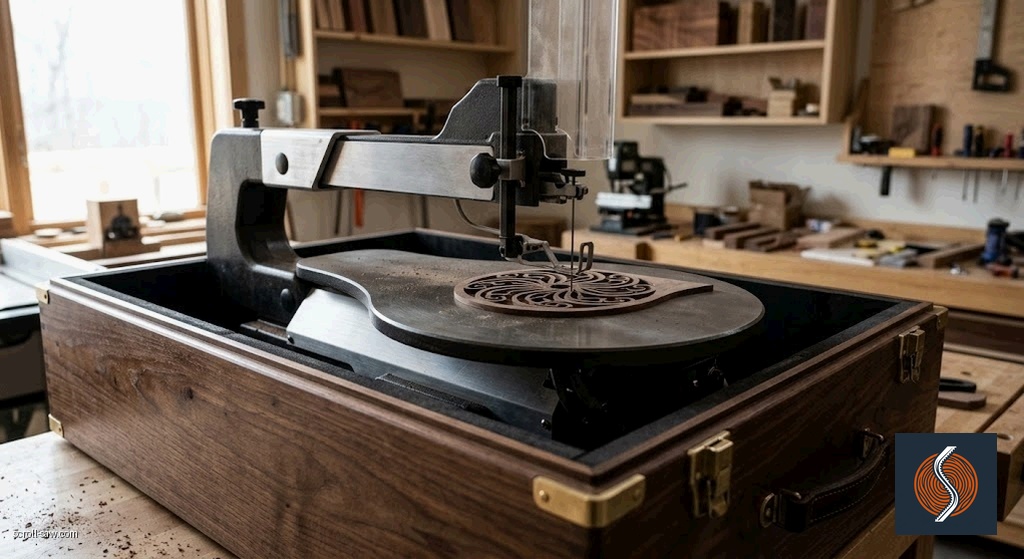
Excalibur 24 Scroll Saw: Premium Case for Bigger Throat
Excalibur scroll saws have a devoted following among serious hobbyists and fretwork specialists, and the 24-inch throat models represent the upper end of the Excalibur lineup. The larger throat opens up workpiece sizes that 20-inch machines can’t accommodate, and the Excalibur design brings signature features that experienced scroll sawers value.
What the Excalibur 24 actually is
An Excalibur 24 scroll saw is a premium scroll saw with:
-
24-inch (or 30-inch in the EX-30) throat depth.
-
Approximately 2.25 to 2.5 inches maximum cutting capacity at 90 degrees.
-
Cast metal table with tilt in both directions (a signature Excalibur feature).
-
Variable-speed induction motor.
-
Plain-end blade clamps.
-
Upper-arm-lift design (the arm lifts to change blades, keeping the workpiece flat).
-
Refined hold-down system, dust blower, and work light.
The design philosophy focuses on serious hobbyist and small-shop use, with attention to blade change convenience, cut smoothness, and table geometry.
The signature Excalibur features
Upper-arm-lift design. Lifts to accept a blade without repositioning the workpiece. Saves significant time on complex interior cuts.
Table tilts both directions. Left and right bevels without repositioning the workpiece.
Refined stroke. Induction motor and parallel-arm geometry deliver smoothness.
Blade holder design. Tool-free or minimal-tool blade changes on most versions.
Precision. Table stays true, mechanisms hold calibration.
Where the Excalibur 24 fits
As a serious hobby primary saw. For users who want premium capability without going full industrial.
As a small-shop scroll saw. Small commercial fretwork or intarsia operations.
As a two-saw shop primary. Alongside a smaller saw for quick work.
For fretwork specialists. Design suits fine detail work as well as general cutting.
Not the right fit for:
-
Casual weekend use (more machine than the pattern justifies).
-
Portable applications.
-
Very-tight-budget entry.
Setup
With the saw unplugged:
-
Assemble on the intended stand or mount to a heavy bench.
-
Level table to blade at zero degrees.
-
Verify tilt lock at 45 degrees both directions.
-
Test tension mechanism.
-
Check speed control across full range.
-
Test upper-arm-lift function.
-
Set hold-down foot lightly on workpiece.
-
Aim dust blower at cut line.
Blade selection
Standard 5-inch plain-end blades.
-
Reverse-tooth #5 or #7: Olson reverse-tooth.
-
Skip-tooth #1 or #3: Pegas skip-tooth.
-
Modified geometry for finest work: Pegas modified geometry.
-
Fret blades: Pegas SK7 fret blades.
-
Ultra reverse for detail: Flying Dutchman Ultra Reverse #2/0.
-
Spirals: Olson SP46500 spirals.
-
Variety pack: Flying Dutchman variety pack.
Tensioning correctly
Pluck the blade near the middle. Clear ringing note is correct.
The Excalibur’s refined stroke rewards precise tension with visibly cleaner cuts on delicate work.
Technique
Steady feed pressure. Rotate the workpiece around the blade. Match speed to the cut. Starter holes for interior cuts. Support long stock.
Take advantage of the 24-inch throat for large workpieces that would exceed 20-inch machines.
Use the upper-arm-lift for interior blade changes without breaking pattern position.
Materials
Softwood up to 3/4 inch: Reverse-tooth #5 or #7 at 1200-1600 SPM.
Hardwood up to 3/4 inch: Skip-tooth at 900-1200 SPM.
Hardwood up to 1 inch: Skip-tooth #7 at 700-900 SPM.
Plywood up to 1/2 inch: Reverse-tooth #5 at 1000-1400 SPM.
Fine fretwork: Modified geometry or fret blades at 500-800 SPM.
Very fine detail: Ultra reverse #2/0 at 400-600 SPM.
Common problems
Blade snaps often. Over-tensioning or side-loading.
Cut wanders. Bent blade, blade holder wear, lateral pressure.
Vibration. Loose mount.
Speed control acts erratically. Service the controller.
Parts and support
Excalibur has passed through multiple ownership arrangements over the years, and current support depends on the current owner’s network. Third-party distributors and community resources fill gaps.
The verdict
An Excalibur 24 scroll saw is a premium hobby-to-small-shop machine that earns its cost for users whose work justifies the throat depth and design features. The upper-arm-lift, dual-direction tilt, and refined stroke are legitimate value adds for serious scroll saw work. For casual users, more machine than needed. For serious users, one of the better options at its class.
FAQ
What blade does the Excalibur 24 use? Standard 5-inch plain-end blades.
How thick can it cut? Roughly 2.25 to 2.5 inches in soft wood at 90 degrees.
Is the Excalibur 24 still made? Excalibur has passed through several ownership arrangements. Check current listings.
Where do I find a manual? Current Excalibur owner’s support resources, aggregator sites, or community forums.
Is a used Excalibur 24 a good buy? At fair pricing with sound condition, yes.
How does it compare to a DeWalt DW788? Excalibur 24 has larger throat, upper-arm-lift, and dual-direction tilt. DW788 has larger user community and often lower price. Both are strong.
Why does my blade break so quickly? Over-tensioning first.
What’s the biggest advantage of the Excalibur design? Upper-arm-lift for interior blade changes without disturbing the workpiece.
References
-
Excalibur product documentation and current support network.
-
Olson Saw Company blade selection resources.
-
Scroll Saw Association of the World.
Title tag: Excalibur 24 Scroll Saw: Premium Case for Bigger Throat Meta description: What the Excalibur 24 scroll saw offers, signature design features, and where it fits for serious hobby and small-shop work. URL slug: excalibur-24-scroll-saw Excerpt: The Excalibur 24 scroll saw is a premium 24-inch throat machine with upper-arm-lift design. Here’s what makes it distinctive and where it fits.


