
Niqua Scroll Saw Blades: Practical Selection Guide
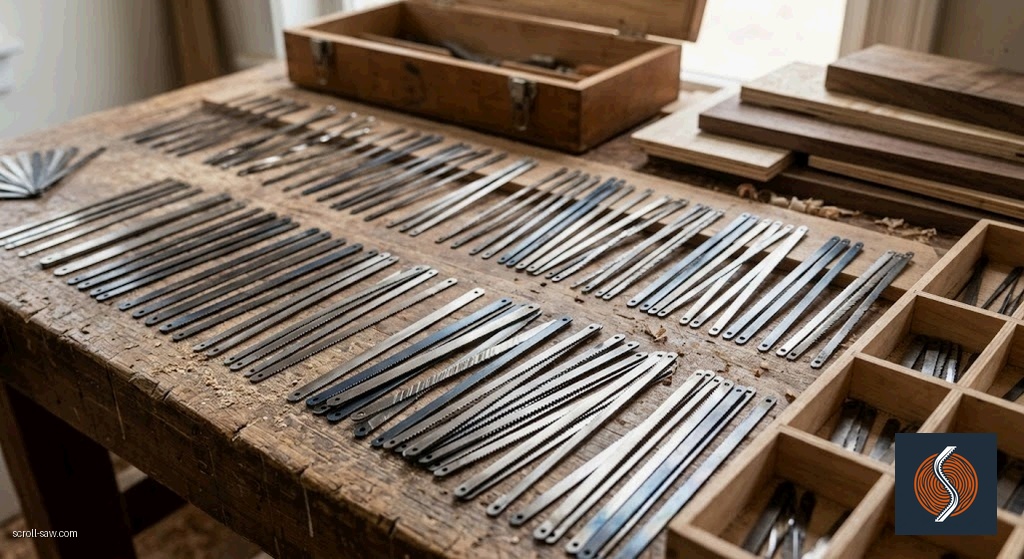
Niqua Scroll Saw Blades: Practical Selection Guide
Ask any competition-level scroll sawyer which blades sit in the top drawer, and Niqua comes up in the first breath. The German-made blades have earned a reputation across three decades of intarsia work, fretwork, and portrait scrolling that most brands never touch. They also cost more than the pack of no-name blades on the hardware store peg, which is why a lot of woodworkers reach for them once and then wonder if the extra dollar per pack really shows up in the cut.
It does. But only if you match the right Niqua line to the material you are actually feeding into the saw. Buying the wrong Niqua blade is worse than buying the right generic one, because you will blame the brand for a mistake you made in the parking lot.
Here is how to pick.
What Niqua actually sells
Niqua makes several distinct lines, and the names on the packaging are not always intuitive. The four you will meet most often:
Onyx is the workhorse skip-tooth line. Precision ground teeth, hardened flexible steel, sold in bundles of 12 or bulk gross packs. If you cut mostly hardwoods in the 1/4 to 3/4 inch range and you want a blade that lasts twice as long as a stamped equivalent, Onyx is the default. Sizes run from 2/0 up through #12.
Puma is Niqua’s reverse-tooth line. The bottom teeth face upward for a portion of the blade length so the underside of the workpiece stays clean. This is the blade for plywood signage where both faces need to look painted, or for stack cutting where the bottom sheet usually splinters. Slightly slower feed than Onyx because the reversed teeth work against you on that portion of the stroke.
Gold is a coated line intended for hard, abrasive stock: teak, ipe, dense exotics, and heavy MDF. The coating extends the working life of the tooth edge by a noticeable margin, at the cost of a slightly wider kerf.
Spiral blades wrap teeth 360 degrees around the axis, and Niqua’s are among the straightest-tracking spirals you can buy. For portrait work with hundreds of tight interior cuts, a Niqua spiral in #2/0 or #1 saves an enormous amount of workpiece rotation.
There are additional specialty lines (metal-cutting, pinned) but the four above account for nearly all the buying decisions a hobbyist or small-shop scroll sawyer will ever make.
Reading the Niqua size number
Niqua uses the standard scroll saw size numbering that runs from the very small (2/0, 3/0) through #12. The number is unrelated to inches; it is a legacy sizing scale, and smaller numbers mean thinner blades with more teeth per inch.
A practical translation for common materials:
| Material | Thickness | Onyx size | Notes |
|---|---|---|---|
| Basswood | 1/8 in | #3 | Clean cut without splintering |
| Baltic birch ply | 1/4 in | #5 | Puma works better if the underside will show |
| Cherry, walnut | 1/2 in | #7 | Onyx handles feed pressure well |
| Oak, maple | 3/4 in | #9 | Slower feed; watch for burn on maple |
| Ipe, teak, purpleheart | 1/2 in | #7 Gold | Coating pays off within one project |
| Corian | 1/4 in | #5 Onyx | Reduce speed to about half |
| Portrait detail work | 1/4 in wood | #2/0 or #1 Puma | Reverse teeth save the back face |
Where Niqua earns its price
Three things separate a Niqua Onyx from a five-dollar pack of generic blades:
-
Tooth geometry consistency. Every tooth in the pack has the same set and the same rake angle. That sounds boring on paper. It shows up on wood as a cut wall you do not need to sand before finish.
-
Steel quality. The spring temper holds tension through longer sessions without stretching. A generic blade stretches within the first ten minutes of hardwood cutting; a Niqua holds for an hour of active feed before you feel it start to flex under side load.
-
Straightness. Blades come out of the pack straight, not with the slight camber that plagues stamped alternatives. A cambered blade wanders no matter how carefully you feed.
The difference is small on any single cut. Across a portrait with 300 interior cuts, it is the difference between a piece worth framing and one that goes in the reject drawer.
Where Niqua is overkill
If you cut 3/4-inch pine outlines for garden signs and you use one blade per project because it snaps before it dulls, generic blades are fine. Niqua’s advantage is precision, and precision is wasted on rough work where a saw fence would be more appropriate anyway.
Same goes for beginners still learning to control feed pressure. A $2 blade breaks the same way a $4 blade breaks when you push too hard through walnut. Get comfortable with technique on cheaper stock before you invest in the top line.
Buying and storage
Niqua blades are sold by scroll saw specialty retailers rather than big-box hardware stores. Sloan’s Woodshop, Bear Woods, and Mike’s Workshop are the common US sources; European buyers can go direct. Bundles of 12 are the standard purchase unit; bulk packs of 144 (a gross) drop the per-blade cost noticeably for anyone cutting more than a few hours a week.
Store them dry, ideally in a plastic tube or the original sleeve. Blade steel takes on surface rust within weeks in a damp basement shop, and even a light rust film wrecks the cut quality on hardwood. If your shop humidity swings, a small silica pack in the blade drawer costs a dollar and saves you a lot of frustration.
Setting a Niqua blade up correctly
Tension first. Niqua blades want more tension than the average stamped blade because the harder steel does not stretch to compensate for a loose clamp. Pluck the blade after tensioning; you want a clean musical note, not a dull thud. A blade that thuds is going to wander.
Speed second. On hardwoods over 1/2 inch, drop the SPM to the middle of your saw’s range. High speed generates heat, and heat is what dulls a good blade in twenty minutes instead of two hours.
Feed third. Let the blade cut. The moment you feel yourself pushing rather than guiding, you are shortening the blade’s life and lowering the cut quality at the same time. If the blade is not cutting on its own weight plus light guiding pressure, the blade is wrong for the material or the tension is off.
Bottom line
For precision hobbyists and anyone chasing publication-quality work, Niqua Onyx and Puma are the default choice, with Gold reserved for exotics and hard board and Spiral for portraits. For rough utility work, generic blades save money without hurting the outcome. Buy in bundles of 12 to start; move to gross packs once you know which sizes you actually consume.
FAQ
What is the difference between Niqua Onyx and Puma? Onyx is a standard skip-tooth blade with all teeth facing down. Puma has a section of teeth facing upward at the bottom, which cuts the underside cleanly. Use Puma when the back face of your workpiece will show.
Can I use Niqua blades in any scroll saw? Yes, as long as you match the end style. Niqua sells plain-end blades for most modern saws (Delta, DeWalt, Excalibur, Hegner, Pegas) and pin-end blades for older or entry-level machines.
How do I tell which Niqua size to buy first? For general 1/4 to 1/2 inch hardwood work, start with a bundle of Onyx #5 and a bundle of Onyx #7. Those two cover most projects while you learn what the smaller and larger numbers feel like.
Do Niqua blades last twice as long as generics? In hardwood and controlled feed, roughly yes. In softwoods or with heavy-handed technique, the gap is smaller. In abrasive stock like MDF or teak, only the Gold coated line pulls that far ahead.
Why did my new Niqua blade break in the first minute? Almost always tension or pinch. Either the blade was under-tensioned and it whipped, or the workpiece closed on the blade during a cut and pinched it. Neither is the blade’s fault. Re-tension and use a zero-clearance insert to keep small pieces from pinching.
Are Niqua blades good for metal? Only the metal-specific line. Do not use Onyx or Puma on brass or aluminum; the tooth geometry is wrong and the blade dulls immediately.
Where should I not buy Niqua blades? Avoid unbranded resellers on general marketplaces. Counterfeit and mislabeled packs exist. Buy from established scroll saw specialty retailers who source direct.
References
-
Niqua GmbH product documentation, niqua.de
-
Bear Woods scroll saw blade guide, bearwood.com
-
Steve Good, Scroll Saw Workshop blade reviews, scrollsawworkshop.blogspot.com
-
Sloan’s Woodshop blade selection notes, sloanswoodshop.com


