
Pebeco Scroll Saw Blades: Setup and Modern Alternatives
Pebeco Scroll Saw Blades: Setup and Modern Alternatives
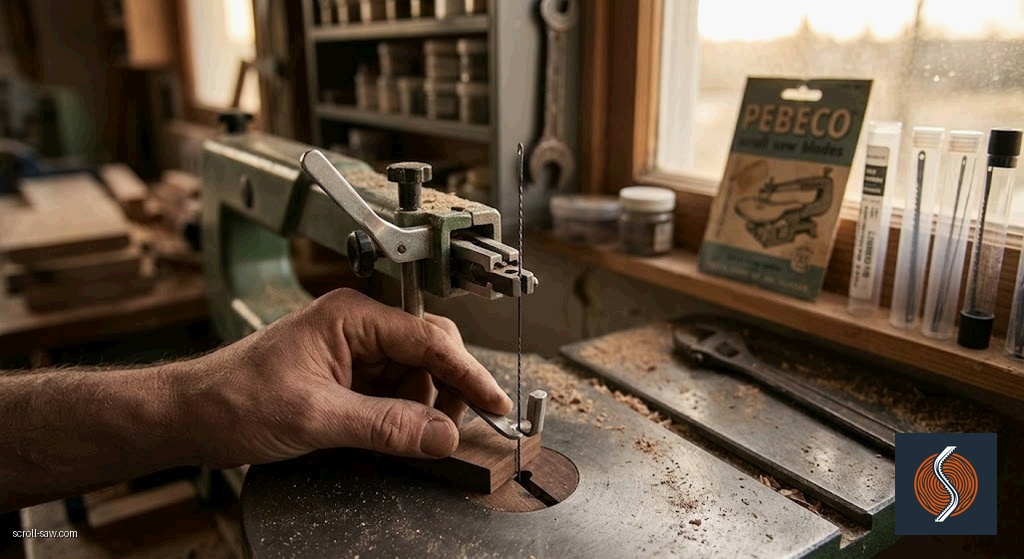
Pebeco blades show up in older scroll saw discussions and in the occasional back drawer of an estate-sale saw. They were a mid-century brand that shared the specialty market with names most modern scrollers still recognize (Olson, Herkules, Niqua). The company itself is no longer producing new blades under the Pebeco name, but the blades still turn up in bulk lots on auction sites, and if you inherited a scroll saw with a partial pack in the drawer, you have probably wondered whether they are worth loading or worth tossing.
Here is the honest answer, plus the practical setup notes for anyone still cutting with a stock of Pebeco blades.
What Pebeco blades were made for
Pebeco produced traditional skip-tooth and reverse-tooth scroll saw blades in the standard scroll saw number sizes, from very small (2/0) up through #12. The steel was decent for its era, softer than a modern Pegas or Niqua blade but consistent enough to earn shelf space in the woodworking supply catalogs of the seventies and eighties.
Because the blades sat in warehouses and toolboxes for years, the pack you find today may have some surface rust or set fatigue. That is not a reason to throw them out. It is a reason to inspect before loading.
Inspecting an older pack
Before you clamp a Pebeco into your saw, check three things:
-
Rust. A light surface film wipes off with a rag and a drop of oil. Pitting is different. If you can feel divots along the tooth edge with a fingernail, that blade will cut poorly and probably snap early. Discard.
-
Straightness. Roll the blade on a flat table. A straight blade rolls smoothly; a cambered one wobbles or refuses to roll. Cambered blades wander no matter how well you set up the saw.
-
Tooth set. Sight down the blade edge. If the teeth show a consistent alternating set (left, right, left, right), the blade will clear a proper kerf. If the set is flattened or bent, the blade will bind.
Any blade that fails one of the three goes in the recycling. Do not fight a bad blade to save two dollars.
Setting up a Pebeco blade for a good cut
Once you have a straight, un-rusted blade with a clean tooth set, treat it like any other traditional skip-tooth blade of the same size. The steel is softer than a modern premium blade, which changes two things:
Tension. Softer steel stretches more under tension, so give it a slightly higher initial tension than you would give a modern blade, then re-tension after the first minute of cutting. Pluck the blade; it should ring, not thud.
Speed. Softer steel dulls faster at high speed because more heat builds up at the tooth. Drop the SPM to the middle of your saw’s range for hardwood and to the lower third for anything abrasive.
Feed pressure. Go lighter than you would with a Pegas or Niqua of the same size. A softer blade bends under aggressive feed and the cut wanders. Let the blade do the work.
Size selection for common materials
Same numbering scheme, same rough matching to material:
| Material | Thickness | Pebeco size |
|---|---|---|
| Basswood | 1/8 in | #3 |
| Baltic birch ply | 1/4 in | #5 |
| Cherry, walnut | 1/4 to 1/2 in | #5 to #7 |
| Oak, maple | 1/2 in | #7 |
| Pine, spruce | 3/4 in | #9 |
When to keep cutting with them, when to move on
If you have a large stock of Pebeco blades and you cut mostly softwood for practice or utility projects, keep using them. They cut wood, they hold acceptable tolerance, and the price you paid was probably nothing beyond the estate sale total.
If you are moving into portrait work, intricate fretwork, or anything you plan to sell or frame, buy a bundle of Pegas or Niqua and see what your work looks like off a fresh premium blade. The difference in cut wall quality shows up on the first pass. Once you see it, the Pebeco pack becomes practice stock and nothing more.
Storage for what you have left
If your Pebeco stash is still cutting well, keep it that way:
-
Dry storage. A tackle box or plastic tube with a silica pack keeps the humidity off the steel.
-
No direct contact with concrete floors or damp basement walls.
-
Separate straight blades from any bent ones so you do not confuse them mid-project.
-
Label the sizes clearly. Old Pebeco packs sometimes have faded printing, and guessing the size mid-cut wastes wood.
Modern equivalents worth buying instead
For anyone who wants the traditional skip-tooth cutting characteristic in a modern blade, three options track closely:
Olson skip-tooth (SK series) is American-made, widely available, and cuts with a similar feel to old Pebeco. Steel is harder, blade life is longer.
Flying Dutchman regular skip-tooth ships from Mike’s Workshop in bundles of 12. Slightly harder steel, cleaner cut wall.
Pegas skip-tooth is the premium end of the same category. Swiss-made, precision ground, tight tolerances. Costs more, lasts longer, cuts cleaner.
Any of the three will outlast a Pebeco pack and give you a better cut wall on hardwoods.
Who should skip Pebeco entirely
A newer scroller who has never used them has no reason to buy an old-stock pack when modern equivalents are cheap and consistently better. The only argument for cutting with Pebeco today is that you already own them.
Bottom line
Inherited Pebeco blades still cut. Inspect them, tension them a bit tighter than modern blades, feed them a bit lighter, and use them for practice or utility work. For finish-quality work, move to a modern premium line. Do not spend money hunting new-old-stock packs online when the current market has better options for the same price.
FAQ
Are Pebeco scroll saw blades still made? No. The brand is legacy stock. What you find today comes from old-shop clearouts, estate sales, and warehouse liquidation.
Are Pebeco blades safe to use? Yes, provided you inspect for rust, straightness, and tooth set before loading. A blade that fails any of the three checks goes in the recycling.
How long do old Pebeco blades last in hardwood? Expect 30 to 50 percent of the working life of a modern premium blade of the same size. Softer steel dulls faster.
What blade should I buy to replace my Pebeco pack? For skip-tooth cutting, Olson SK series or Flying Dutchman regular skip-tooth are close equivalents at modest prices. Pegas skip-tooth is the premium option.
Why is my Pebeco blade wandering even when I feed lightly? Most likely a cambered blade or a bent tooth set. Roll it on a flat surface to check straightness and sight down the edge for tooth set consistency.
Can I sharpen an old Pebeco blade? Scroll saw blades are not practical to sharpen. Teeth are too small and set is too precise to restore reliably. When it dulls, replace it.
Are Pebeco blades collectible? Only to the small niche of vintage tool collectors. For woodworkers, they are practical stock, not collectibles.
References
-
Olson Saw Company blade catalog, olsonsaw.com
-
Flying Dutchman blade information, mikesworkshop.com
-
Pegas Scroll Saw Blades product notes, pegas-swiss.com
-
Steve Good, Scroll Saw Workshop, on blade care and inspection, scrollsawworkshop.blogspot.com


