
Plain Scroll Saw Blades: Sizes, Styles, and Selection
Plain Scroll Saw Blades: Sizes, Styles, and Selection
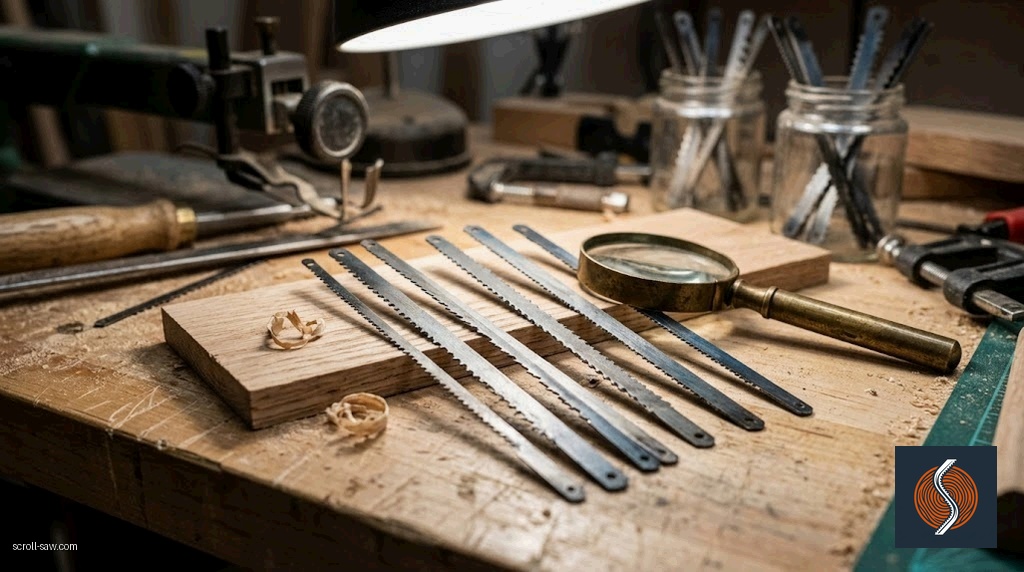
A plain scroll saw blade is a plain-end blade, meaning it has no pin at either end. Both ends are square-cut steel that clamp into the saw’s blade holders under screw or lever pressure. That plain end is the standard for every enthusiast and professional scroll saw made in the last thirty years, and it is the reason plain blades come in a range of sizes and geometries that pinned blades physically cannot match.
If you own a DeWalt DW788, a Delta P20, a Pegas 21, a Hegner Multimax, or an Excalibur EX-16, plain-end blades are what you feed the saw. Understanding the size and style options is the difference between fumbling through a project and having the right blade in the drawer.
The size numbering, translated
Plain scroll saw blades run through a legacy numbering scale from the smallest sizes upward:
| Size | Approximate width | Typical use |
|---|---|---|
| 2/0 | 0.008 in | Very fine detail, portrait work, 1/8 in stock |
| #1 | 0.010 in | Fine fretwork, 1/8 to 1/4 in stock |
| #3 | 0.012 in | General detail work in 1/4 in wood |
| #5 | 0.015 in | Workhorse for 1/4 to 3/8 in hardwood |
| #7 | 0.017 in | 1/2 in hardwood, general use |
| #9 | 0.020 in | 3/4 in hardwood, aggressive cuts |
| #12 | 0.024 in | Thick stock, rough shapes |
The three tooth styles that cover most work
Skip-tooth blades space every other tooth, which clears sawdust efficiently and cuts cool. This is the default for wood cutting and it belongs in the first drawer.
Reverse-tooth blades add a section of upward-facing teeth at the bottom of the blade. The upward teeth cut on the return stroke and clean the underside of the workpiece. Use them for plywood signage where both faces show and for stack cutting where the bottom sheet usually splinters.
Precision ground blades (Olson PGT, Pegas precision, Niqua Onyx) grind each tooth after forming, producing cleaner cut walls and longer blade life. Worth the extra cost in hardwood.
There are also spiral blades, metal-cutting blades, and specialty geometries. Those are supplemental. Skip-tooth, reverse-tooth, and precision-ground cover 90 percent of what a hobby shop actually cuts.
Matching blade to material
A starter chart for common combinations:
| Material | Thickness | Blade size and style |
|---|---|---|
| Basswood | 1/8 in | #3 skip-tooth |
| Baltic birch ply | 1/8 in | #3 reverse-tooth |
| Baltic birch ply | 1/4 in | #5 reverse-tooth |
| Cherry, walnut, maple | 1/4 in | #5 precision ground |
| Cherry, walnut, maple | 1/2 in | #7 skip-tooth or precision ground |
| Oak, ash | 1/2 in | #7 precision ground |
| Pine, spruce | 3/4 in | #9 skip-tooth |
| Corian | 1/4 in | #5 skip-tooth at half speed |
| Aluminum, brass 1/16 in | 1/16 in | #3 metal-cutting blade with cutting fluid |
| Portrait detail | 1/4 in wood | #2/0 or #1 spiral or reverse |
Setting up any plain blade correctly
Three things determine cut quality regardless of blade brand:
Tension. Tighten the blade until it rings when plucked, not thuds. Loose blades wander and break. Re-check tension after the first minute of cutting; steel stretches under initial load and needs a second tension.
Speed. Match SPM to material. Hardwoods and thick stock want moderate speed; thin softwoods and plastics want lower speed to avoid melting and burning.
Feed. Guide the wood, do not push it. If the blade is cutting on its own weight plus light pressure, the setup is right. If you are shoving the wood into the blade, the blade is too small for the material or the speed is wrong.
A correctly set-up cheap blade beats a poorly set-up premium blade every time. Setup comes first.
The brands worth naming
Olson is the American default. Wide range of sizes and styles, easy to find, moderate price. PGT precision-ground line is worth trying for hardwood.
Pegas (Swiss) is the premium end. Tight tolerances, longer blade life, higher cost per blade. Preferred by competition-level scrollers.
Flying Dutchman ships from Mike’s Workshop in bundles of 12. Strong reputation among hobbyists, several lines including reverse and spiral.
Niqua (German) sells Onyx, Puma, and Gold lines through scroll saw specialty retailers. Precision quality at prices between Olson and Pegas.
All four are worth trying. Buy a single bundle of each in your most-used size and cut the same test piece with each blade to feel the differences.
Storage
Blade steel oxidizes in humid shops, and even a light rust film hurts cut quality. Store plain blades in original tubes or labeled plastic sleeves, keep the drawer dry, and add a small silica pack if humidity swings. Separate straight blades from any that have been bent so you do not grab a bad one mid-project.
Bottom line
Plain scroll saw blades give you the full range of scroll saw work, from portrait fretwork to thick outline cutting. Start with three sizes: a #3 for fine work, a #5 for general use, and a #7 for thicker stock. Add reverse-tooth versions of #3 and #5 for plywood work. Once you have those five bundles in the drawer, you have the equipment to cut anything a hobby scroll saw can cut.
FAQ
What is a plain scroll saw blade? A plain-end blade, meaning both ends are square-cut steel with no pin. The ends clamp directly into the saw’s blade holders.
Which scroll saws use plain blades? Every enthusiast and professional saw made in the last thirty years. DeWalt DW788, Delta P20, Hegner Multimax, Excalibur EX-16, Pegas 21, and similar all use plain-end blades.
Can I use plain blades in a pin-end saw? Some saws include an adapter clamp that accepts both styles. Most do not. Check the saw’s manual.
What size plain blade should a beginner buy first? A bundle of #5 skip-tooth. It cuts 1/4 to 3/8 inch hardwood well and forgives new-scroller mistakes. Add #3 and #7 as your projects demand.
How long does a plain blade last? In 1/4-inch hardwood at correct tension and feed, expect 30 to 60 minutes of active cutting per blade. Blade life drops sharply in abrasive stock like teak or MDF.
What is the difference between skip-tooth and reverse-tooth? Skip-tooth has evenly spaced teeth all facing downward. Reverse-tooth has a section of upward-facing teeth at the bottom that clean the underside of the cut. Use reverse for plywood signage and stack cutting.
Why does my plain blade keep breaking? Usually tension too low or feed pressure too high. Tighten the blade until it rings when plucked, then lighten your feed until the saw does the cutting.
References
-
Olson Saw Company plain-end blade catalog, olsonsaw.com
-
Pegas Scroll Saw blade product data, pegas-swiss.com
-
Flying Dutchman blade information, mikesworkshop.com
-
Niqua GmbH product documentation, niqua.de


