
Ridgid Scroll Saw Blades: Size Chart and Setup
Ridgid Scroll Saw Blades: Size Chart and Setup
Ridgid built scroll saws for the Home Depot mid-range market for years, and while the current lineup is smaller than it was a decade ago, plenty of Ridgid scroll saws are still cutting in home shops today. If you own one, the blade question comes up quickly: does Ridgid make blades specifically for their saw, or should you buy generic blades that fit the same clamp system?
The answer is both, and picking the right size matters more than the brand on the pack.
What the Ridgid saw actually accepts
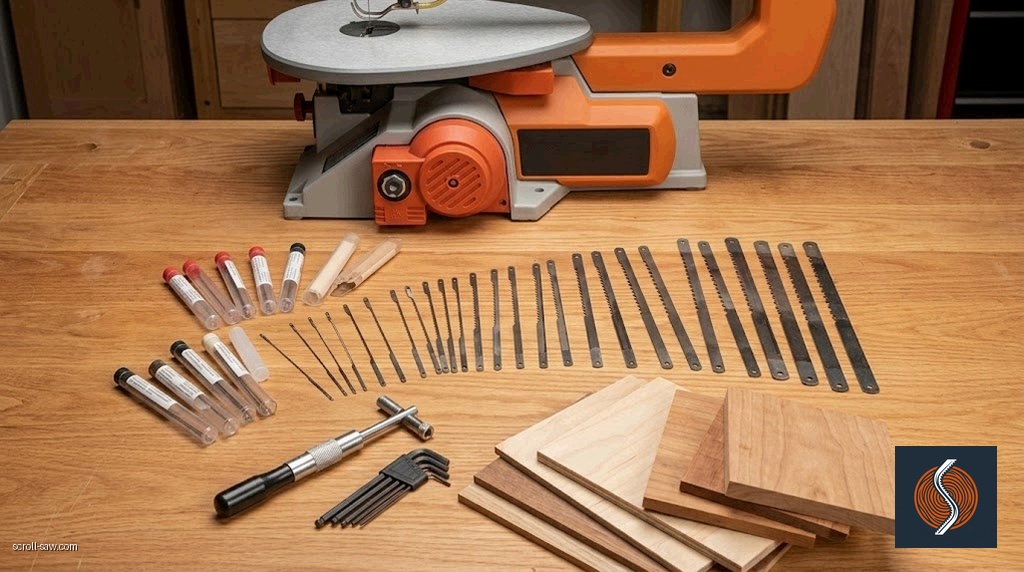
Most Ridgid scroll saws made in the last twenty years accept standard 5-inch plain-end scroll saw blades. The blade clamps take any brand of plain-end blade in the standard size range from #2/0 through #12. That means the blade market is wide open; you are not locked into a Ridgid-branded pack.
Older Ridgid saws (and some low-end variants) accept pinned blades instead. Pinned blades have a small crosswise pin at each end that seats in a slot on the clamp. Check the manual for your specific model. If it takes pinned blades, your size range is more limited but the blades are easier to load.
The sizing chart for any scroll saw blade in a Ridgid
| Material | Thickness | Blade size |
|---|---|---|
| Basswood | 1/8 in | #3 skip-tooth |
| Baltic birch ply | 1/8 in | #3 reverse-tooth |
| Baltic birch ply | 1/4 in | #5 reverse-tooth |
| Cherry, walnut | 1/4 in | #5 skip-tooth |
| Cherry, walnut | 1/2 in | #7 skip-tooth |
| Oak, maple | 1/2 in | #7 skip-tooth |
| Oak, maple | 3/4 in | #9 skip-tooth |
| Pine, spruce | 3/4 in | #9 skip-tooth |
| Portrait detail | 1/4 in wood | #2/0 or #1 spiral |
| Corian | 1/4 in | #5 skip-tooth at half speed |
Are Ridgid-branded blades worth buying?
Ridgid-branded scroll saw blade packs are typically sourced from a third-party manufacturer and rebranded. They cut acceptably for general work and are convenient if you shop at Home Depot for other supplies. They are not competitive with premium ground blades in hardwood cutting or fretwork.
For most scrollers with a Ridgid saw, the practical setup is:
-
Rough utility cuts and softwood outlines: Ridgid-branded blades or any budget pack.
-
Hardwood cutting: Olson skip-tooth SK series or Olson PGT.
-
Plywood signage: Olson SKR reverse-tooth or Flying Dutchman Ultra Reverse.
-
Portrait or fretwork: Pegas, Niqua Onyx, or PS Wood Ultra Reverse.
Match the blade to the job, not to the brand on the saw.
Common Ridgid scroll saw models and their blade needs
Ridgid R2600. 16-inch plain-end scroll saw, discontinued but still in use. Accepts standard 5-inch plain-end blades. Full range of sizes.
Ridgid R2500. Older 16-inch pinned-blade saw. Limited to pinned blades; buy in multipacks with mixed TPI.
Ridgid MS1290LZ (portable). Actually a miter saw and not a scroll saw. Do not attempt to use scroll saw blades in a miter saw.
Check your model number on the saw’s nameplate before ordering blades. The manual, if you still have it, lists the exact blade specification.
Setup for good cuts on a Ridgid saw
The cut quality on any scroll saw depends on three things: blade choice, tension, and feed. Ridgid saws are not exceptional on any of those but they are competent when set up correctly.
Tension. Ridgid saws use a lever-tension mechanism. Pluck the blade after tensioning; you want a clear ringing note. Re-tension after the first minute of cutting because steel stretches under initial load.
Speed. Most Ridgid scroll saws are variable speed. Use middle of the range for hardwood, upper middle for softwood, and lower range for plastics and metals.
Feed. Guide the wood with light pressure. If the blade is cutting on its own weight plus fingertip guidance, the setup is right. If you are shoving the wood, the blade is too small for the material or the speed is off.
Common problems with Ridgid saws and blade fit
Blade slipping in the clamp. Ridgid clamp screws can wear over time. Replace the screw or the clamp block; parts are available through Ridgid customer service or aftermarket sources.
Blade breaking early. Usually tension too low, feed too heavy, or a blade too small for the material. Systematically check each before assuming the blade is bad.
Cut wall roughness. Blade dull, wrong TPI for the material, or feed pressure too high. Replace with the correct blade for the material.
Blade wandering off the line. Loose tension, cambered blade, or a blade too large for the required turn radius. Check tension first; roll the blade on a flat surface to check straightness.
Upgrading beyond stock blades
If you are cutting hardwood or fretwork regularly on a Ridgid saw, moving to Olson PGT or Pegas ground blades improves the finish coming off the saw more than any other upgrade you can make. The blade is doing 80 percent of the work of scroll sawing; the saw is doing the other 20 percent. A better blade in a competent saw beats a stock blade in a premium saw.
Bottom line
A Ridgid scroll saw accepts standard scroll saw blades from any brand. Match blade size to material using the chart above, tension firmly, and feed lightly. Ridgid-branded blades cut acceptably for general work; move to Olson, Pegas, or Niqua ground lines for hardwood and fretwork. Do not chase premium saw features when the return on investment starts with a better blade in the saw you already own.
FAQ
Do Ridgid scroll saws use standard blades? Most Ridgid scroll saws made in the last twenty years accept standard 5-inch plain-end blades. Older or entry-level models may use pinned blades. Check the manual.
What size blade should I use in a Ridgid scroll saw? Match the size to the material. #5 for 1/4 to 3/8 inch hardwood, #7 for 1/2 inch, #9 for 3/4 inch. Full sizing chart above.
Are Ridgid-branded scroll saw blades good? Acceptable for general work. Not competitive with premium ground blades in hardwood or fretwork.
Which blade brand should I use with my Ridgid saw? Olson SK series for general work, Olson PGT for hardwood, Pegas or Niqua for premium cut quality. Match the brand to the work, not the saw.
Why does my blade slip in the Ridgid clamp? Usually a worn clamp screw or a blade end that has been repeatedly clamped in the same spot. Replace the screw or clean the clamp faces.
Can I use pinned blades in a plain-end Ridgid saw? No. Match the blade end style to the saw’s clamp. Some saws include an adapter for both styles; most do not.
Where do I buy replacement blades for my Ridgid? Home Depot for Ridgid-branded packs. Woodworking specialty retailers (Rockler, Woodcraft, psWood.com, mikesworkshop.com) for premium brands.
References
-
Ridgid tool documentation and manuals, ridgid.com
-
Olson Saw Company blade catalog, olsonsaw.com
-
Home Depot Ridgid scroll saw product listings, homedepot.com
-
Steve Good, Scroll Saw Workshop on scroll saw setup, scrollsawworkshop.blogspot.com


