
Scroll Saw Blade Adapter Kit: Setup Guide
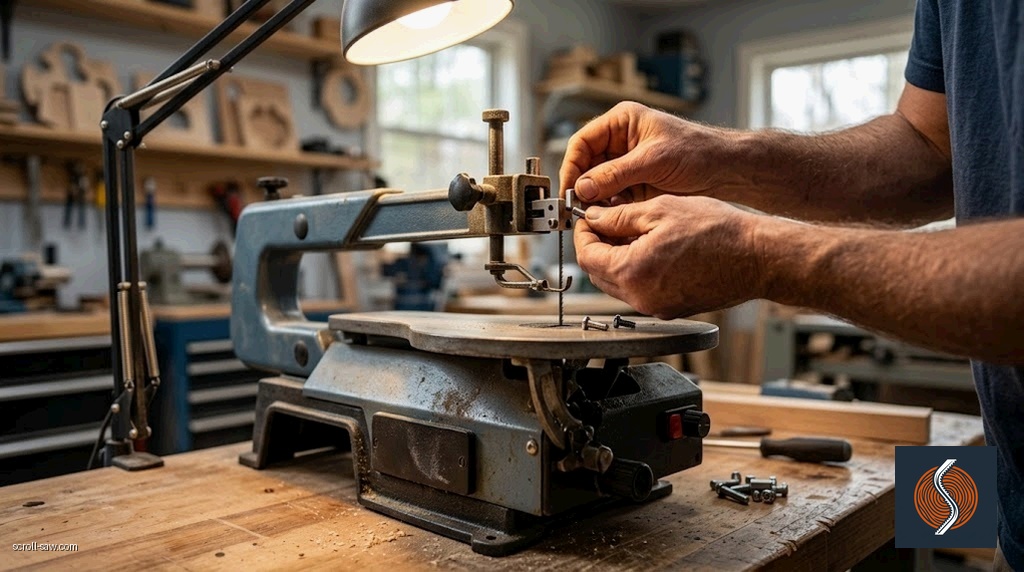
Scroll Saw Blade Adapter Kit: Setup Guide
A scroll saw blade adapter kit typically bundles two adapters (upper and lower) with a small hex key or wrench, sometimes a starter pack of plain-end blades, and printed instructions. It is the packaged version of the single-adapter purchase, aimed at someone who has decided to convert a pinned saw to run plain-end blades and wants everything needed in one shipment.
Installing one changes what a pinned scroll saw can do. But the cut quality difference depends on more than just the adapter kit itself. Here is how to get the most from the conversion.
What a kit usually contains
A typical adapter kit ships with:
-
One upper blade adapter, sized for your saw’s pin socket
-
One lower blade adapter, sized for the same
-
A small hex key or wrench for the setscrews
-
Sometimes a starter assortment of plain-end blades
-
Sometimes replacement setscrews
-
Instructions specific to the saw model
Some kits are truly universal (fitting several similar saw models). Others are model-specific. Read the listing carefully; a kit sized for a Dremel Moto-Saw is not going to fit an old Delta 40-570.
Why the kit matters more than the individual adapter
Buying adapters and a hex key separately usually works, but kits solve two small problems:
-
Compatibility guarantee. Kits sold for specific saw models have been tested to fit. Buying loose parts risks a mismatch.
-
Correct tools. A metric hex key when you needed imperial, or vice versa, means an extra trip to the hardware store. Kits ship the right tool.
For a scroller doing the conversion for the first time, spending a few dollars more on a bundled kit avoids frustration.
Installing the kit
The procedure is the same for most kits:
-
Unplug the saw.
-
Release blade tension and remove any pinned blade.
-
Insert the lower adapter into the lower blade clamp exactly the way a pinned blade would seat.
-
Insert the upper adapter into the upper blade clamp with the saw’s arm at its lowest position.
-
Feed a plain-end blade through the throat, into the lower adapter first (teeth pointing down and forward), and clamp with the setscrew.
-
Clamp the top of the blade into the upper adapter.
-
Apply tension using the saw’s tension mechanism.
-
Pluck the blade. Ring, not thud. Re-tension if dull.
-
Test-cut on scrap to verify the setup.
Expect the first few blade changes to feel awkward. The setscrew adapters take a couple of tries to get the tightening motion down without dropping small parts into the saw’s throat.
What to expect from the cut
With the adapter kit installed and a correctly sized plain-end blade loaded, the cut quality on a converted pinned saw improves in three ways:
Finer detail is possible. Plain-end blades come in sizes finer than any pinned blade. A #2/0 or #1 blade lets you cut fretwork bridges as thin as 1/32 inch, which the smallest pinned blade cannot.
Interior cuts through smaller pilot holes. Feed the plain-end blade through a 1/16-inch pilot hole for interior fretwork. A pinned blade cannot fit through a hole that small.
Tighter turning radius. The finer plain-end blades pivot in almost zero space, letting you cut lettering and portrait detail that a wider pinned blade would round off.
Cut wall quality on the same-material outline cut is similar between pinned and plain-end blades. The difference is what becomes possible, not how a straight cut looks.
Sizing for the material
Once converted, size plain-end blades to material the way you would on any plain-end saw:
| Material | Thickness | Blade size |
|---|---|---|
| Basswood | 1/8 in | #3 skip-tooth |
| Baltic birch ply | 1/4 in | #5 reverse-tooth |
| Cherry, walnut | 1/4 to 1/2 in | #5 to #7 skip-tooth |
| Oak, maple | 1/2 to 3/4 in | #7 to #9 skip-tooth |
| Fretwork detail | 1/4 in wood | #2/0 or #1 spiral or reverse |
Troubleshooting after installation
Blade slipping out of adapter under tension. Setscrew not tight enough. Snug it firmly with the hex key. If it keeps slipping, roughen the adapter’s grip surface with fine sandpaper.
Blade breaks at the adapter end consistently. The blade is pinched at an angle. Check that the blade sits square in the adapter, not tilted.
Adapter loose in the saw’s clamp. The saw’s clamp is worn. Test with a stock pinned blade to confirm; if the pin holds a pinned blade correctly, the adapter should fit too. If not, the clamp needs replacement.
Cannot apply enough tension. Some pin-end saws have limited tension range. If plucking the blade never produces a ring, the saw’s tension mechanism is limiting you and no adapter will fix it.
When the kit is not enough
An adapter kit works well on pin-end saws in reasonable condition. If your saw has:
-
A worn or wobbly upper arm
-
A weak tension mechanism
-
Worn blade clamp sockets
-
Underpowered motor for the work you want
The kit will not fix any of that. The adapter expands what blades you can use; it does not upgrade the saw’s fundamentals.
Bottom line
A scroll saw blade adapter kit is the cheapest way to open up plain-end blade options on a pinned saw. For a scroller who wants to try fretwork or portrait scrolling without buying a new machine, one adapter kit plus a few bundles of plain-end blades in fine sizes is the practical conversion. For serious ongoing work, a native plain-end saw remains the better long-term investment.
FAQ
Is a blade adapter kit better than buying loose adapters? For first-time conversions, yes. The kit ensures compatibility and includes the tools you need.
Does the kit include blades? Some do, some do not. Read the listing before ordering; buy blades separately if not included.
Can any pinned scroll saw be converted with an adapter kit? Most can, provided the saw’s pin socket and blade clamp are in good condition. Very small or unusual saws may not have a matching kit available.
How long does it take to install? Under 15 minutes for most saws. The adapters simply seat in the existing clamp; no permanent modification.
Do I have to remove the adapters to use pinned blades again? Yes, if you want to go back to pinned. Store the adapters somewhere you can find them; they are small and easy to lose.
Does the adapter reduce cut quality? Slightly, in the sense that any extra mechanical joint under tension can vibrate. Difference is small enough that most scrollers do not notice after the first few cuts.
Where do I buy an adapter kit? Sloan’s Woodshop, Bear Woods, PS Wood, and scroll saw specialty retailers stock kits for common saw models.
References
-
Sloan’s Woodshop scroll saw adapter kits, sloanswoodshop.com
-
Bear Woods scroll saw accessories, bearwood.com
-
Steve Good, Scroll Saw Workshop on saw conversions, scrollsawworkshop.blogspot.com
-
Olson Saw Company plain-end blade catalog, olsonsaw.com


