
Scroll Saw Keychain Maker: Material Thickness, Blade Size, and Finishing Notes
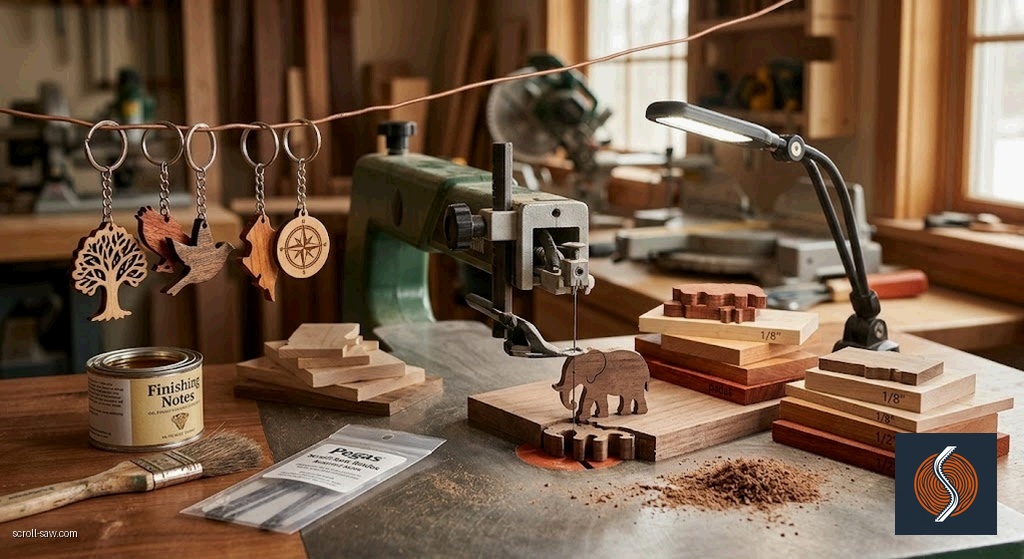
Scroll Saw Keychain Maker: Material Thickness, Blade Size, and Finishing Notes
A scroll saw keychain maker is a hobbyist who’s shifted from casual keychain cutting into semi-production work: dozens of keychains for craft fairs, wedding favors, corporate gift orders, or online storefront listings. The techniques stay the same as one-off keychain work, but the workflow shifts toward batch processing, consistent output, and material efficiency.
What separates a keychain maker’s workflow from a one-off cutter’s: stack-cutting, batch drilling, batch finishing, and inventory management.
What keychain making at scale typically involves
Most scroll saw keychain makers focus on a specific product line: monogrammed initials, wedding favor hearts, sports team icons, state outlines, business logos, or seasonal shapes. Each product line has a specific pattern, a specific wood species, and a specific finish. Batch production runs from a dozen at a time (for a small craft fair) to several hundred (for wholesale orders).
Quick answer: standardize on 1/4 inch stock across the product line. Stack-cut four to six pieces at once with double-sided tape. Batch drill keyring holes with a drill press stop-block. Batch finish with wipe-on oil applied to a tray of pieces at once. Attach hardware in batches.
Material thickness for keychain production
Quarter-inch stock is the production standard. Substantial enough to feel like a real keychain, thin enough to stack-cut four to six at a time.
Three-eighths inch stock for premium keychain lines. Stack-cut two to three at a time.
One-eighth inch stock for jewelry-grade lightweight keychain lines. Stack-cut six to eight at a time.
Standardize on one thickness across a product line for workflow consistency.
Wood choice for production
Half a dozen species work well for keychain production:
-
Cherry in 1/4 inch: the reliable default, cuts easily, oils warm.
-
Walnut in 1/4 inch: darker and warm.
-
Maple in 1/4 inch: pale, takes stain and paint.
-
Bloodwood in 1/4 inch: bright red statement pieces.
-
Purpleheart in 1/4 inch: purple statement pieces.
-
Baltic birch plywood in 1/4 inch: economical for painted or laser-etched keychains.
Buy stock in matched batches (same board, same milling run) for color consistency across a product line.
Blade size and batch strategy
A #3 skip-tooth for standard 1/4 inch stack-cut work.
A #5 skip-tooth for 3/8 inch stack-cut work.
A #1 or #2/0 blade for pierced initial detail in a monogram keychain line.
Stock blades in bulk. A production run of 50 keychains can consume 8 to 15 blades depending on wood species and stack depth.
Stack-cutting for production
-
Cut identical rectangular blanks of stock (e.g. 3 inch by 2 inch each for a 2 inch keychain with margin).
-
Sandwich four to six blanks with double-sided tape between each layer.
-
Apply the pattern to the top layer.
-
Drill keyring hole through the full stack with a drill press.
-
Drill entry holes through the full stack for any interior detail.
-
Cut the outer perimeter through the full stack in one continuous cutting path.
-
Peel tape apart to separate the identical finished keychains.
Stack-cutting quadruples throughput compared to one-at-a-time cutting.
Batch drilling with a stop-block
A drill press stop-block ensures consistent keyring hole placement across every keychain in a product line:
-
Set the drill press fence to position the keyring hole at the intended distance from the piece’s top edge.
-
Set a stop-block on the fence to position the keyring hole at the intended distance from the piece’s side edge.
-
Drill every keychain against the same fence and stop-block. Every keyring hole ends up in exactly the same relative location.
Consistent hole placement gives a product line uniform appearance from piece to piece.
Batch finishing
-
After cutting and sanding, lay finished keychains face-up on a wire drying rack.
-
Apply wipe-on oil with a soft cloth to all pieces at once.
-
Wait 30 minutes for the oil to soak in.
-
Wipe off excess oil.
-
Flip pieces and repeat on the reverse.
-
Cure overnight before second coat.
Batch finishing keeps hand time consistent and prevents pieces from being missed or double-coated.
Batch hardware attachment
-
Order split rings and jump rings in bulk (100-count boxes are common).
-
After finishing cures, attach hardware to all pieces in one session.
-
Package each piece in a small clear cellophane bag with a business card or care card.
-
Store batches in cardboard boxes labeled with product name, wood species, and finish type.
Where scroll saw keychain making at scale fails
Inconsistent hole placement across pieces. Not using a drill press stop-block. Set a fence and stop-block before drilling.
Earrings mismatched (for jewelry-style keychain pairs). Not stack-cutting. Always stack-cut identical pairs.
Wood color varies from batch to batch. Different lumber sources. Buy stock in matched batches.
Finish inconsistent from piece to piece. Manual application without batch process. Use a wire drying rack and apply to all pieces in one session.
Pieces damaged during storage or shipping. Individual cellophane bags prevent piece-to-piece rubbing. Cardboard boxes for storage.
Inventory management
Maintain a simple inventory sheet: product name, wood species, quantity in stock, quantity sold, reorder threshold.
Restock a product line when inventory falls below the reorder threshold. Typical reorder threshold: one week’s expected sales.
Pattern management
Store patterns in a labeled binder or file system: product name, pattern PDF file, notes on blade size and cut sequence.
Create a pattern library for the product line so any new production run can be started from the same source material.
Comparing three keychain product lines
Simple monogram initial keychain line, 1/4 inch cherry stack-cut, oiled, brass split ring. The reliable first product line. Batch of 50 cuts in a weekend.
Wedding favor heart keychain line with pierced date monogram, 1/4 inch maple stack-cut, oiled, brass split ring, custom packaging. The mid-range line.
Detailed sports icon keychain line with painted team color scheme, 1/4 inch Baltic birch stack-cut, sealed and painted, brass split ring, packaged with team-branded card. The signature line.
Conclusion
A scroll saw keychain maker’s workflow succeeds when the stock is standardized across a product line, stack-cutting is used for every batch, batch drilling with a stop-block ensures consistent hole placement, and batch finishing keeps the product line uniform. Quarter-inch cherry, walnut, or Baltic birch. A #3 skip-tooth outline with #1 or #2/0 for pierced detail. Titebond II for any laminate work. Wipe-on oil or sealed acrylic paint. Metal split rings attached after finishing. Do those and the finished product line reads as production quality without losing the handmade personality that makes wooden keychains sell in the first place.
Frequently asked questions
What stock thickness works best for keychain production? Quarter-inch is the production standard. Substantial enough to feel real, thin enough to stack-cut four to six at once.
How many can I stack-cut at once? Four to six pieces of 1/4 inch stock, six to eight of 1/8 inch stock, two to three of 3/8 inch stock. Beyond those numbers, alignment shift becomes a risk.
How do I keep hole placement consistent across a product line? A drill press stop-block against a fence. Every piece gets drilled against the same reference, so every hole ends up in the same relative location.
How do I keep wood color consistent across a batch? Buy stock in matched batches from the same board or milling run. Color varies between lumber sources.
How should I batch finish? Lay pieces on a wire drying rack, apply oil to all pieces at once, wait 30 minutes, wipe off excess. Flip and repeat.
What packaging works for keychain sales? Individual clear cellophane bag with a business card or care card. Cardboard boxes for storage between craft fair events.
How many blades will a production run consume? Eight to fifteen for a 50-piece run, depending on wood species and stack depth. Stock blades in bulk.
References
-
Steve Good, Scrollsaw Workshop pattern archive: scrollsawworkshop.blogspot.com
-
Sue Mey, Scroll Saw Artist: scrollsawartist.com
-
Scroll Saw Woodworking & Crafts, Fox Chapel Publishing: foxchapelpublishing.com


