
Scroll Saw Blade Holder Parts: Measurement Guide
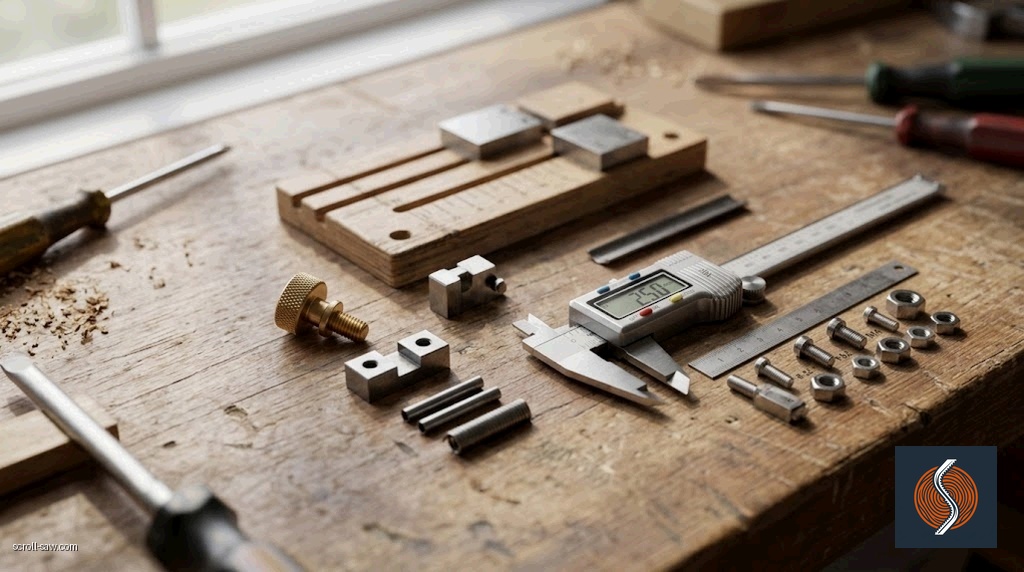
Scroll Saw Blade Holder Parts: Measurement Guide
Ordering scroll saw blade holder parts sight-unseen leads to a lot of returned packages and a lot of frustrated scrollers. Blade holders vary in nearly every dimension between saws, and a part sized for the wrong model will not thread correctly, will not seat firmly, or will not grip the blade. Ten minutes with a caliper before ordering saves days of back-and-forth with the retailer.
Here are the measurements to take and how they map to the parts you might need.
The blade holder parts inventory
A typical scroll saw blade holder consists of:
-
Holder body. The main housing that mounts to the saw’s arm.
-
Clamp block or jaw. The internal piece that grips the blade end.
-
Thumbscrew or setscrew. Applies pressure to hold the blade.
-
Captive washer or spring. Keeps the thumbscrew consistent and prevents backing out.
-
Mounting stud or threaded post. Attaches the holder to the saw’s arm.
-
Grip insert. Small hardened surface where the blade end sits.
Each of these has specific dimensions that must match. Guessing risks buying the wrong part.
Measurements to take
Thumbscrew
Thread diameter. Measure across the outer diameter of the thread with a caliper. Common sizes: M4, M5, M6 in metric; #10-24, 1/4-20 in imperial.
Thread pitch. Metric thread pitch is measured in millimeters between threads (e.g., 0.8 mm). Imperial pitch is measured in threads per inch (e.g., 24 TPI). A thread gauge is the fastest way to check.
Overall length. From the top of the head to the tip of the screw.
Head style. Knurled thumb head, hex socket, slotted, or square. Match the style so you can operate the screw the same way.
Clamp block
Overall dimensions (length × width × height). Fits in a specific pocket in the holder body.
Blade slot width. The slot that accepts the blade end. Usually 0.020 to 0.030 inches, depending on the blade sizes the saw is designed for.
Grip surface texture. Hardened knurl, plain, or replaceable insert.
Holder body
Mounting thread specification. Same measurements as the thumbscrew but for the stud that attaches to the arm.
Overall dimensions. Length, width, and height. Must fit the saw’s arm without interference.
Orientation of clamp jaw opening. Some holders open sideways, some face-on. Must match your intended blade change motion.
Grip insert (if separate)
Insert dimensions. Small, usually 3 to 8 mm across. Must fit the pocket in the clamp jaw.
Material. Hardened steel, brass, or knurled aluminum. Match the original for consistent grip.
Where to find spec information
Saw manual. Older manuals often include parts diagrams with specifications. Newer manuals sometimes reference online parts catalogs.
Manufacturer’s parts diagram. DeWalt, Delta, Excalibur, and other major brands maintain parts diagrams online. Look for exploded views with part numbers.
The old part itself. The most reliable source. Measure the failed part against a caliper and thread gauge.
Aftermarket supplier catalogs. Sloan’s Woodshop, Bear Woods, and similar retailers list dimensions for the parts they stock. Cross-reference against your measurements.
Common mismatches
Thread pitch wrong. Fits by hand but strips on the first turn. Always confirm pitch, not just diameter.
Screw too long. Bottoms out in the clamp before applying pressure. Cut to length or return.
Screw too short. Cannot reach the clamp block. Order the correct length.
Clamp block too large for the pocket. Will not seat. Return.
Blade slot too narrow. Larger blades will not fit. Order a wider-slot version if available.
Grip texture wrong. Insert smooths out under first tension; blade slips. Replace with correctly textured version.
Making the parts order
Once you have the measurements:
-
Find the part number. Cross-reference against the manufacturer’s parts diagram or an aftermarket supplier’s catalog.
-
Verify dimensions match. Compare listed dimensions against your measurements.
-
Order from a scroll saw specialty supplier. They stock parts for specific saw models and know the compatibility issues.
-
Confirm the order includes all needed sub-parts. A replacement thumbscrew sometimes ships without the captive washer; a replacement clamp block sometimes ships without the grip insert. Check what is included.
Budget a few extra days for shipping. Some scroll saw parts move slowly through supply channels.
Common questions before ordering
Do I need to replace the whole holder or just one part? If the failure is thumbscrew or clamp block only, order that part. If multiple parts are worn, replace the whole holder assembly.
Can I mix factory and aftermarket parts? Sometimes. Aftermarket thumbscrews often work in factory holders; aftermarket clamp blocks are trickier because they need to fit factory pockets precisely.
Are aftermarket parts as good as factory? Often better. Aftermarket suppliers sometimes redesign known-weak parts with sturdier materials.
Should I keep the failed part as a template? Yes. If the replacement does not fit or does not work, you can send the failed part to the supplier for comparison.
When ordering parts is not the fix
If you have replaced parts twice and the holder still fails:
-
Check the arm mounting thread. A stripped arm thread lets any holder wobble.
-
Consider upgrading to a completely different holder design (e.g., a Pegas cam chuck) that bypasses the failure mode.
-
Ask on scroll saw forums about known issues with your saw model. Some saws have chronic weak spots that only a redesign fixes.
Bottom line
Measure before you order. Thread diameter, thread pitch, length, and clamp dimensions all matter. Cross-reference against the saw’s parts diagram or an aftermarket supplier’s catalog. Keep the failed part for comparison. If replacements keep failing in the same way, consider a full holder upgrade rather than continued small-part replacements.
FAQ
How do I identify my scroll saw’s blade holder specifications? Saw manual, manufacturer’s parts diagram, or measuring the existing part with calipers and a thread gauge.
Are scroll saw blade holder parts interchangeable between brands? Rarely. Each brand uses different threads and dimensions.
What is the most common failure point? The thumbscrew, either stripped threads or a bent shaft.
Can I use a hardware store thumbscrew? Only if the thread pitch, length, and head style all match. Woodworking supply catalogs stock scroll saw thumbscrews in correct specifications.
Do I need a captive washer? Many scroll saw thumbscrews use one to prevent backing out under vibration. If the original had one, the replacement should too.
Where do I buy blade holder parts? Factory parts through the saw manufacturer’s parts service. Aftermarket through Sloan’s Woodshop, Bear Woods, PS Wood.
Should I upgrade instead of replacing worn parts? If parts fail repeatedly, upgrade to a different holder design. Continued small replacements often cost more over time than one good upgrade.
References
-
DeWalt DW788 parts diagram, dewalt.com
-
Sloan’s Woodshop scroll saw parts catalog, sloanswoodshop.com
-
Bear Woods scroll saw accessories, bearwood.com
-
Pegas Scroll Saw replacement parts, pegas-swiss.com


